
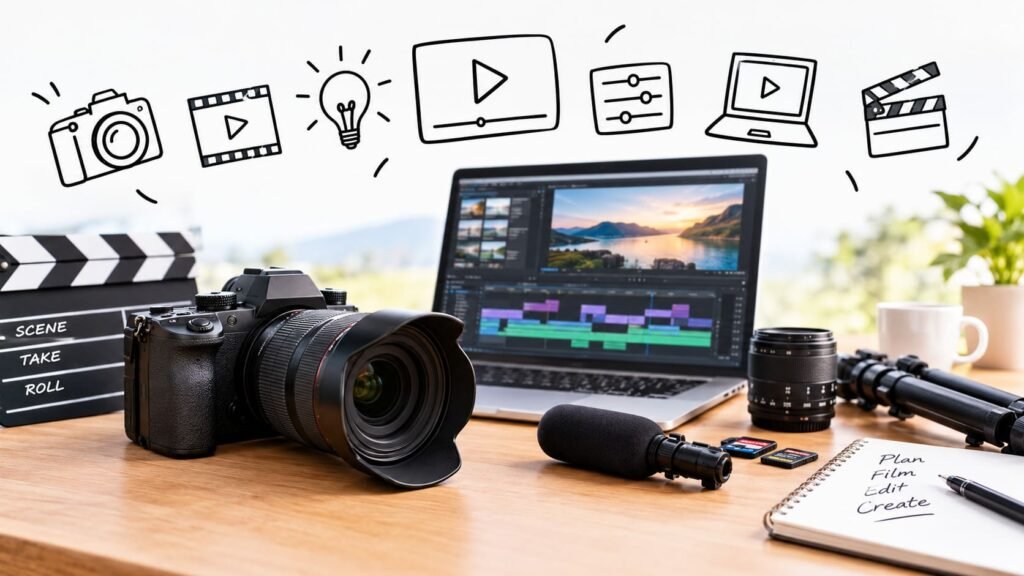
Have you ever watched a stunning video and wondered how professionals turn ordinary moments into cinematic stories?
Video has become one of the most powerful forms of communication. Whether you’re creating content for social media, documenting special events, producing business promotions, or pursuing a creative career, strong videography skills can help you stand out in a competitive digital world.
Enrolling in a videography course is one of the fastest ways to develop practical filming, editing, and storytelling techniques. Rather than relying on trial and error, structured learning helps you understand camera settings, lighting, composition, audio, and post-production through a logical progression.
The demand for digital skills also continues to grow. According to the Australian Bureau of Statistics (ABS), 23% of Australians aged 15–74 participated in work-related training during the previous 12 months, highlighting the increasing importance of professional learning and upskilling across industries. (Source!)
Whether your goal is to become a freelance videographer, grow a YouTube channel, support your business, or simply capture life’s moments more creatively, the right training can make all the difference.
1. Why Learn Videography Today?
The way people consume information has changed dramatically. Videos dominate social media platforms, business websites, online advertising, streaming services, and educational content. Audiences are naturally drawn to moving images because they communicate emotion, demonstrate products, and tell stories more effectively than text alone.
Learning videography isn’t only about operating a camera. It involves understanding visual storytelling, planning shots, controlling lighting, recording clear audio, and editing footage into engaging content.
A quality videography course teaches these essential skills through practical lessons that build confidence from beginner to advanced levels.
2. What You’ll Learn in a Videography Course
A comprehensive videography course covers much more than pressing the record button. Students develop a complete production workflow from planning through to final delivery.
Typical learning areas include:
- Understanding different camera types and lenses
- Camera settings including aperture, shutter speed and ISO
- Exposure and white balance
- Composition techniques
- Storyboarding and shot planning
- Camera movement
- Lighting for indoor and outdoor filming
- Recording professional-quality audio
- Colour correction and colour grading
- Video editing fundamentals
- Exporting videos for different platforms
These skills work together to create polished productions that keep viewers engaged.
3. Understanding Camera Fundamentals
Professional-looking videos begin with understanding your equipment.
A good course explains how cameras capture light and how each setting affects the final image.
You’ll learn how to control:
- Manual exposure
- Focus techniques
- Frame rates
- Resolution options
- Dynamic range
- Lens selection
Rather than relying on automatic settings, you’ll gain the confidence to adapt to different shooting environments.
4. Mastering Composition and Storytelling
Even expensive equipment cannot compensate for weak storytelling.
Strong videography combines technical knowledge with creativity.
You’ll discover techniques such as:
- Rule of thirds
- Leading lines
- Framing
- Negative space
- Visual balance
- Subject placement
More importantly, you’ll learn how every shot contributes to the overall narrative.
Professional videographers think beyond individual clips—they build emotional journeys that capture attention from beginning to end.
5. Lighting Makes Every Video Better
Lighting can transform an average scene into something extraordinary.
Many beginners underestimate its importance, yet lighting often has a greater impact than camera price.
You’ll explore:
- Natural lighting
- Golden hour filming
- Three-point lighting
- Soft versus hard light
- Diffusers and reflectors
- LED lighting
- Indoor lighting setups
Understanding how light shapes mood allows you to create cinematic visuals regardless of location.
6. Great Audio Creates Professional Results
Viewers may forgive slightly imperfect visuals, but poor audio quickly drives audiences away.
A quality videography course teaches students how to record clean sound using:
- Shotgun microphones
- Lavalier microphones
- External recorders
- Wind protection
- Audio monitoring
- Noise reduction techniques
Professional audio instantly improves the overall quality of your productions.
7. Learn Smooth Camera Movement
Static shots have their place, but movement adds energy and visual interest.
You’ll learn when and how to use:
- Handheld filming
- Gimbals
- Sliders
- Tripods
- Panning
- Tilting
- Tracking shots
Understanding movement helps create immersive viewing experiences without distracting the audience.
8. Editing Brings Your Story Together
Filming is only half the process.
Editing transforms raw footage into compelling content.
Most students learn how to:
- Import footage
- Organise projects
- Trim clips
- Build timelines
- Add transitions
- Adjust colours
- Improve audio
- Add titles
- Export videos
Editing software becomes far less intimidating once you understand an efficient workflow.
9. Create Videos for Different Platforms
Every platform has unique audience expectations.
For example:
- YouTube rewards longer educational content.
- Instagram prioritises visually engaging short videos.
- TikTok focuses on fast-paced storytelling.
- LinkedIn benefits from professional educational videos.
- Business websites often require polished promotional content.
A structured videography course teaches how to adapt filming and editing styles for each platform.
Helpful YouTube resource:
https://www.youtube.com/results?search_query=videography+beginner+tutorial
10. Career Opportunities After Learning Videography
Videography skills open doors across many industries.
Potential career paths include:
- Wedding videographer
- Commercial videographer
- Real estate videographer
- Travel content creator
- Social media producer
- Documentary filmmaker
- Corporate video producer
- Event videographer
- Online educator
- Freelance content creator
Many professionals combine several of these services to build a flexible career.
11. Build a Portfolio That Attracts Clients
Clients want to see what you can produce.
Your portfolio should demonstrate:
- Variety
- Technical quality
- Creative storytelling
- Editing ability
- Consistent style
Start by filming local events, family projects, travel experiences, or passion projects.
Every completed video helps strengthen your portfolio and build confidence.
12. Why Structured Learning Beats Learning Alone
Many beginners spend months watching random online tutorials without making consistent progress.
A structured videography course provides:
- Clear learning pathways
- Practical assignments
- Professional guidance
- Industry techniques
- Real-world workflows
- Constructive feedback
Instead of guessing what to learn next, you follow a proven curriculum designed to develop practical skills efficiently.
13. Essential Equipment for Beginners
You don’t need the most expensive gear to produce excellent videos.
Many professionals recommend starting with:
- Mirrorless or DSLR camera
- Versatile zoom lens
- Tripod
- External microphone
- LED light
- Spare batteries
- Fast memory cards
- Editing computer
As your skills grow, you can gradually upgrade your equipment based on your specific needs.
14. Mistakes Every Beginner Should Avoid
Learning from common mistakes accelerates improvement.
Avoid these frequent errors:
- Using automatic settings exclusively
- Ignoring audio quality
- Shaky handheld footage
- Poor lighting
- Overusing transitions
- Recording without planning
- Inconsistent colour balance
- Forgetting backup storage
Recognising these issues early saves countless hours of frustration.
15. Choosing the Right Videography Course
Not every course offers the same value.
Look for a programme that includes:
- Step-by-step lessons
- Practical projects
- Flexible online learning
- Industry-relevant curriculum
- Editing instruction
- Camera fundamentals
- Storytelling techniques
- Ongoing support
Choosing the right videography course means investing in skills that remain valuable across countless creative and professional opportunities.
Final Thoughts
Video content continues to shape how businesses communicate, creators connect with audiences, and individuals preserve meaningful memories. Developing professional videography skills is no longer reserved for filmmakers—it has become an increasingly valuable capability across marketing, education, events, journalism, and digital media.
By enrolling in a structured videography course, you’ll gain the confidence to plan, film, edit, and deliver high-quality productions using proven techniques. More importantly, you’ll develop the creative mindset needed to tell stories that engage, inspire, and leave a lasting impression.
Are you ready to transform your passion for filming into professional-quality videos with the right videography course?