

Organisations rarely struggle because of a lack of effort. More often, they struggle because their effort is unfocused.
In competitive and fast-moving markets, activity alone does not create meaningful progress. What matters is alignment.
What matters is clarity. And this is why brand strategy has become an essential foundation for any organisation that wants to grow with confidence.
Brand strategy is not a logo, campaign or visual refresh. It is the discipline that defines the choices a business makes about who it is, who it serves and how it creates value in a way that stands apart from competitors.
When this clarity is missing, teams pull in different directions. Messaging becomes inconsistent. Decisions are driven by short-term pressures rather than long-term ambition.
Over time, the organisation loses its edge and struggles to articulate why it should be chosen over someone else.
How Brand Strategy Aligns Teams and Strengthens Decisions

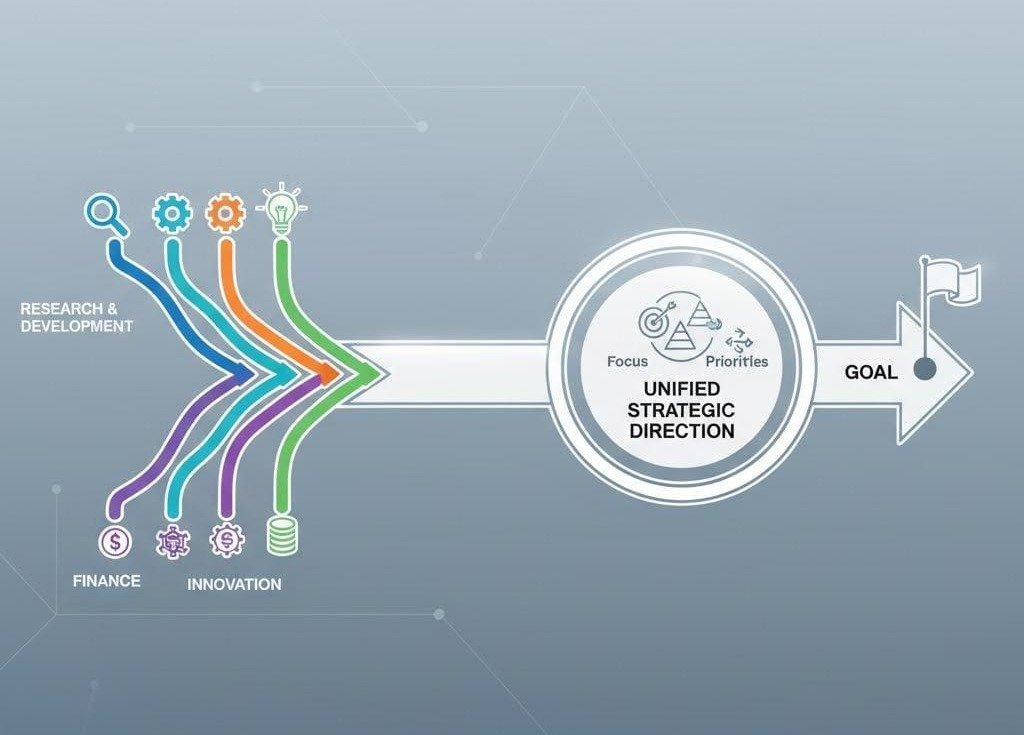
A strong brand strategy prevents this drift. It brings coherence to the business by giving people a shared understanding of what the organisation stands for and the future it aims to build.
With this clarity, decision-making becomes more grounded and purposeful. Teams understand where to focus, what to prioritise and how to deliver a consistent experience.
Leaders also gain the confidence to say no to initiatives that may look appealing but don’t serve the strategy.
This alignment delivers measurable commercial benefits. Research consistently shows that brands with clearly articulated strategies outperform those without.
They attract more loyal customers, achieve stronger margins and move through complexity with greater resilience.
A clear strategy also strengthens internal culture, enabling employees to feel more connected to the organisation’s ambitions and more confident in the work they deliver.
Why Many Organisations Misunderstand Brand Strategy
Despite this, many businesses still misunderstand what brand strategy is and reduce it to a visual or messaging exercise.
They invest in design updates or campaign ideas without addressing the strategic foundations beneath them.
These efforts may create temporary noise, but without alignment they fail to drive sustainable progress.
Where to Begin: Understanding Your Current State and Foundations
A practical starting point for most organisations is working with a freelance brand strategist to gain clarity on their identity, audience, competitive landscape and internal alignment.
This strategic partnership helps uncover blind spots, provides objective insight and accelerates the development of a coherent brand direction grounded in evidence rather than intuition.
It allows leaders to make informed decisions about the future of the organisation and ensures the strategy is built on a robust understanding of both internal truth and market reality.
Once the current state is understood, organisations can define or refine the fundamentals that shape their identity.
This includes purpose, values, audience insight, competitive context and the unique value the business brings to the world.
The most effective strategies also look ahead. They ask not only who the organisation is today, but who it needs to become to thrive in the future.
This future-focused lens helps leaders avoid reactive decision-making and strengthens long-term direction.
Translating Strategy Into Positioning, Culture and Long-Term Focus

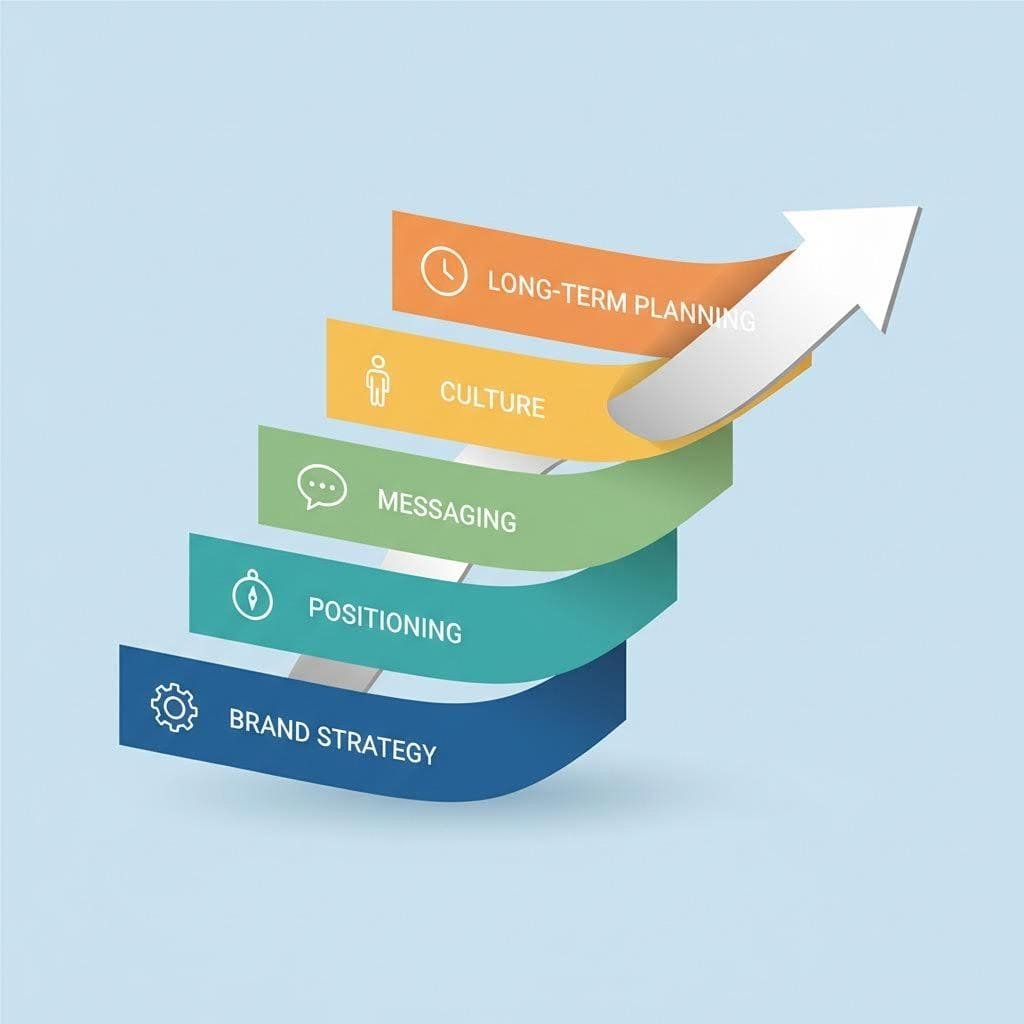
From these foundations, strategy translates into positioning, messaging and behaviour.
One of the most important outputs is a clear market position that articulates what makes the brand distinct and relevant.
Without strategy feeding into it, positioning often becomes vague, built on claims like quality, innovation or customer service.
A strategic foundation ensures that the brand’s point of difference is credible, compelling and anchored in real value.
Brand strategy also shapes culture. When employees understand the organisation’s purpose, value and direction, they can embody it consistently.
This alignment between intention and experience is what builds trust with customers.
The most successful brands are not those that speak the loudest, but those that act with the greatest coherence.
As technology accelerates change and choice becomes overwhelming, strategy becomes the filter that cuts through complexity. It guides what to pursue, what to avoid and how to evolve.
Without this clarity, organisations risk being pulled in multiple directions, diluting their impact and confusing their audience.
For leaders seeking strategic support and a clearer sense of direction, a strategic brand consultant provides an overview of programmes and advisory support designed to help organisations define who they need to become to move forward with confidence.
Brand strategy is not a luxury reserved for the largest companies. It is a necessity for any organisation that wants to grow intentionally rather than reactively.
In a world filled with noise, complexity and shifting expectations, the brands that succeed are those that understand themselves clearly and act with purpose.
Strategy is how that clarity is created and protected, and it is the anchor that enables real progress.
Final Words
A clear brand strategy is no longer optional—it is the backbone of intentional growth in an increasingly complex world.
When organisations understand who they are, what they stand for and the value they uniquely provide, they gain the focus needed to make confident decisions and deliver consistent experiences.
Strategy aligns teams, strengthens culture and provides a long-term lens that protects against reactive choices. Without it, effort becomes scattered and progress becomes unpredictable.
With it, organisations can navigate change with clarity and purpose. Ultimately, brand strategy is the anchor that ensures every action, initiative and investment moves the organisation toward the future it wants to create.