
A Practical Guide for Graphic Designers and Branding Enthusiasts
Robot logos have become a visual shorthand for innovation. Whether it’s an AI startup, a robotics company, or a cutting-edge SaaS platform, robots instantly signal technology, intelligence, and the future.
It’s no surprise that designers keep coming back to this theme.
But here’s the challenge: robot logos are popular, which means it’s easy to fall into clichés.
A successful robot logo doesn’t just look “techy”—it feels intentional, modern, and aligned with the brand’s personality.
In this article, we’ll break down 10 robot logo concepts for futuristic tech brands, with practical design tips you can actually use.
If you’re a graphic designer or branding enthusiast looking for inspiration that goes beyond surface-level trends, you’re in the right place.
Why Robot Logos Make Sense for Tech Branding
Before diving into concepts, let’s talk about why robot logos work so well in the first place.
Robot imagery naturally communicates:
- Intelligence and automation
- Precision and efficiency
- Innovation and forward thinking
- A connection to AI, machine learning, and advanced systems
When designed well, robot logos can also feel approachable and human—an important balance for tech brands that want trust, not intimidation.
From an SEO perspective, keywords like robot logo design, futuristic tech branding, and AI logo inspiration continue to perform well because demand in this space keeps growing.
1. Minimalist Robot Face Logo

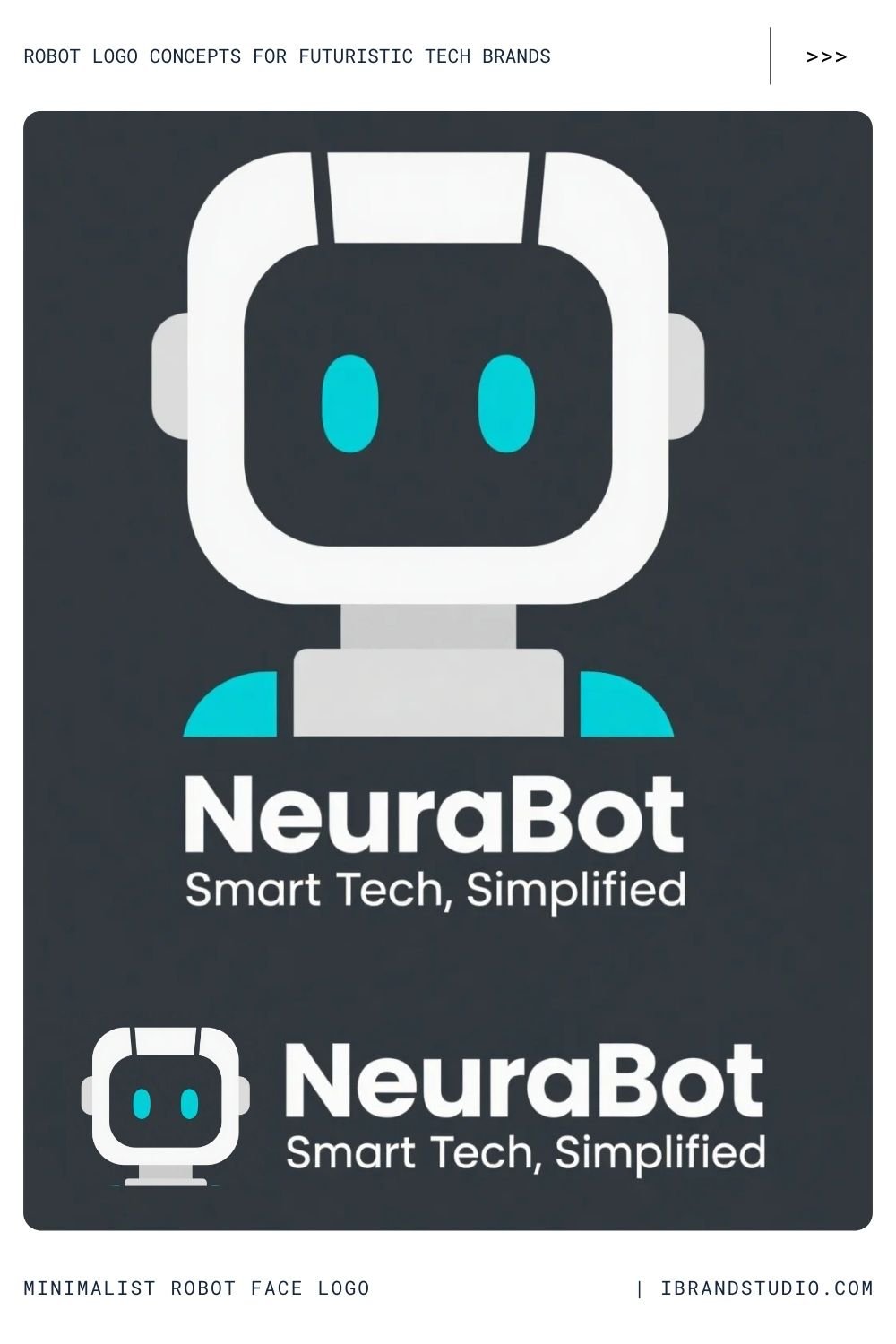
The minimalist robot face is a favorite for modern tech brands. It usually consists of a simple head shape, eyes, and just enough detail to suggest personality.
Best for:
AI startups, SaaS platforms, productivity tools
Why it works:
Minimal robot logos are easy to recognize, even at small sizes. They’re perfect for app icons, dashboards, and social media avatars.
Design tips:
- Use basic geometry like circles and rounded rectangles
- Limit facial elements to avoid clutter
- Focus on symmetry and balance
- Test legibility at very small scales
This style aligns well with current trends in minimalist logo design for tech brands.
2. Abstract Robot Symbol
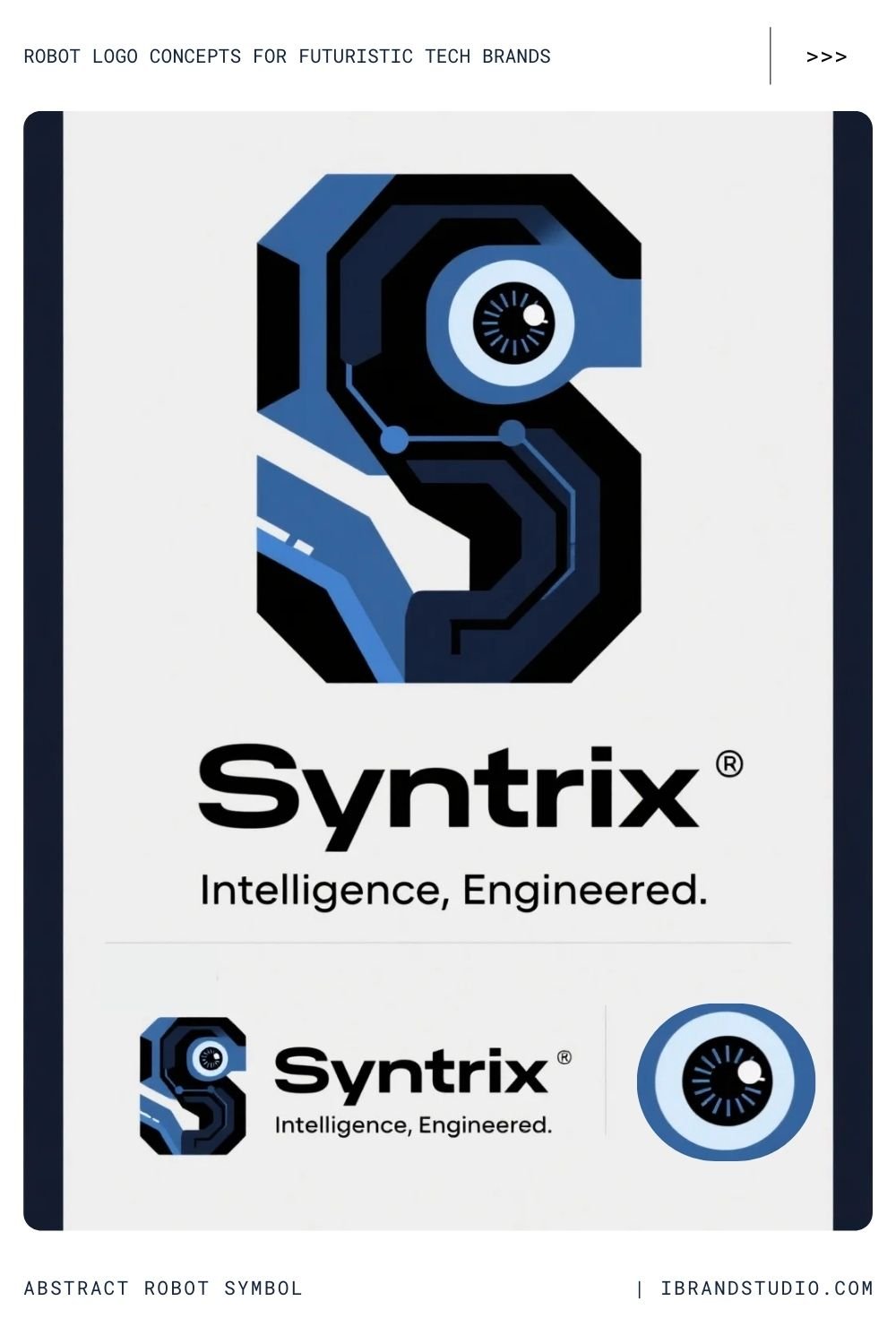
Abstract robot logos don’t scream “robot” at first glance—and that’s intentional.
These designs rely on symbolism, shapes, and structure rather than literal faces or bodies.
Best for:
Enterprise tech, fintech, cybersecurity brands
Why it works:
Abstract robot logos feel smarter and more mature. They suggest advanced technology without being playful or obvious.
Design tips:
- Use negative space to hint at robot features
- Keep forms clean and intentional
- Avoid unnecessary decoration
- Pair with a strong, modern wordmark
This approach is ideal for brands that want a future-proof logo rather than something trendy.
3. Friendly Robot Mascot Logo
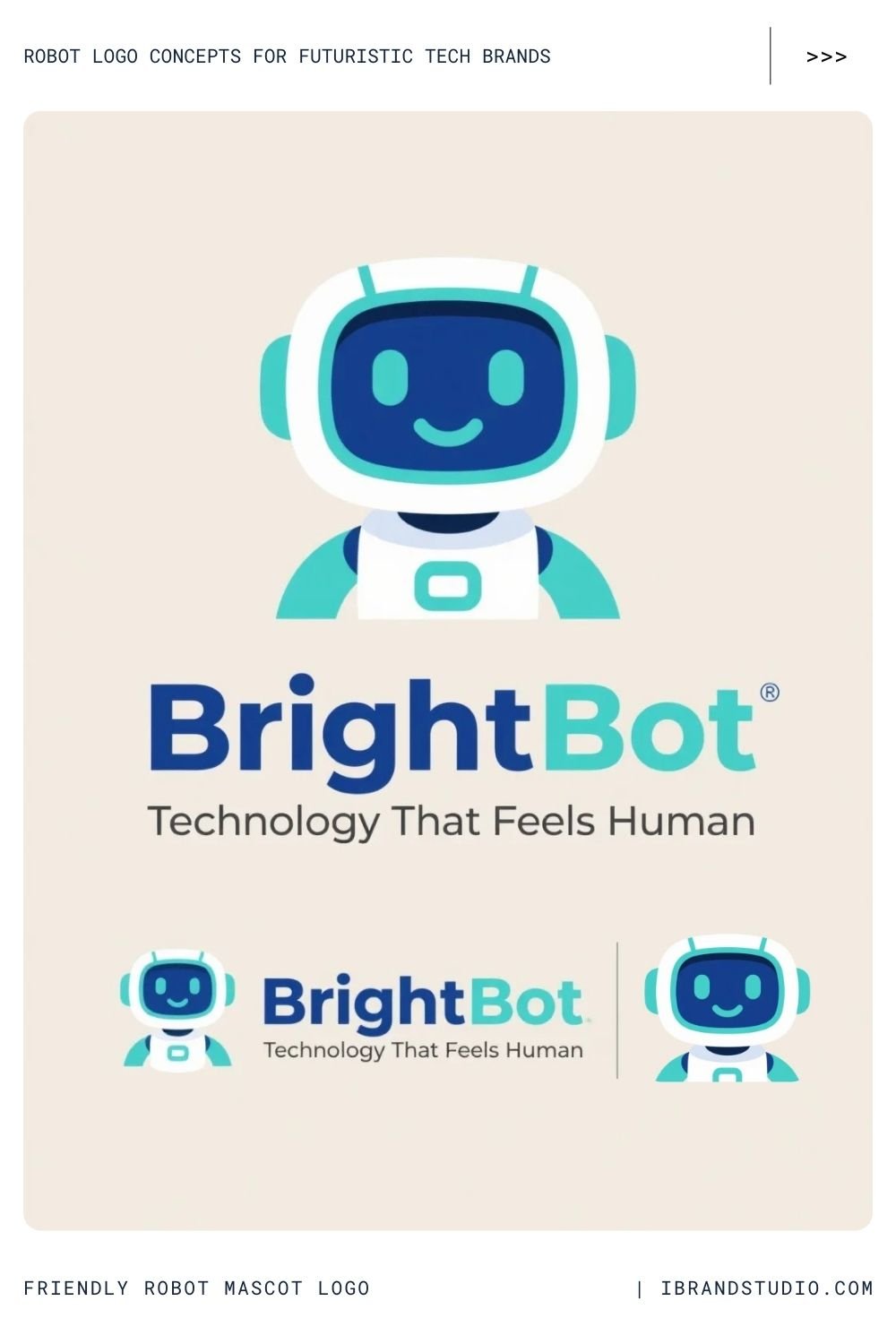
Mascot-style robot logos bring personality to tech branding. When done right, they make technology feel less intimidating and more relatable.
Best for:
EdTech platforms, consumer apps, onboarding-focused products
Why it works:
People connect with characters. A friendly robot mascot can build trust and emotional engagement, especially with non-technical users.
Design tips:
- Keep expressions simple and subtle
- Avoid exaggerated cartoon features
- Use rounded shapes for approachability
- Design variations for marketing and motion
Friendly robot logos are especially effective when paired with thoughtful brand storytelling.
4. Monoline Robot Icon
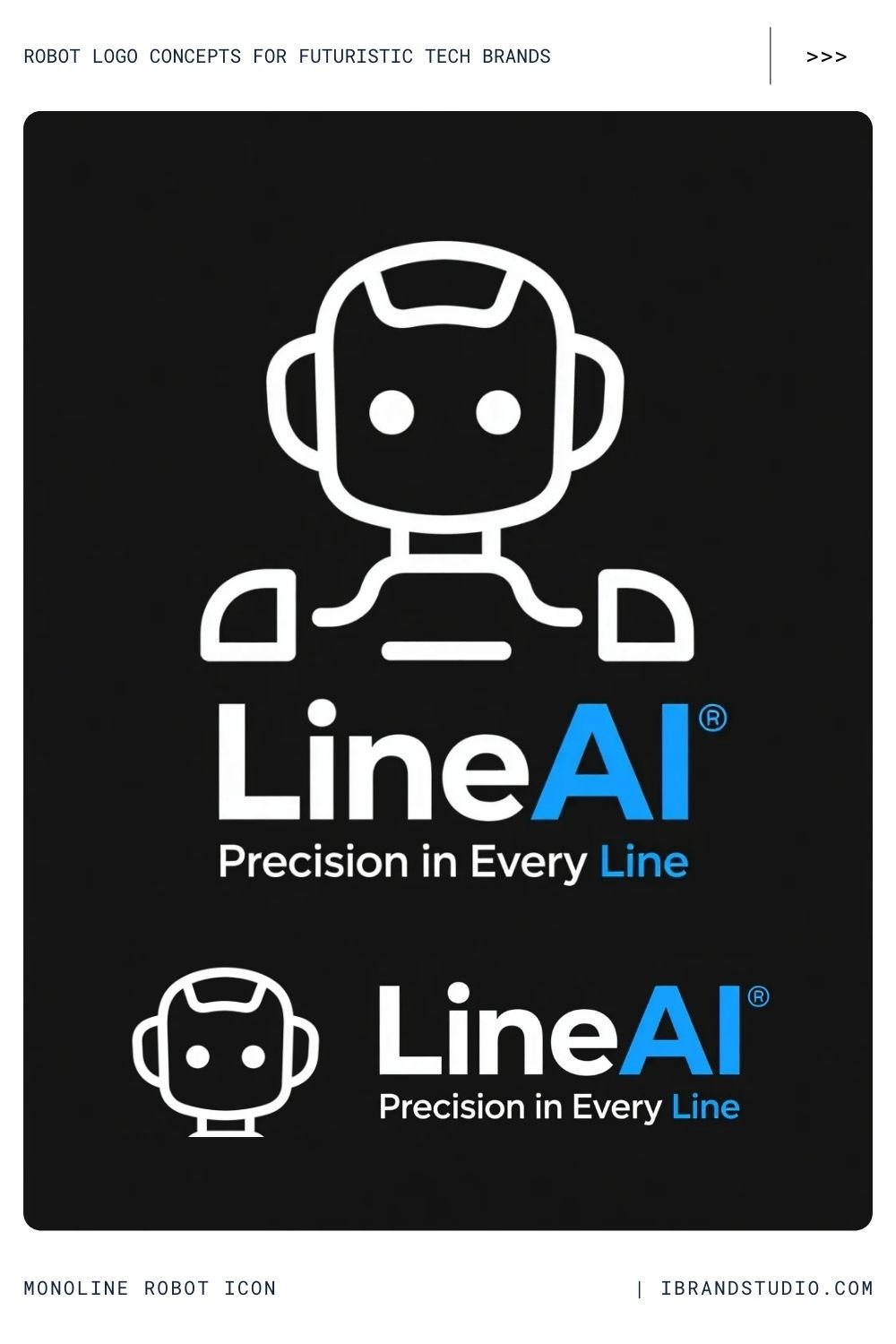
Monoline robot logos use a single, consistent stroke width throughout the design. The result is clean, modern, and highly versatile.
Best for:
Digital products, design-forward startups, developer tools
Why it works:
Monoline logos scale beautifully and feel right at home in UI-heavy environments.
Design tips:
- Maintain consistent stroke thickness
- Avoid overly complex intersections
- Ensure the logo works in one color
- Test against both light and dark backgrounds
This style fits naturally into modern futuristic logo design systems.
5. Geometric Robot Logo
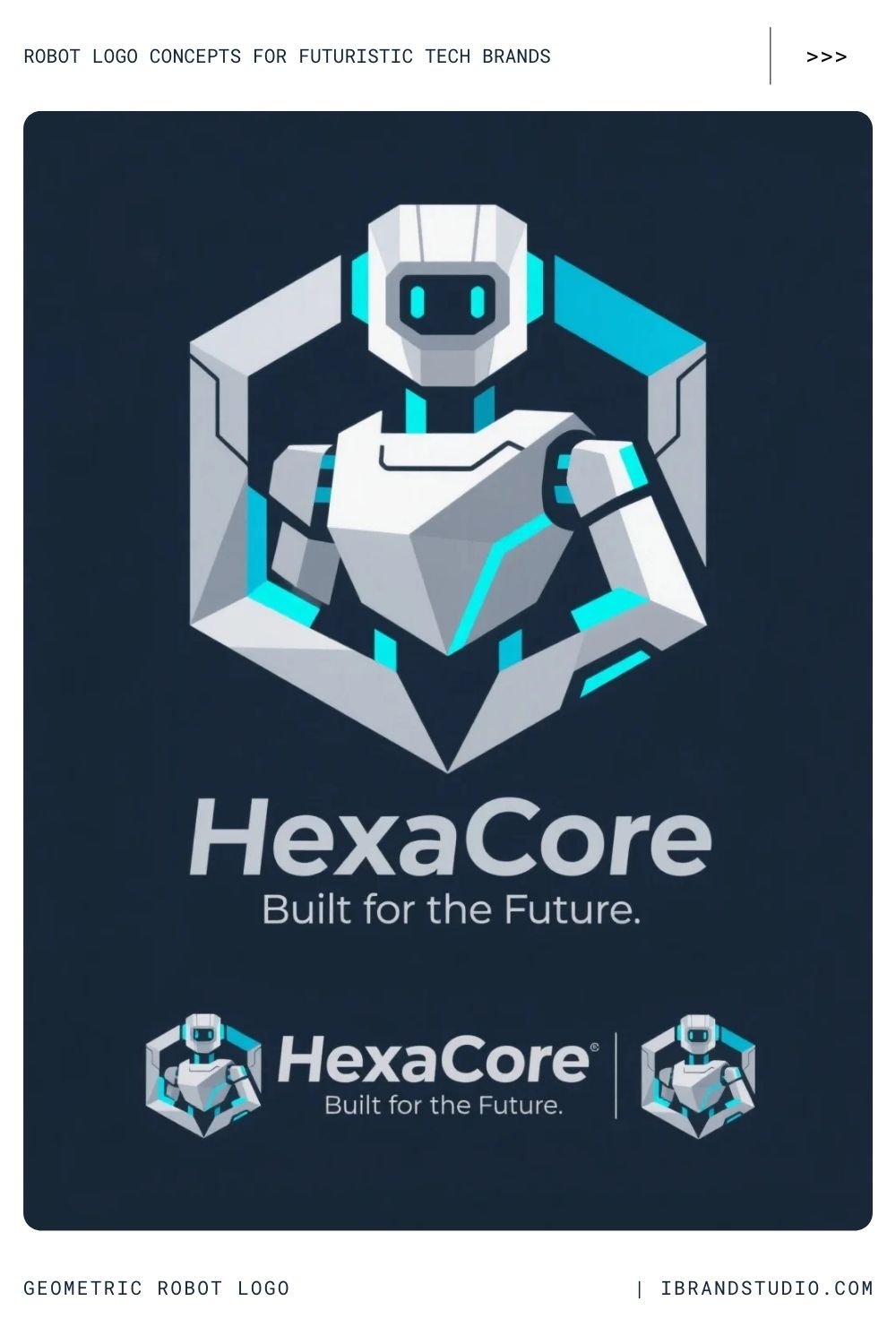
Geometric robot logos lean into structure, symmetry, and precision. They often feel more “engineered” than illustrated.
Best for:
Robotics companies, AI research labs, hardware startups
Why it works:
Geometry communicates logic and control—qualities many tech brands want to emphasize.
Design tips:
- Build the logo on a grid
- Use sharp angles or modular shapes
- Keep proportions mathematically balanced
- Pair with bold, contemporary typography
This concept is perfect for brands focused on engineering and advanced technology.
6. Letterform Robot Logo
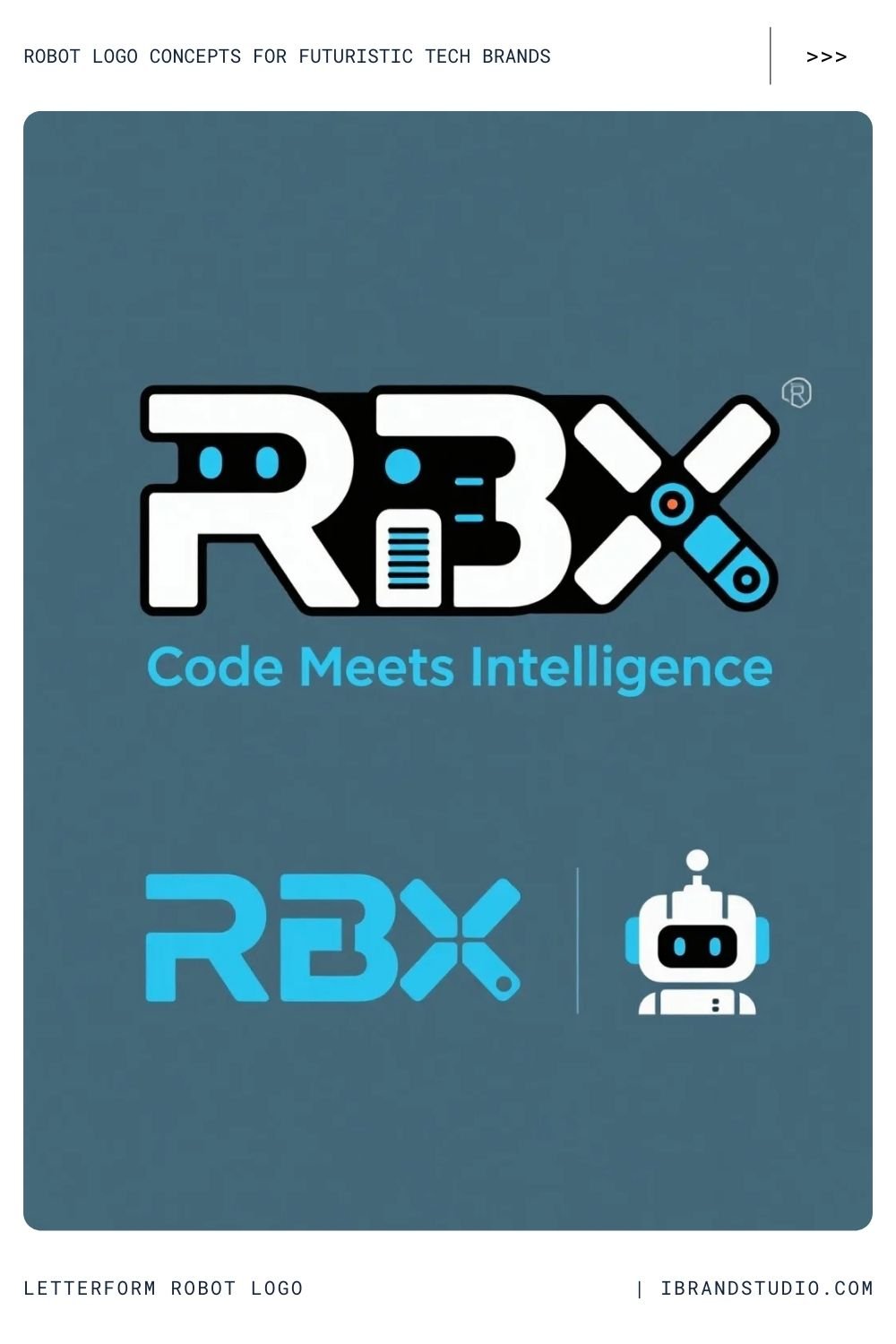
Letterform robot logos combine typography and robotics by turning letters—often initials—into robot-inspired shapes.
Best for:
Tech startups with short names or acronyms
Why it works:
Letterform logos are compact, memorable, and highly brandable.
Design tips:
- Integrate eyes or robot features naturally
- Prioritize readability at all sizes
- Avoid forcing the concept if it feels awkward
- Test recognition without the wordmark
This style works well for AI branding where name recognition matters.
7. Futuristic Robot Emblem
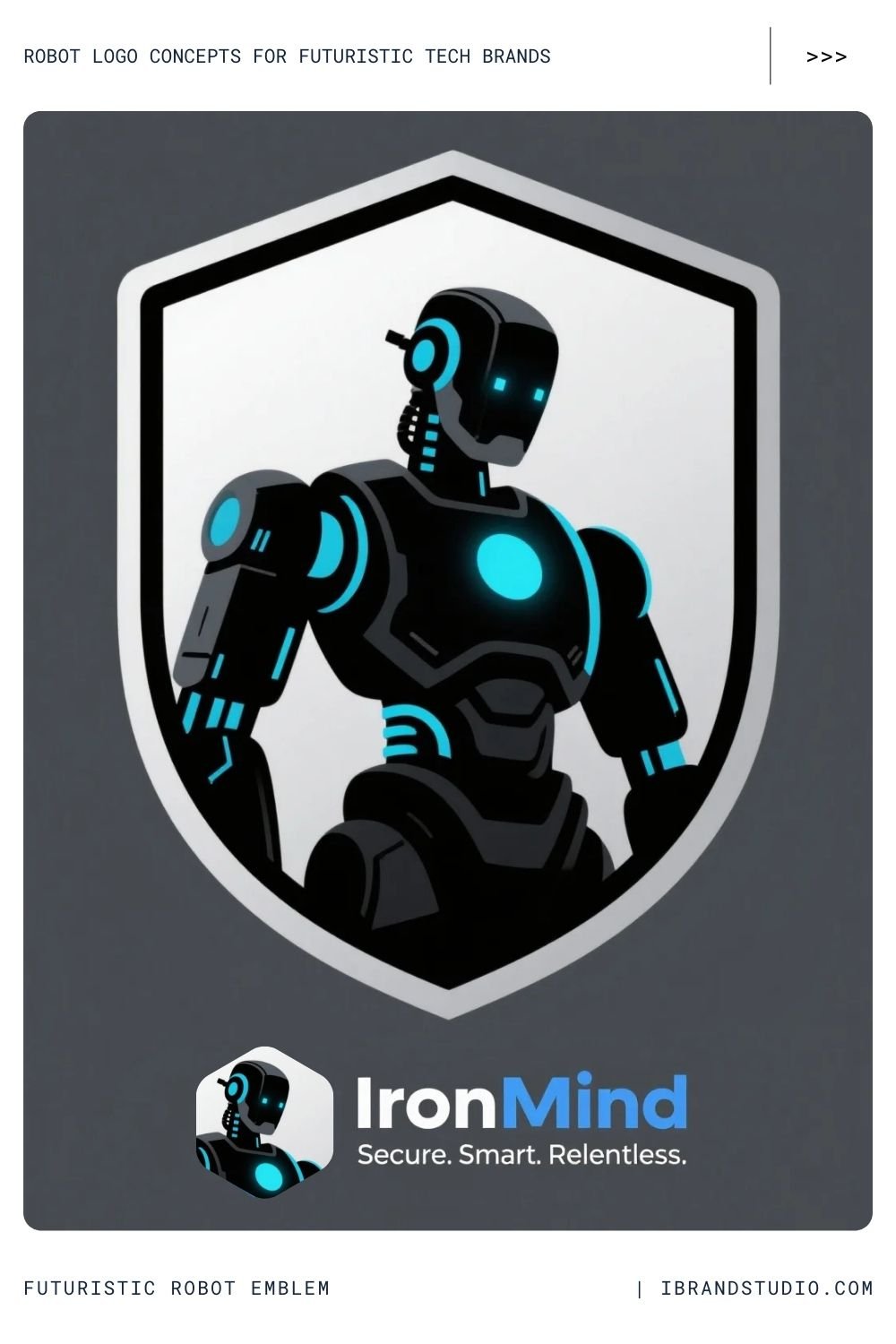
Robot emblems place a robot symbol inside a badge, shield, or contained shape. These logos tend to feel bold and authoritative.
Best for:
Blockchain platforms, gaming tech, cybersecurity products
Why it works:
Emblems convey strength and reliability, which is important for trust-heavy industries.
Design tips:
- Keep the container shape simple
- Avoid overly detailed borders
- Ensure scalability for merch and print
- Make the robot the clear focal point
This approach pairs nicely with dark-mode branding and high-contrast palettes.
8. Line-Art Robot Logo
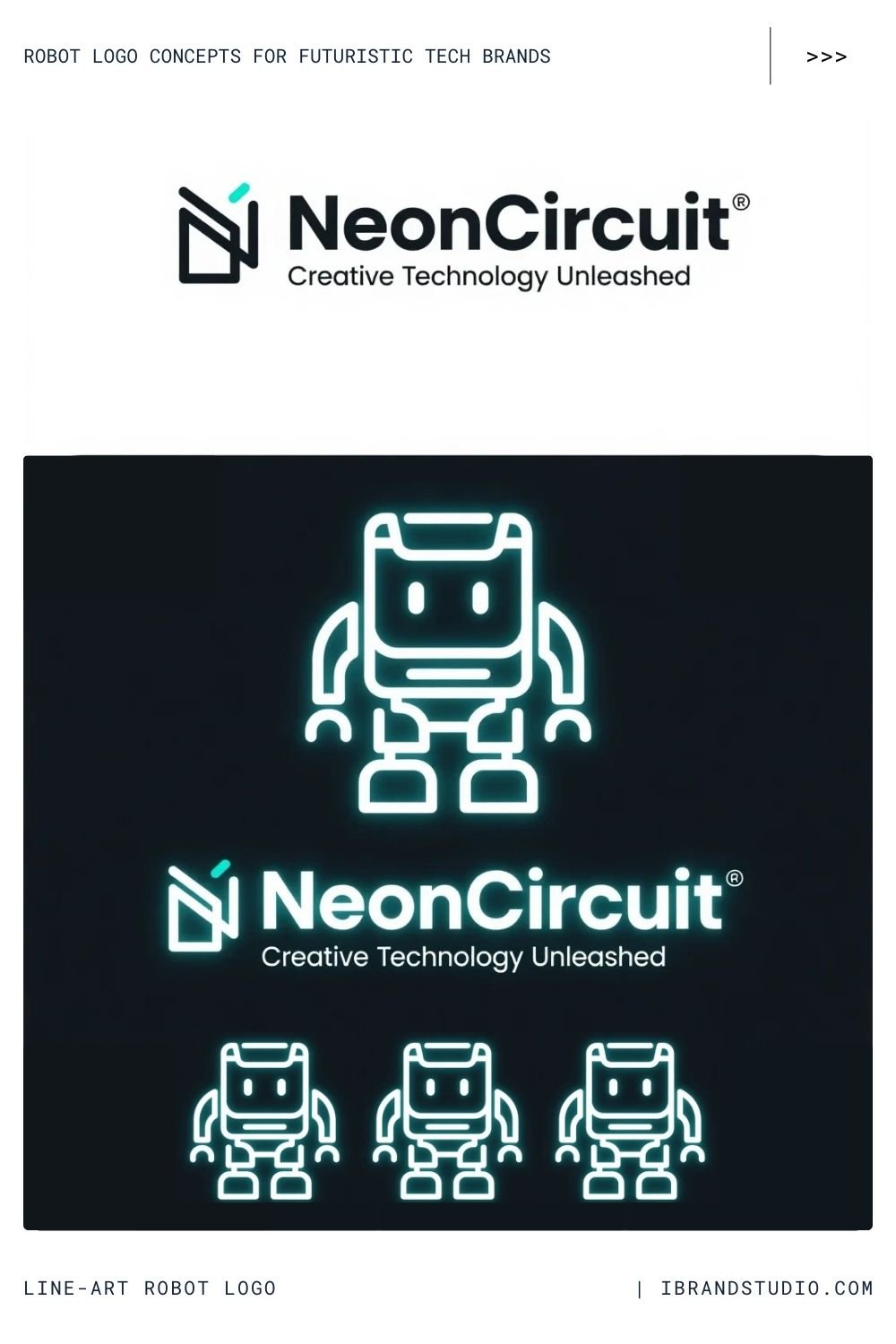
Line-art robot logos use outlines rather than filled shapes, creating a lightweight and futuristic feel.
Best for:
Creative tech studios, digital agencies, experimental brands
Why it works:
Line-art logos feel modern and adaptable, especially in motion or interactive contexts.
Design tips:
- Avoid overlapping lines
- Maintain clear visual hierarchy
- Test contrast carefully
- Consider subtle animation for digital use
This style shines in modern tech branding environments.
9. AI Brain and Robot Hybrid Logo
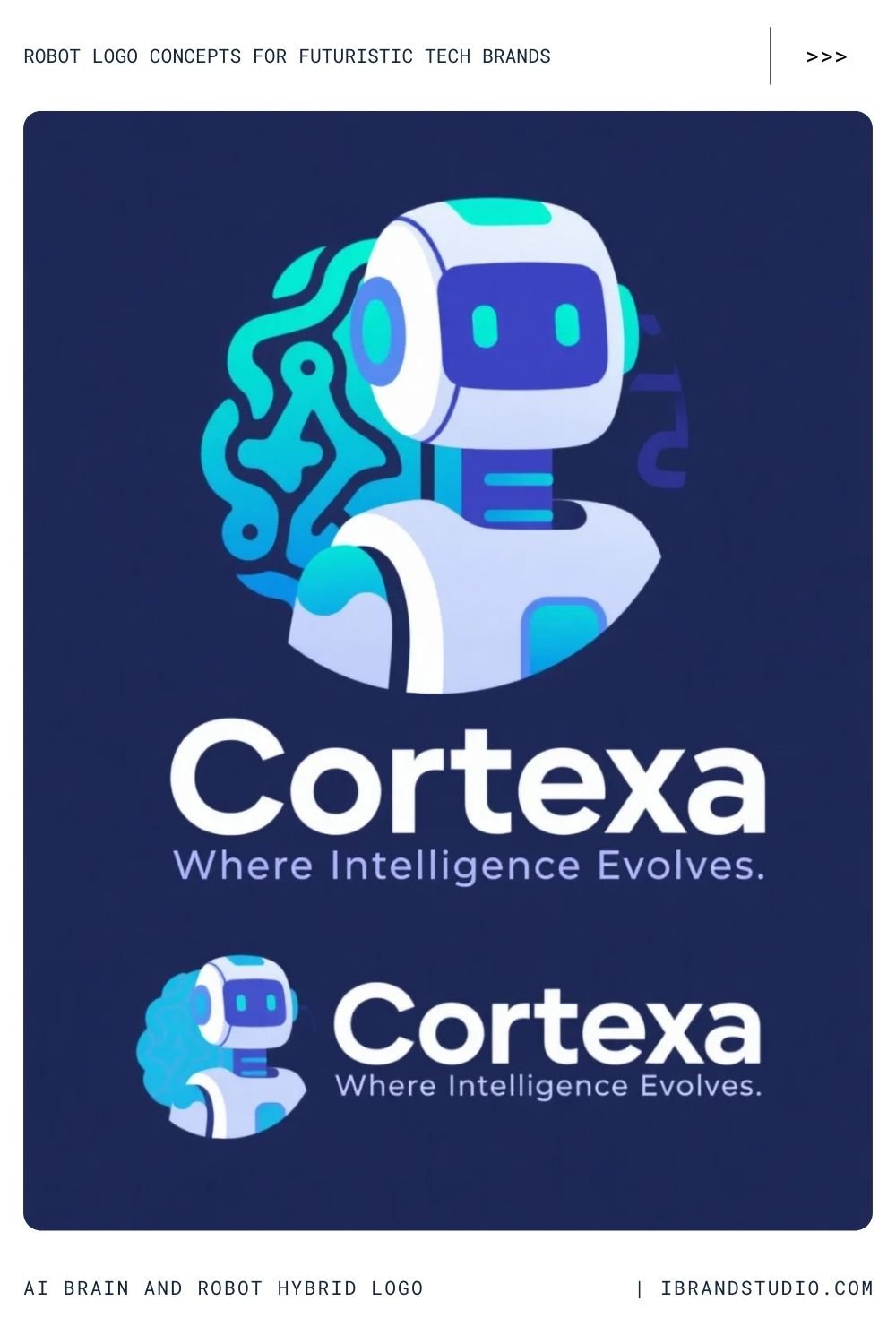
Combining robot imagery with brain or neural network elements is a direct nod to artificial intelligence.
Best for:
AI platforms, machine learning tools, data science startups
Why it works:
It instantly communicates intelligence and computational power.
Design tips:
- Simplify neural patterns
- Avoid overused “glowing brain” clichés
- Balance organic and geometric elements
- Use gradients sparingly
This concept is strong when clarity is more important than playfulness.
10. Negative Space Robot Logo
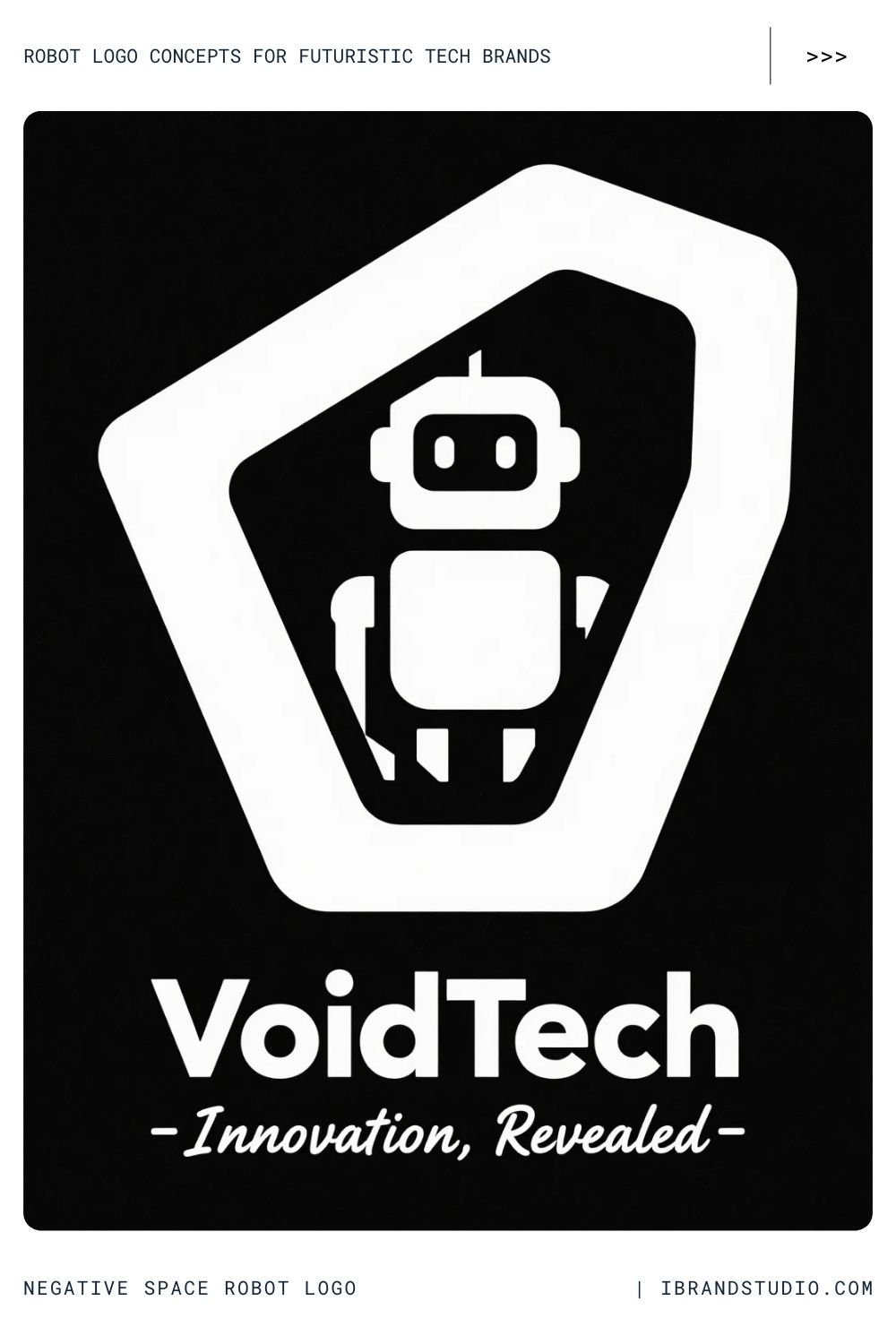
Negative space robot logos hide robot shapes within other forms, creating a subtle “aha” moment for viewers.
Best for:
Premium tech brands, creative startups, branding-led companies
Why it works:
Negative space designs feel smart, intentional, and memorable.
Design tips:
- Plan negative space early
- Ensure the robot is still recognizable
- Test with first-time viewers
- Maintain strong contrast
When executed well, this approach elevates a logo instantly.
Color and Typography Tips for Robot Logos
Even the best robot logo concept can fall flat without the right supporting choices.
Color tips:
- Blue and cyan for trust and technology
- Purple for innovation and creativity
- Black and white for premium positioning
- Neon accents for futuristic energy (use lightly)
Typography tips:
- Geometric sans-serifs for modern tech brands
- Rounded fonts for friendly robots
- Sharp, extended typefaces for advanced or industrial brands
Typography should support the robot concept—not compete with it.
Final Thoughts
Robot logos aren’t just a design trend—they’re a visual language for the future of technology.
The key is choosing a concept that fits the brand’s goals, audience, and long-term vision.
As a designer, always ask yourself:
- Does this robot logo feel timeless?
- Will it scale across digital and physical platforms?
- Does it reflect the brand’s personality and values?
If the answer is yes, you’re on the right track. With the concepts and tips above, you’ll be better equipped to design robot logos for futuristic tech brands that feel thoughtful, modern, and genuinely human.