
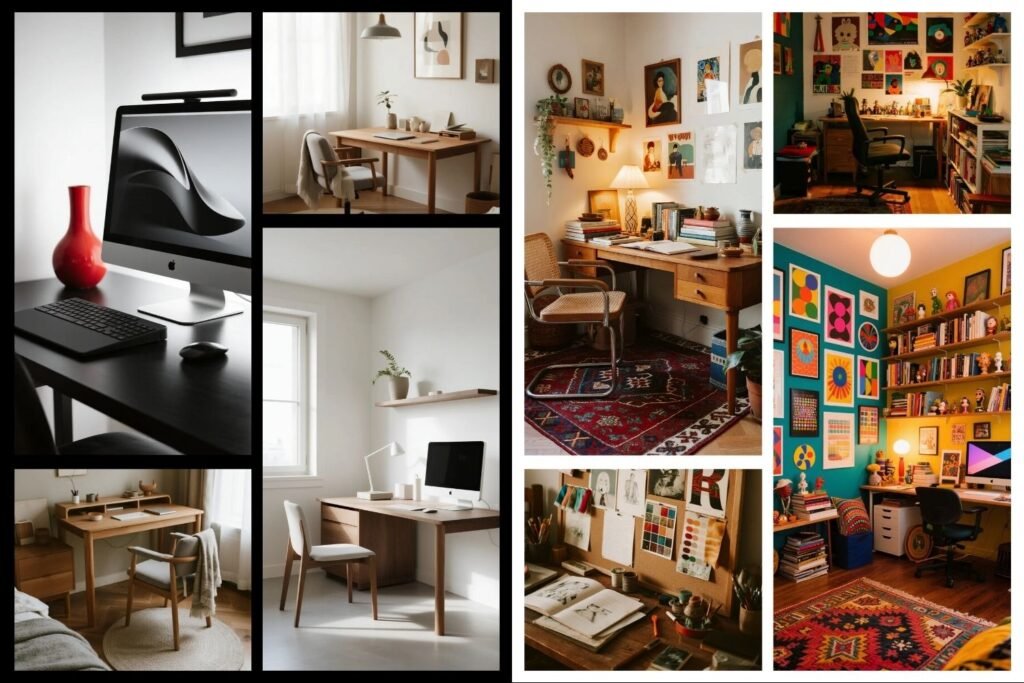
When it comes to designing a space that fuels creativity, graphic designers tend to fall into two camps: those who crave calm simplicity and those who thrive in bold, expressive environments.
Minimalist and maximalist workspaces represent two very different approaches to inspiration, organization, and visual stimulation.
In this pictorial guide, we explore the strengths of both styles to help you decide which one truly supports your creative flow.
Also Read: Color Psychology for Designers: How Your Workspace Colors Affect Creativity
MINIMALIST WORKSPACES
Clean, Airy Minimalist Studio

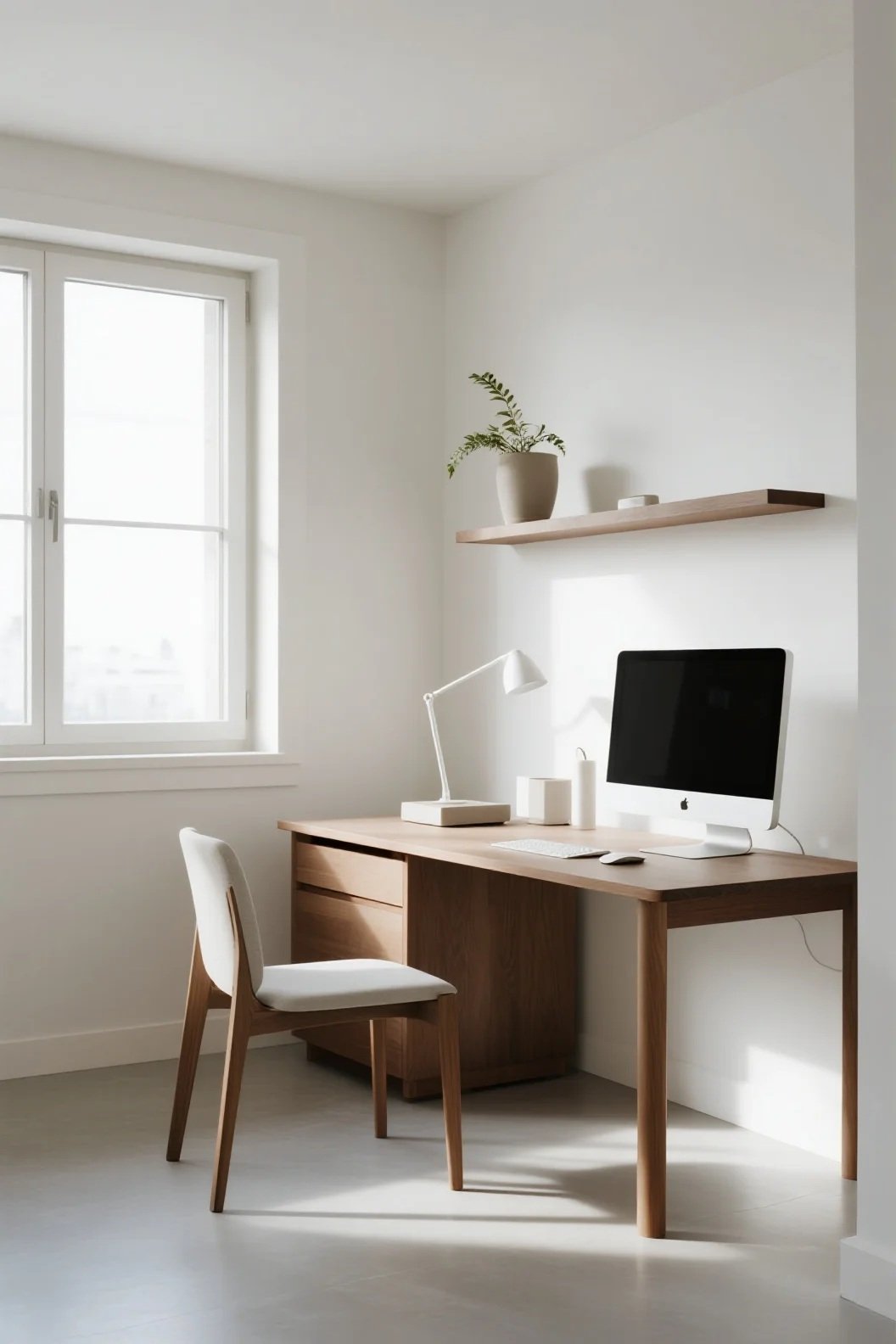
White walls, light wood furniture, natural daylight, uncluttered surfaces, a single monitor, and subtle décor.
Why It Works:
Minimalist workspaces reduce visual noise, creating a calm environment ideal for deep focus, detailed design work, and long editing sessions.
Black-and-White Minimalist Desk Setup
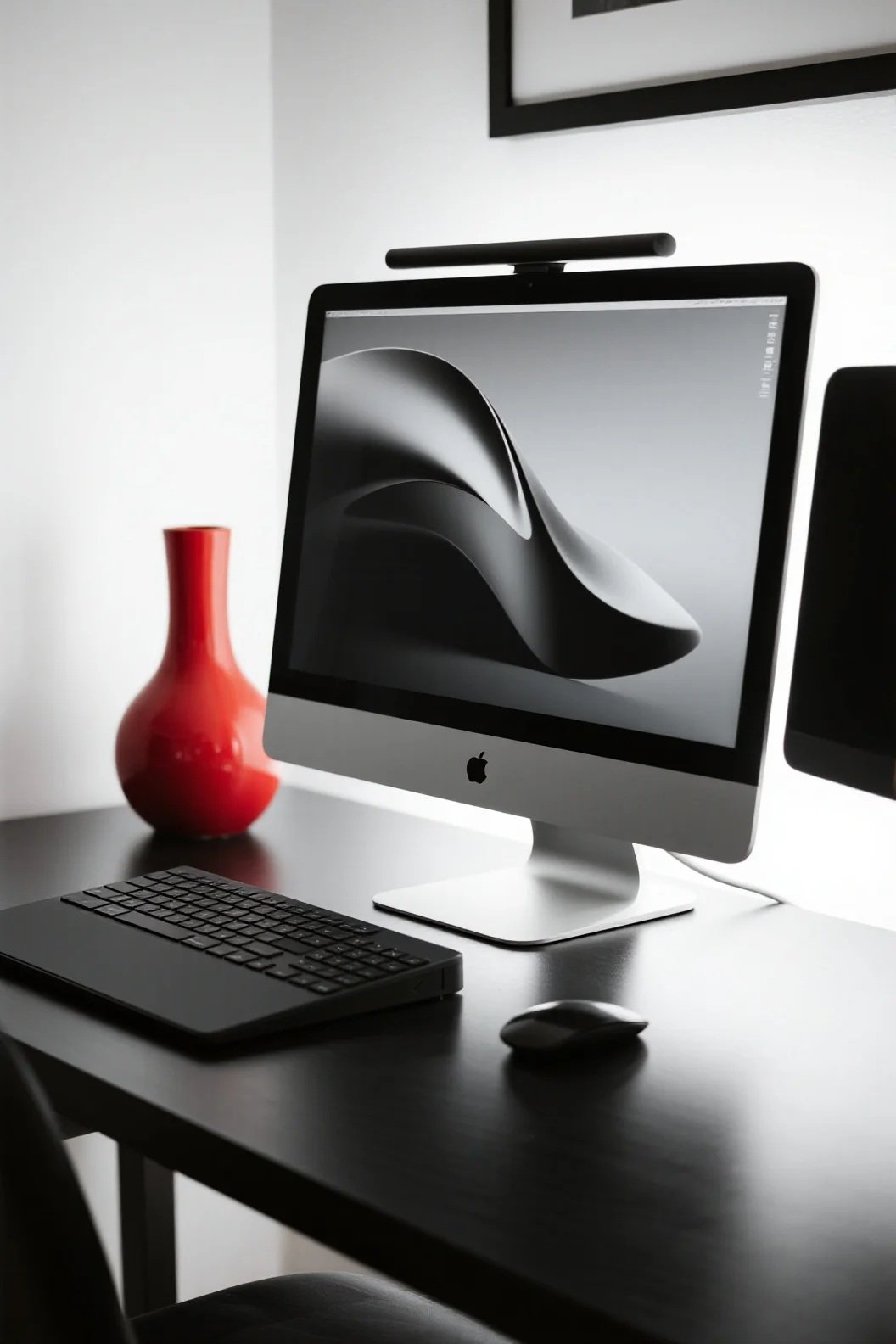
Monochrome palette, matte black accessories, hidden cable management, and a single bold accent element.
Creative Benefit:
A limited color palette helps reduce decision fatigue and keeps the mind clear for conceptual thinking.
Scandinavian Minimalist Workspace
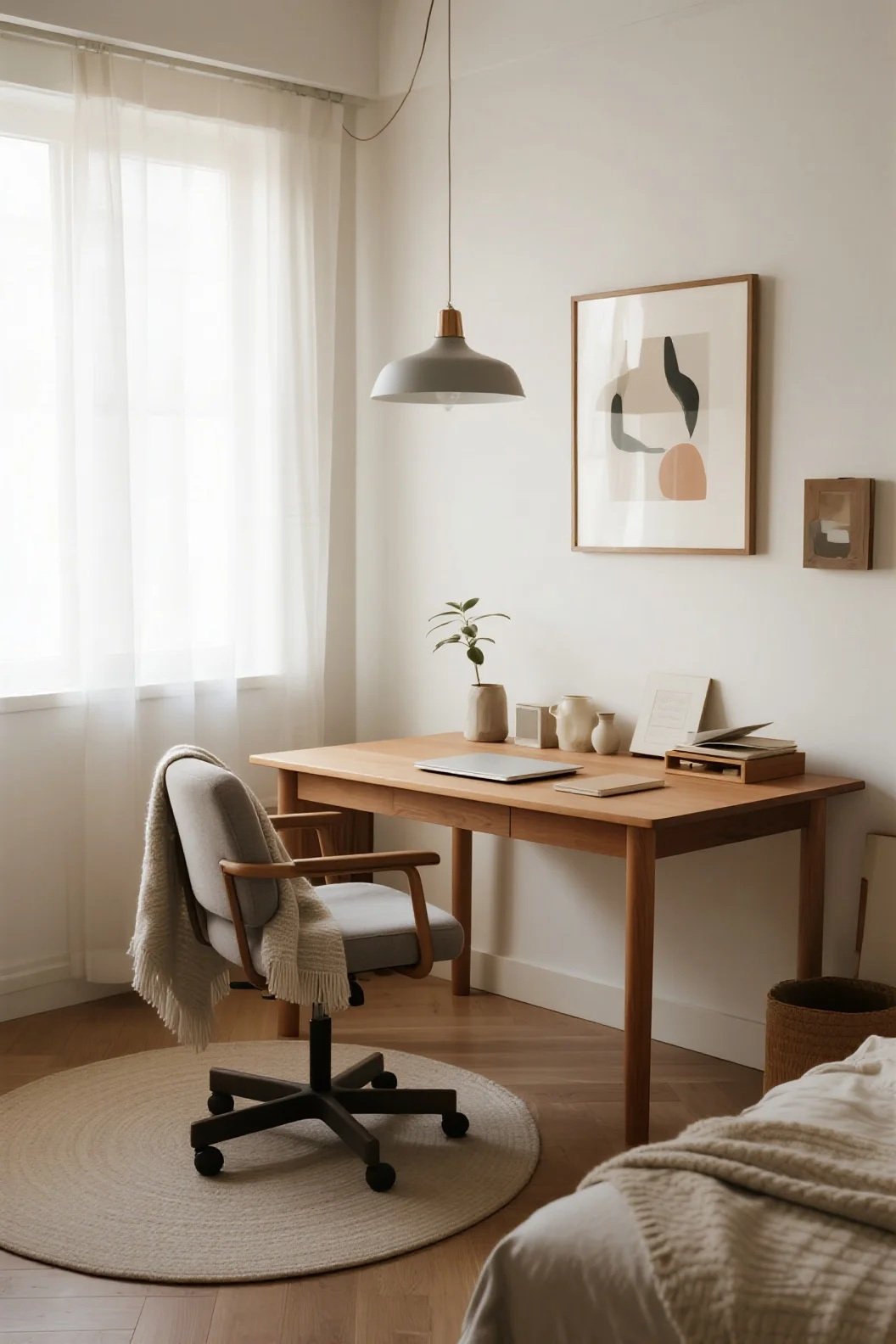
Soft neutral tones, cozy textures, simple décor, functional furniture.
Perfect For:
Designers who want to feel relaxed, grounded, and mentally organized before diving into creative work.
Key Strengths of Minimalism
- Enhances focus
- Lowers stress
- Encourages organization
- Helps maintain a clean workflow
- Reduces decision fatigue
You Might Also Like: Boost Your Creativity: 12 Unique Workspace Concepts for Designers
MAXIMALIST WORKSPACES
Bold, Color-Filled Creative Studio
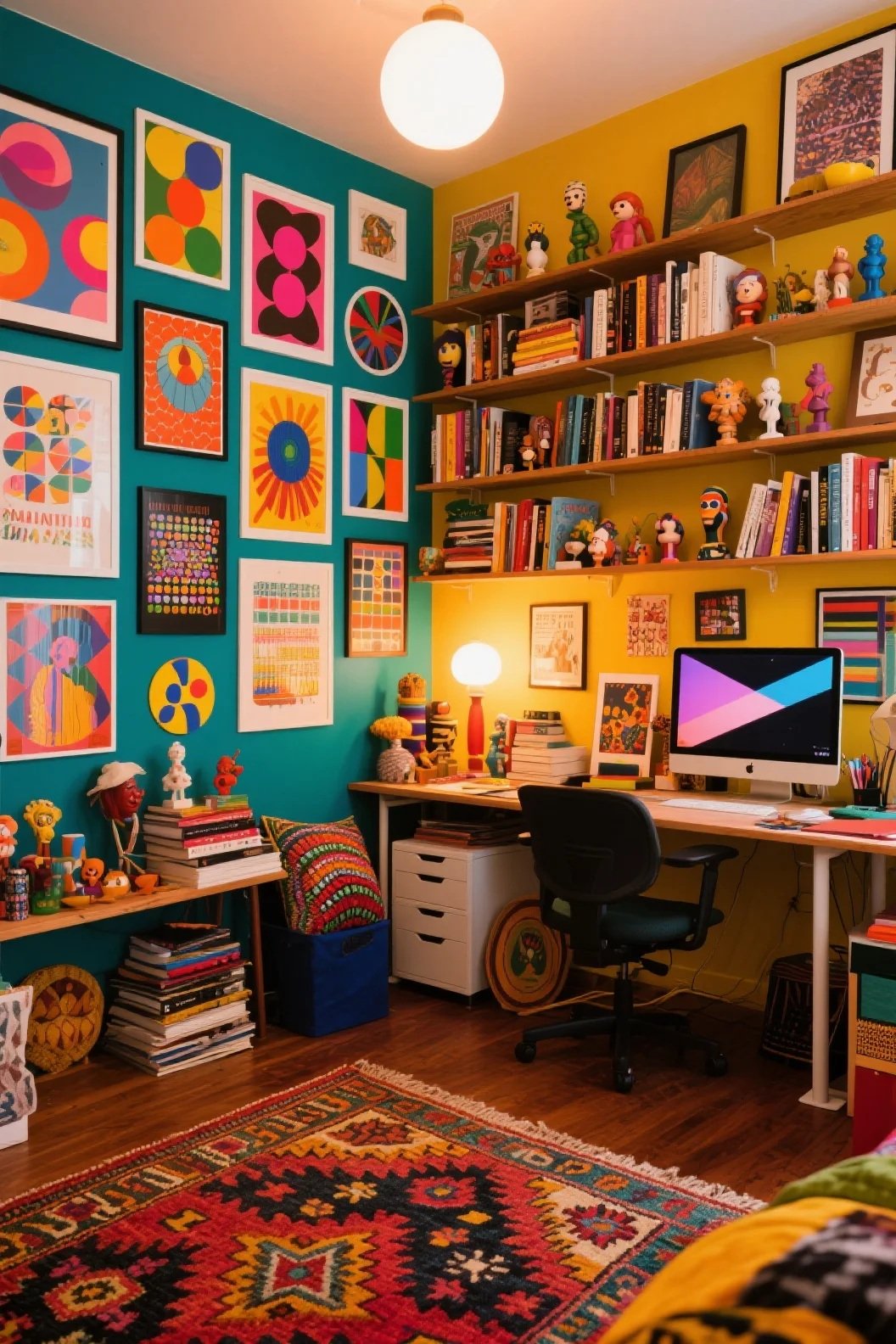
Walls covered with art prints, colorful décor, layered textures, and creative clutter that sparks ideas.
Why It Works:
Maximalist environments push boundaries and stimulate imagination—perfect for designers who draw inspiration from visual abundance.
Eclectic Maximalist Desk Corner
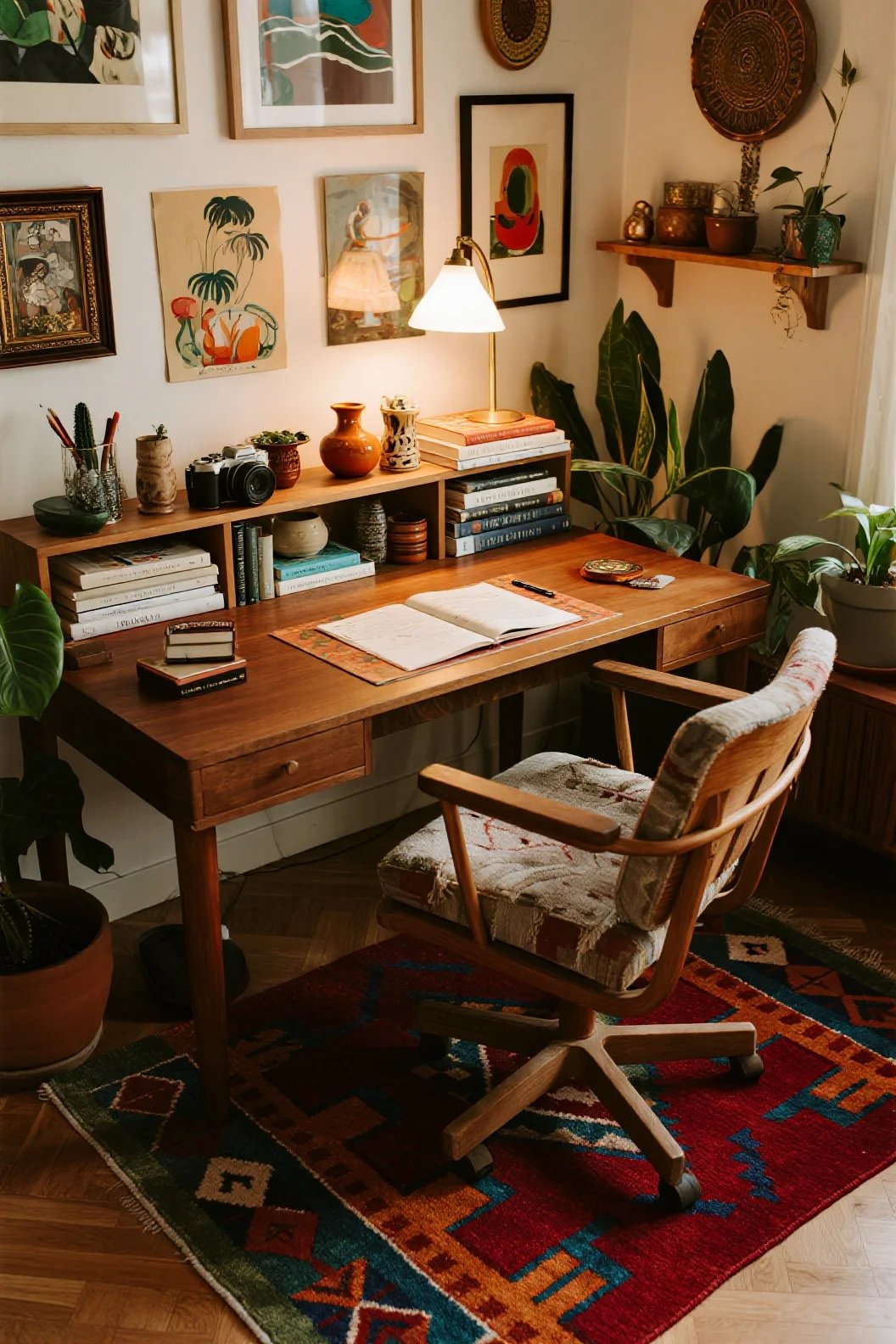
Mismatched but coordinated décor pieces, patterned rug, vibrant accessories, inspiration walls, books, and collectibles.
Creative Benefit:
Every object has a memory or meaning, turning the workspace into a personal creative playground.
Artistic Maximalist Mood Board Wall
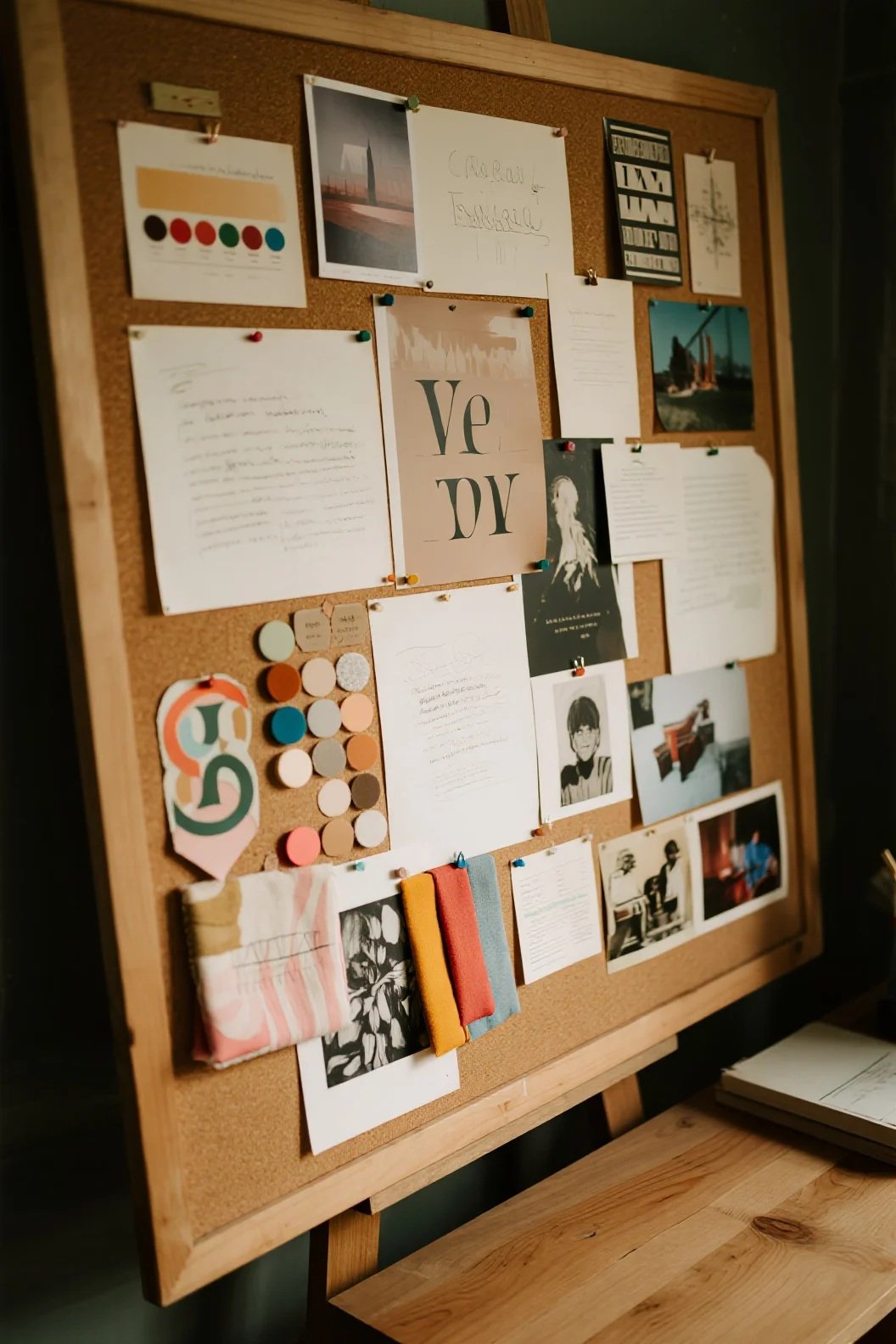
A full wall filled with sketches, posters, fabric swatches, color palettes, postcards, and creative artifacts.
Perfect For:
Designers who thrive on visual cues, storytelling, and a dynamic, idea-rich environment.
Key Strengths of Maximalism
- Boosts imagination
- Encourages experimentation
- Inspires visual storytelling
- Supports highly expressive design work
- Makes the workspace uniquely personal
Minimalist or Maximalist: Which One Helps You Create Better?

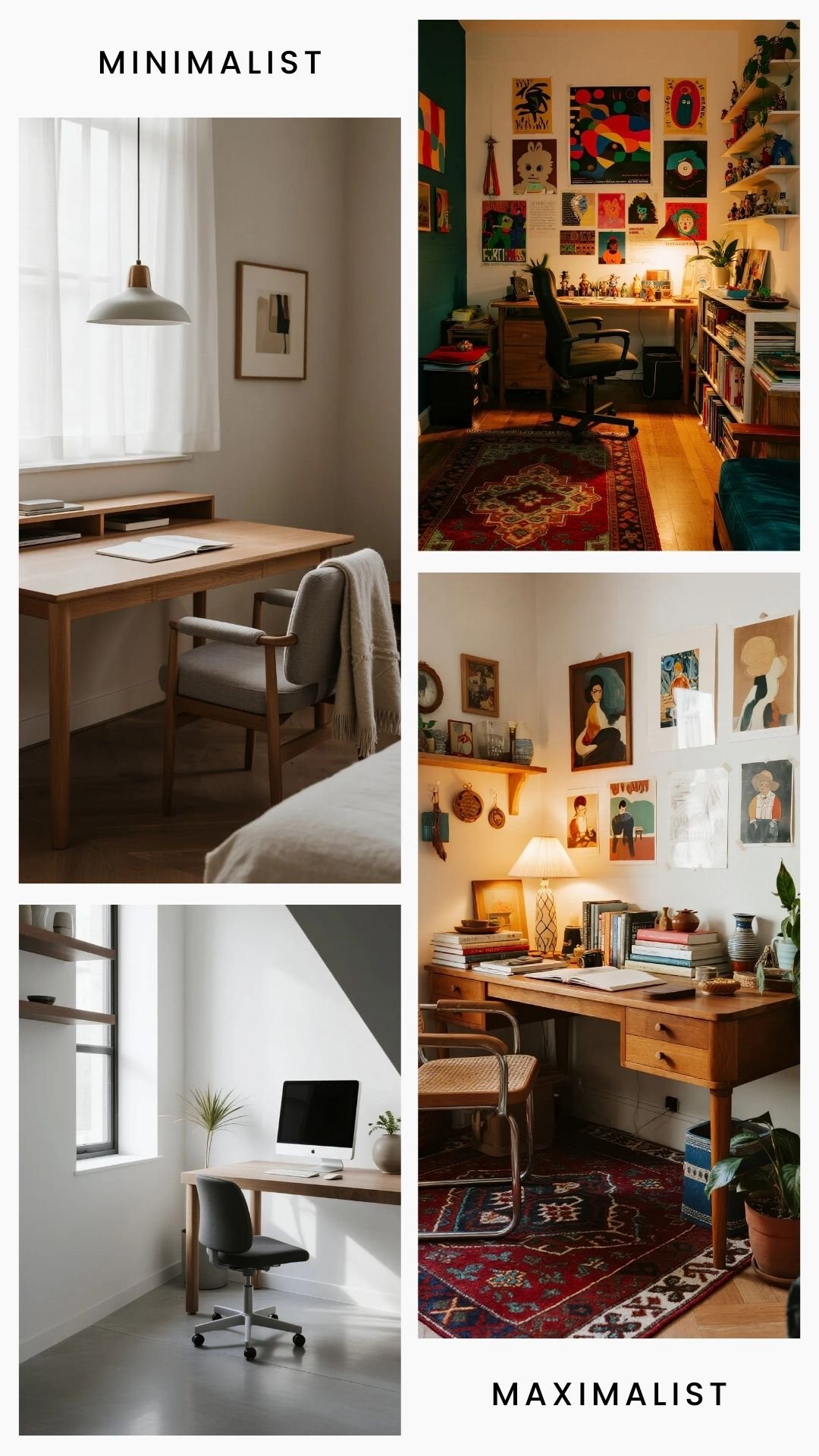
The truth is—there’s no universal answer. Creativity is deeply personal.
Some designers think clearly only when their space is uncluttered and serene; others ignite their imagination through color, texture, and curated chaos.
Minimalism is better if you:
✔️ need calm to focus
✔️ work digitally most of the time
✔️ get distracted by clutter
✔️ prefer clean, modern aesthetics
Maximalism is better if you:
✔️ draw inspiration from visual variety
✔️ love tactile objects, books, and art
✔️ enjoy building mood boards
✔️ feel energized in vibrant spaces
Free Download: 11 Workspace Mockups to Show Off Your Creatives
Final Thoughts
Minimalist and maximalist workspaces aren’t opposites—they’re expressions of how different minds create best.
Some designers even blend both: a clean desk paired with an inspiration-heavy wall, or a neutral palette layered with meaningful objects.