
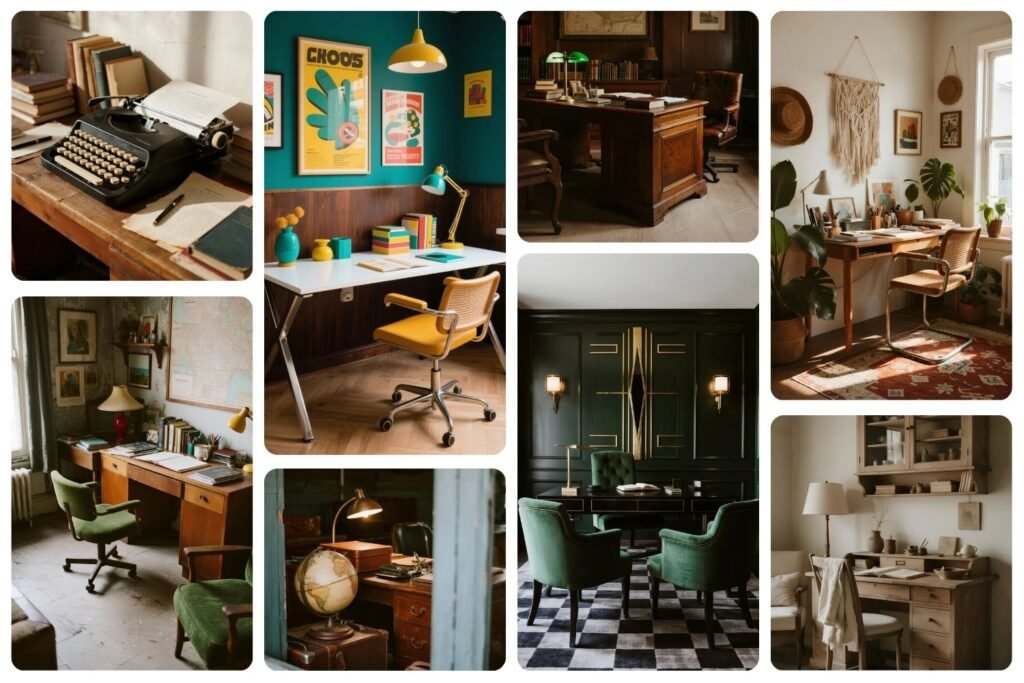
Your workspace isn’t just where you work—it’s where ideas take shape, stories unfold, and creativity either flows or stalls.
For bloggers, writers, and design lovers, the look and feel of a workspace matter more than we sometimes admit.
That’s where retro vintage workspace inspiration comes in. Vintage-inspired offices bring warmth, personality, and a sense of history that modern, ultra-minimal setups often lack.
They feel lived-in, intentional, and quietly inspiring—exactly what creative minds need.
Whether you love mid-century design, bohemian textures, or old-school academic vibes, this guide explores 12 retro vintage workspace ideas that blend aesthetics with real-world usability.
Along the way, you’ll also find practical tips to help you build a space that works as beautifully as it looks.
Why Retro Vintage Workspaces Work So Well for Writers and Bloggers
There’s a reason so many creatives gravitate toward vintage-inspired offices. These spaces do more than look good.
A retro vintage workspace:
- Feels warmer and more personal
- Encourages deeper focus and slower thinking
- Tells a story through objects and design
- Photographs beautifully for blogs and social media
- Ages better than trend-heavy modern décor
Vintage style isn’t about going backward—it’s about creating a workspace with soul.
1. Mid-Century Modern Workspace for Writers

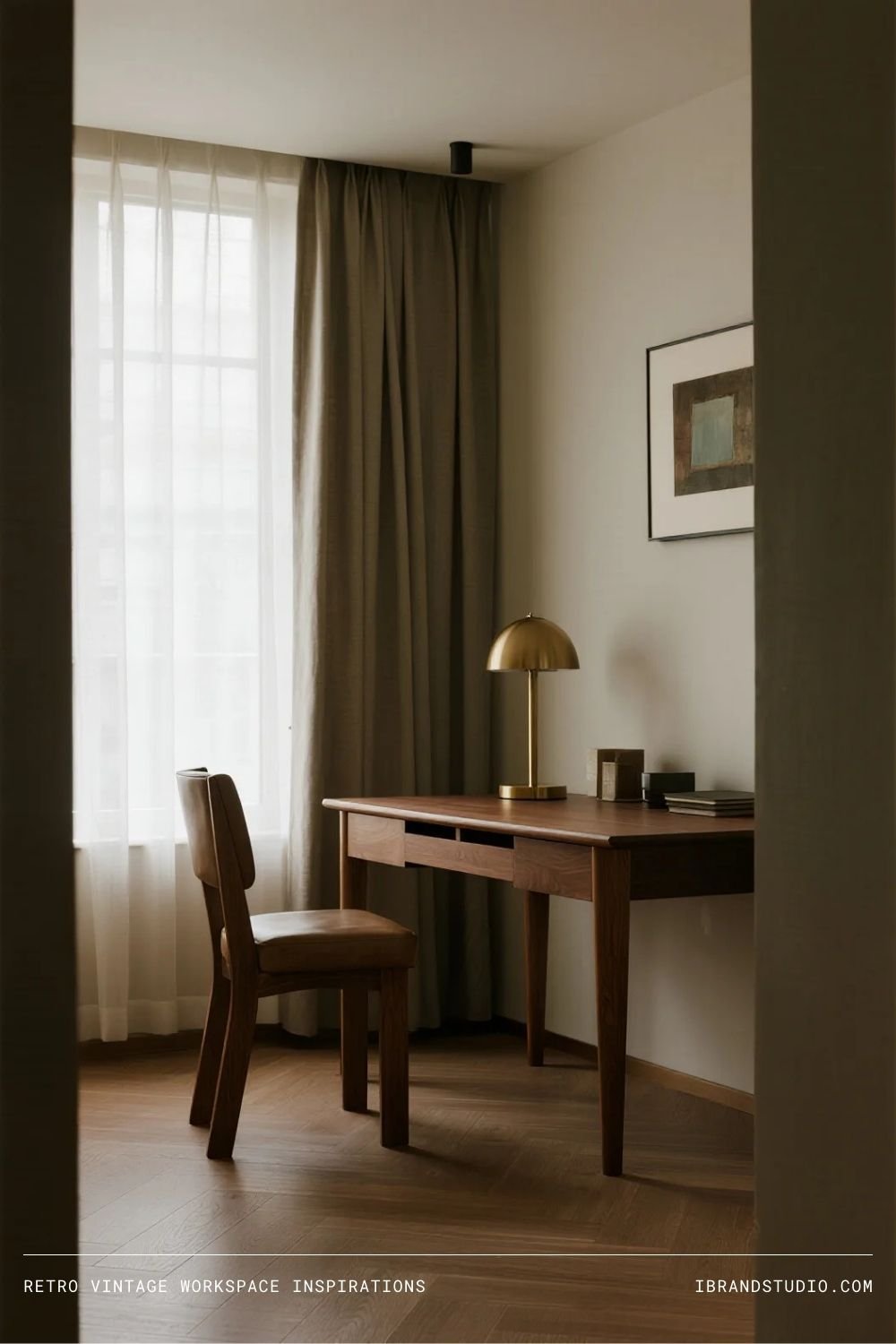
Mid-century modern design remains a favorite for a reason. Its clean lines and warm wood tones feel structured but never cold.
What works here:
- A wooden desk with tapered legs
- A leather or molded chair
- Simple brass or cone-shaped desk lamps
- Minimal but thoughtful décor
Tip: Mid-century spaces shine when you avoid clutter. Let a few quality pieces do the talking.
2. Typewriter-Inspired Vintage Writing Desk
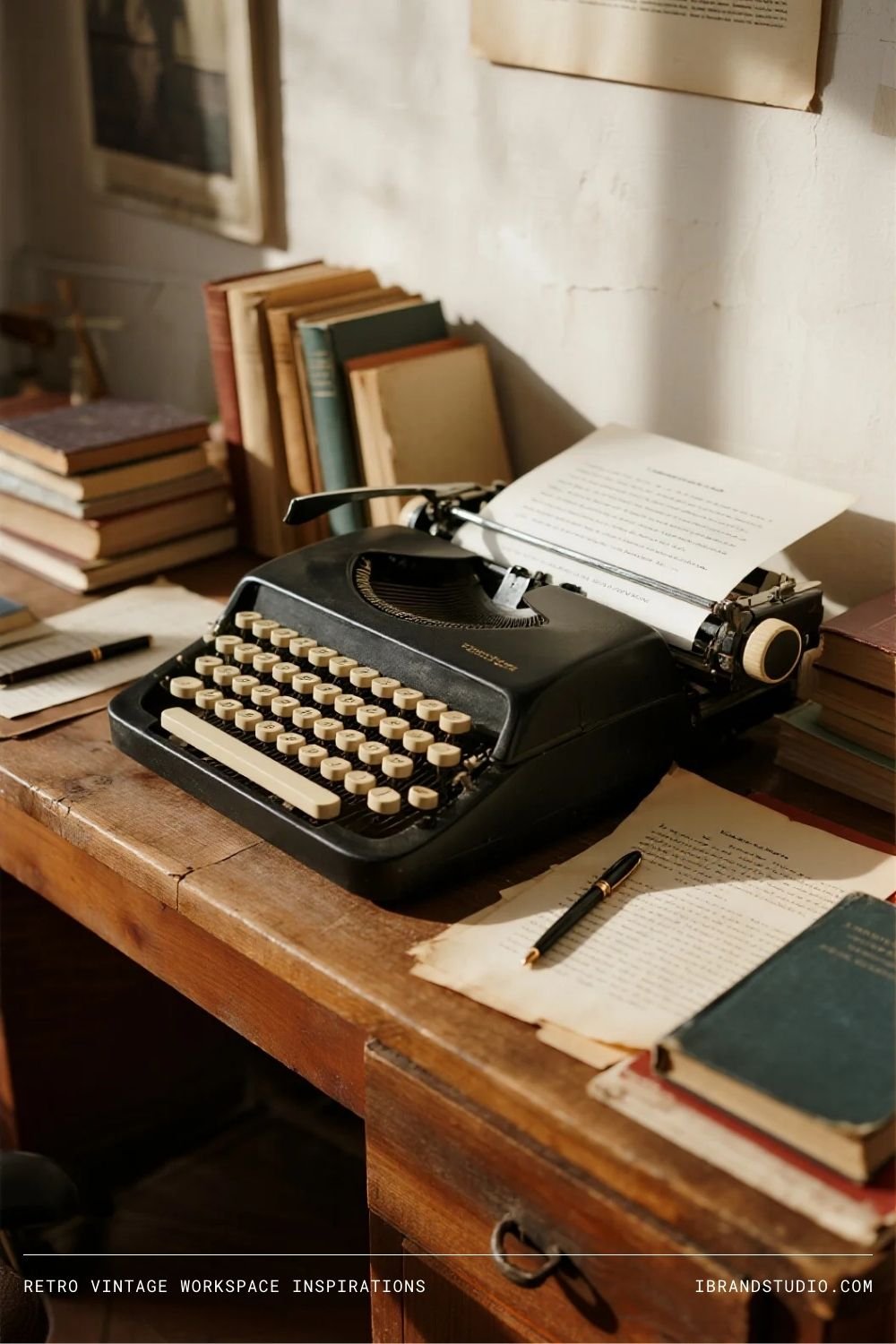
Even if you write on a laptop, a typewriter-inspired workspace taps into the romance of writing’s past.
Design ideas:
- A real or replica typewriter
- Wooden desk with visible wear
- Stacks of classic books
- Fountain pens or handwritten notes
This setup feels authentic, timeless, and especially appealing for writer-focused blogs and branding photos.
3. 1970s Bohemian Retro Workspace
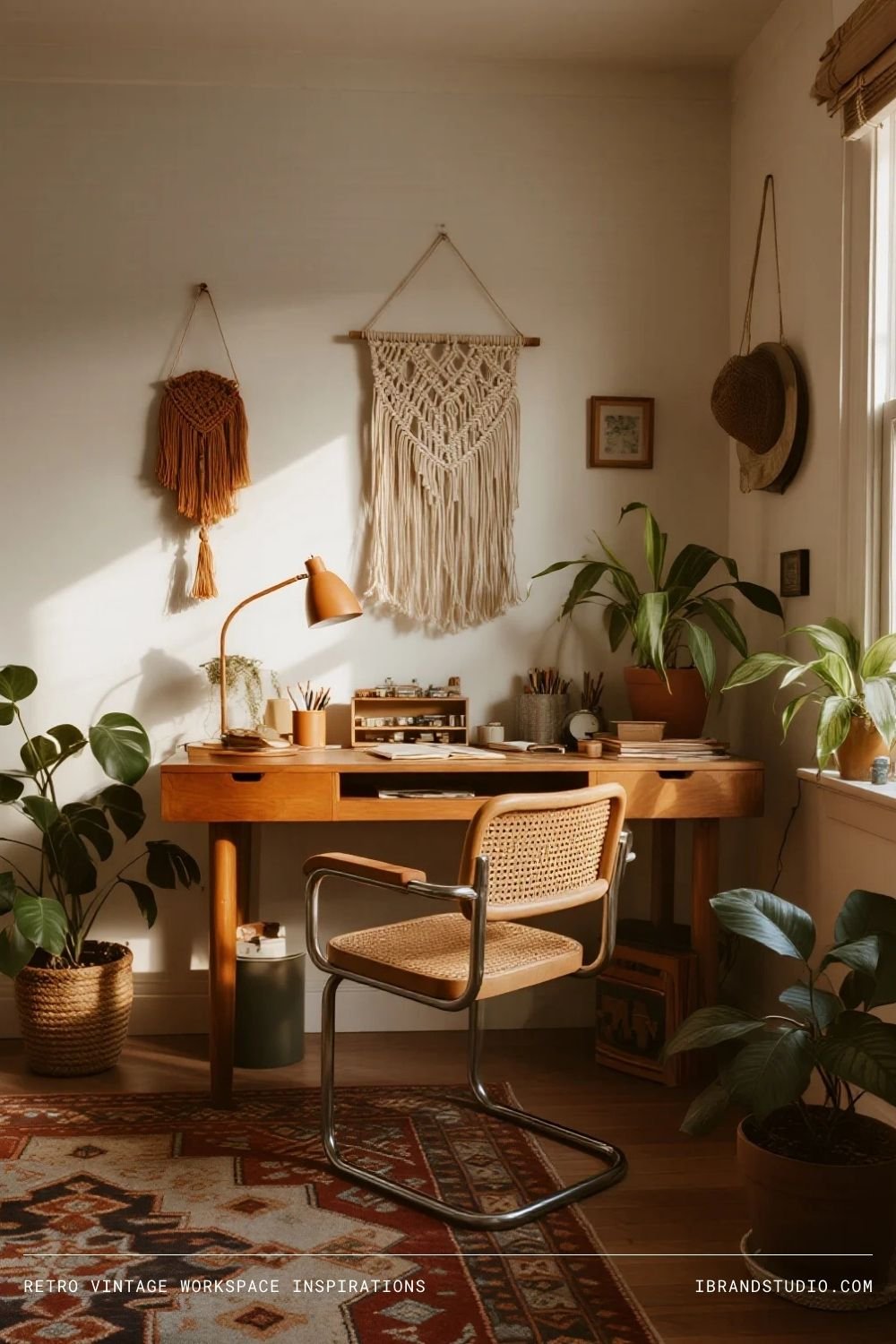
If you want a relaxed, creative feel, a boho vintage workspace inspired by the 1970s is hard to beat.
Key elements:
- Rattan or wicker furniture
- Warm earth tones like rust and mustard
- Patterned rugs and layered textures
- Plants and handmade décor
Productivity tip: Keep one surface clear for actual work so the creativity doesn’t turn into clutter.
4. Art Deco Vintage Office with Glam Appeal
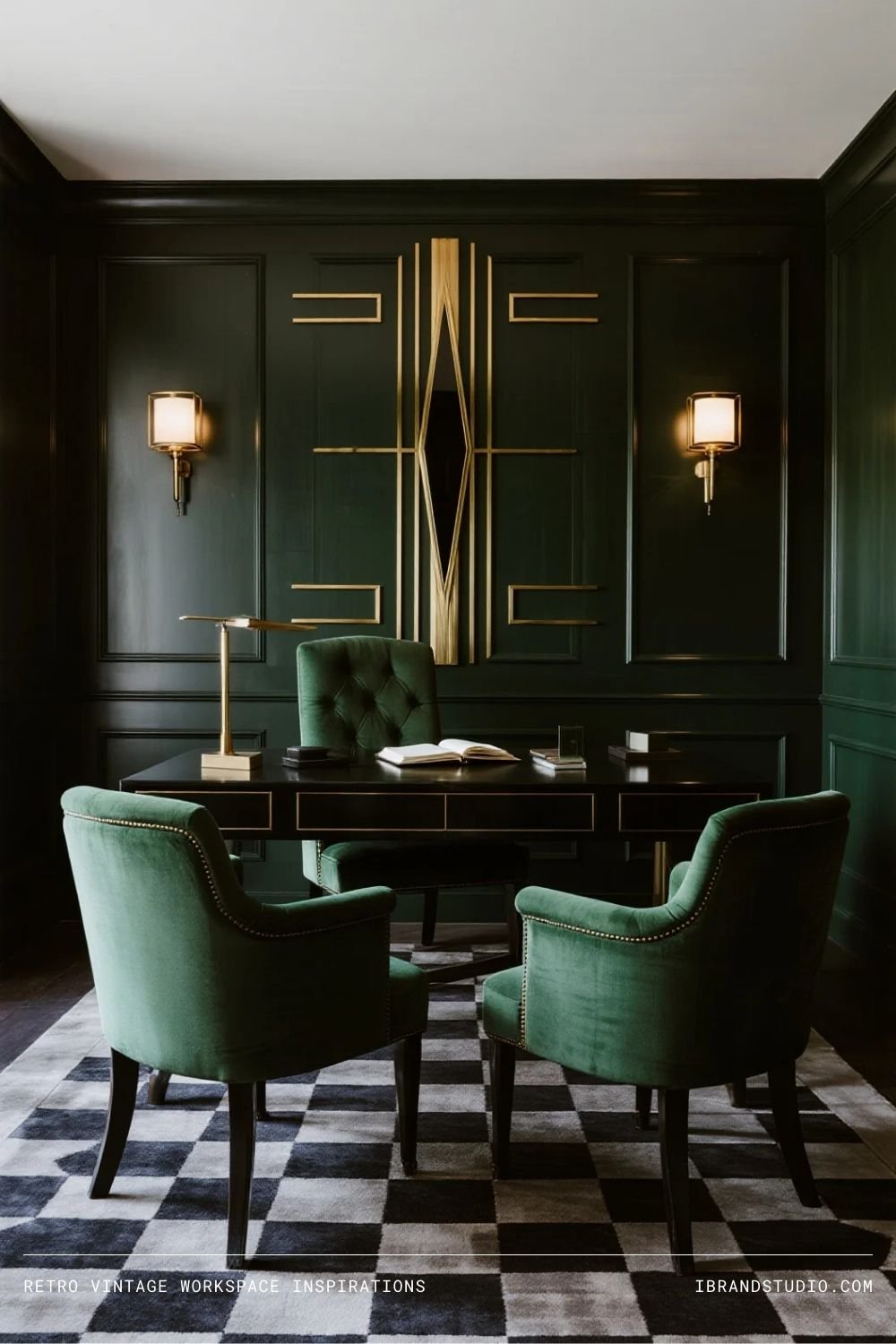
Art Deco brings boldness, structure, and a touch of luxury—perfect for writers who love drama and elegance.
Signature features:
- Dark or glossy desks
- Gold or brass accents
- Velvet seating
- Geometric lighting or décor
Design advice: Choose one statement piece to anchor the room. Too much Art Deco can feel heavy.
5. Rustic Farmhouse Vintage Workspace
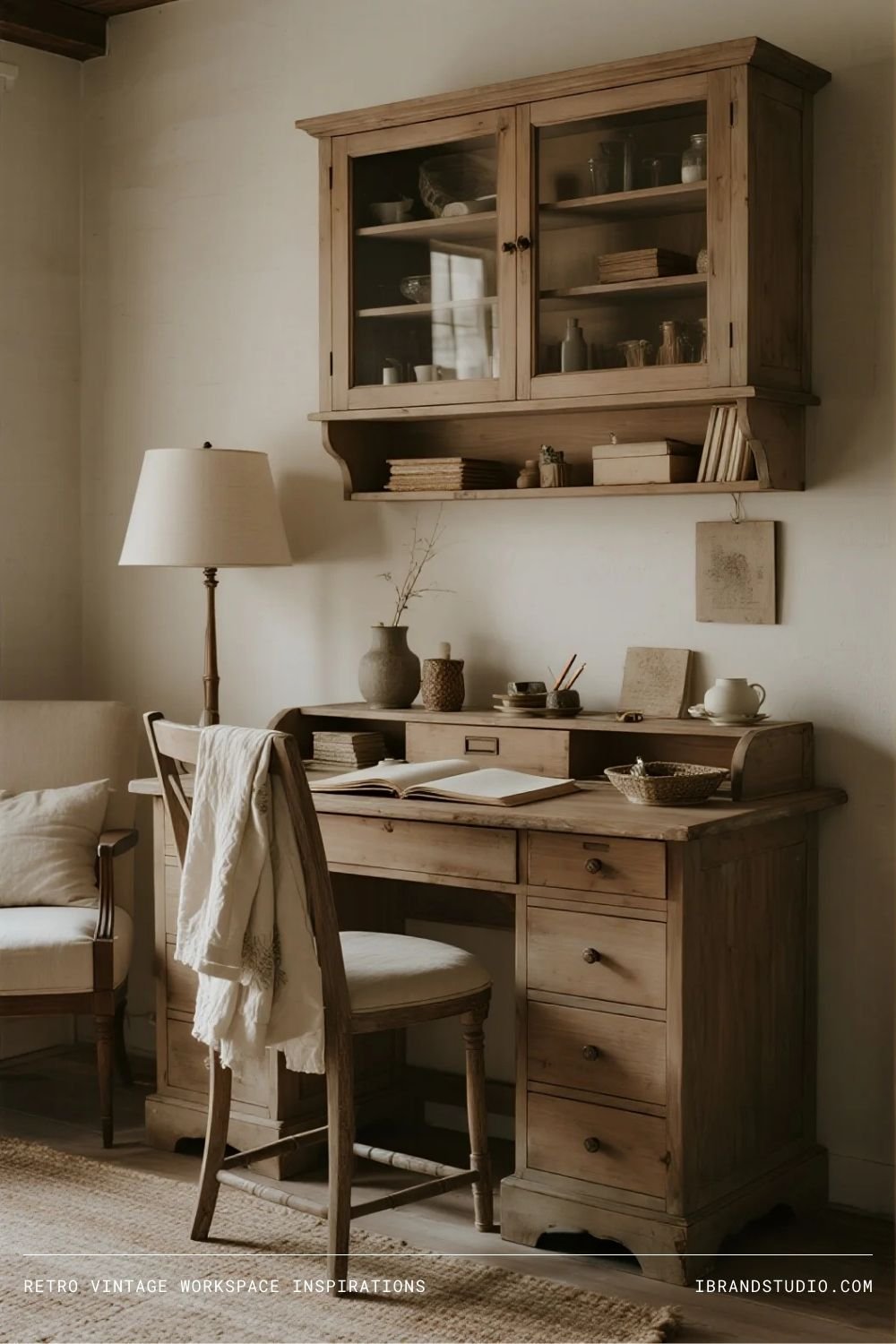
Farmhouse-inspired vintage offices are cozy, grounded, and ideal for long writing sessions.
Style essentials:
- Distressed wood desks
- Antique drawers or crates
- Neutral colors with soft textures
- Warm, practical lighting
This style works especially well for bloggers who write about lifestyle, wellness, or slow living.
6. Retro Industrial Workspace for Creatives
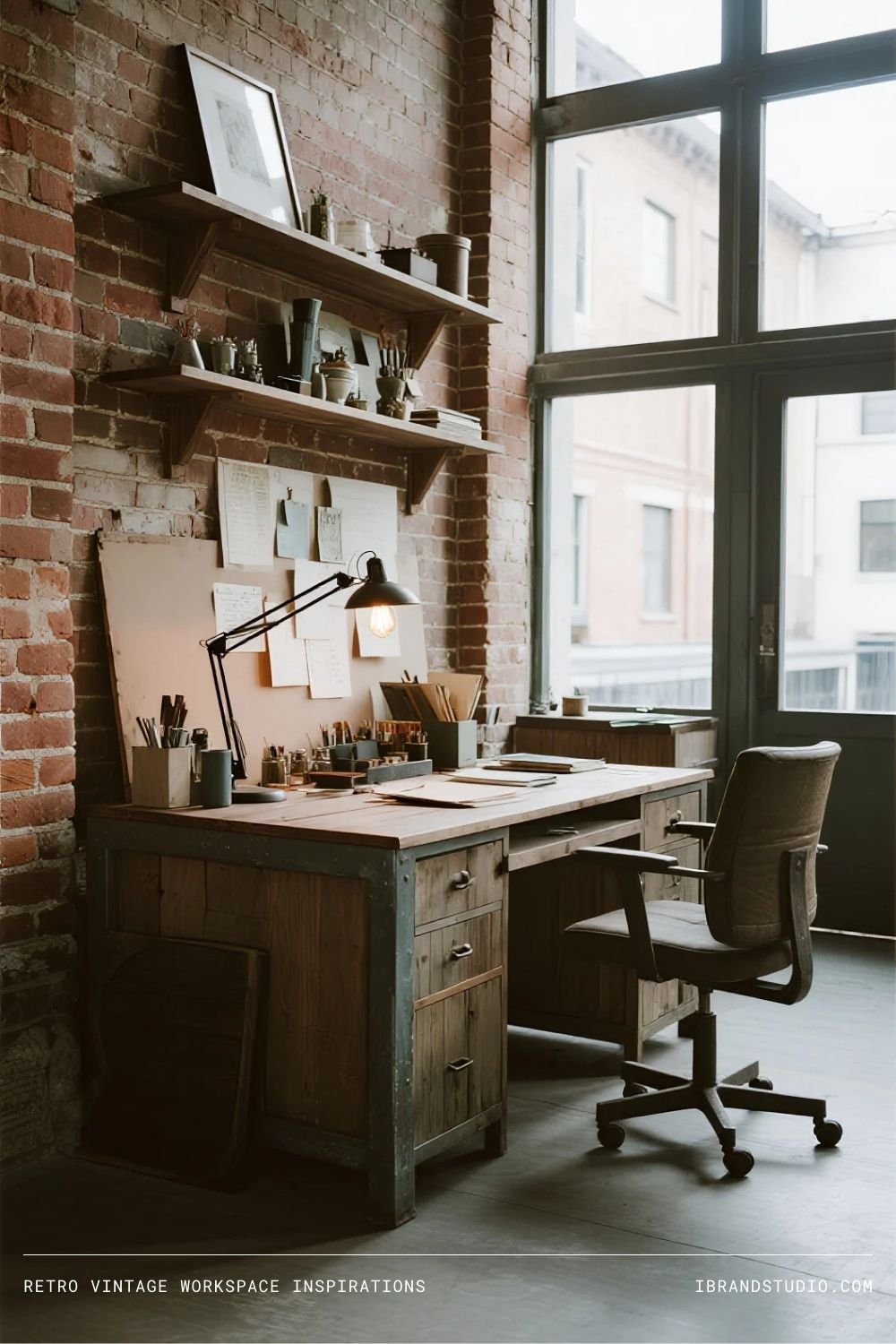
Industrial vintage workspaces blend old-world grit with modern creativity.
Look for:
- Metal and wood desks
- Exposed textures like brick or concrete
- Vintage-style bulbs
- Open shelving
Balance tip: Add warmth with leather, wood, or fabric to keep the space inviting.
7. Old-School Academic Study
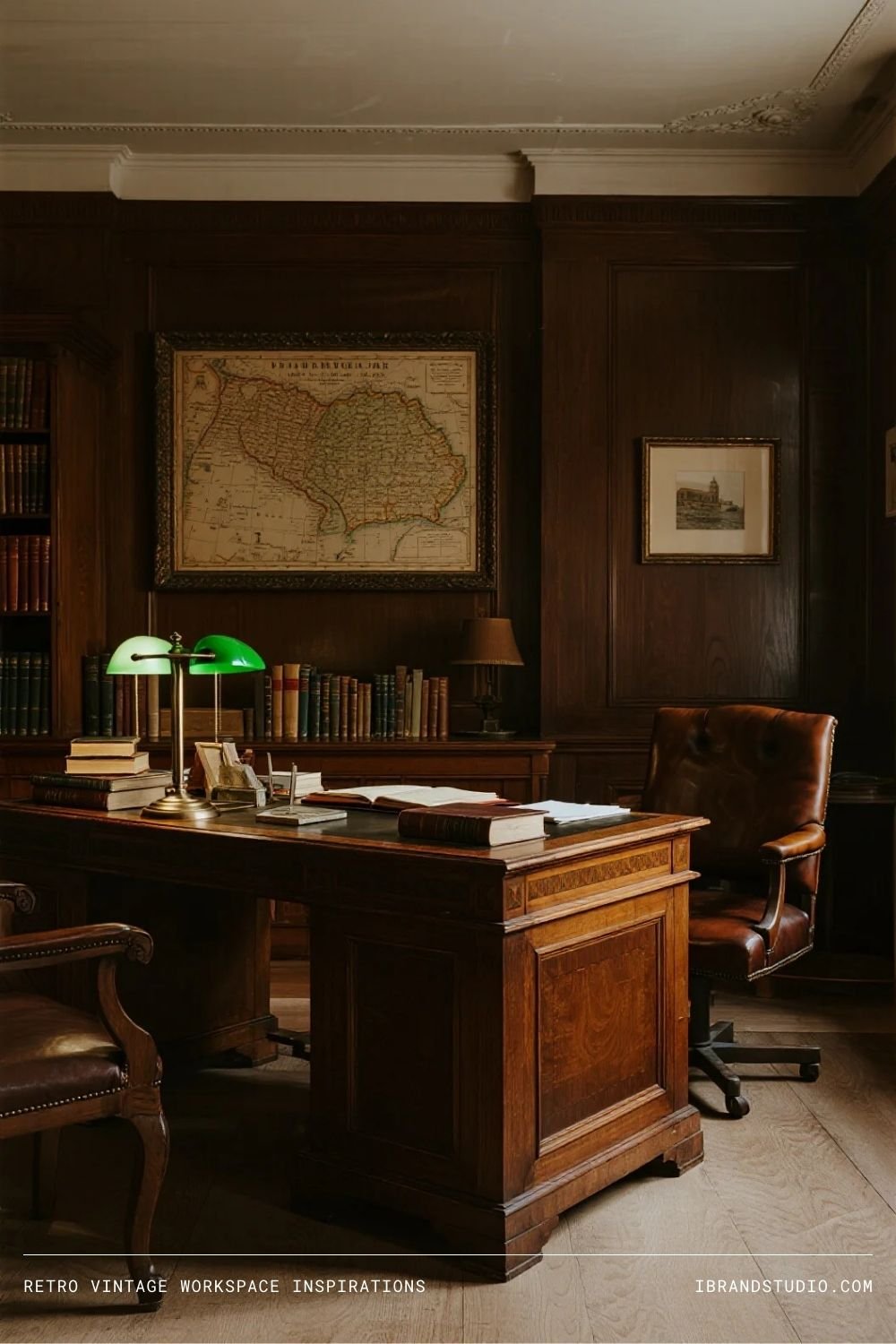
This classic vintage workspace feels like a private library—and it’s perfect for serious writers.
Must-haves:
- Dark wood furniture
- Wall-to-wall bookshelves
- A green banker’s lamp
- Framed art or vintage maps
This setup naturally encourages focus and deep work, especially for long-form writing.
8. Scandinavian Retro Minimalist Workspace
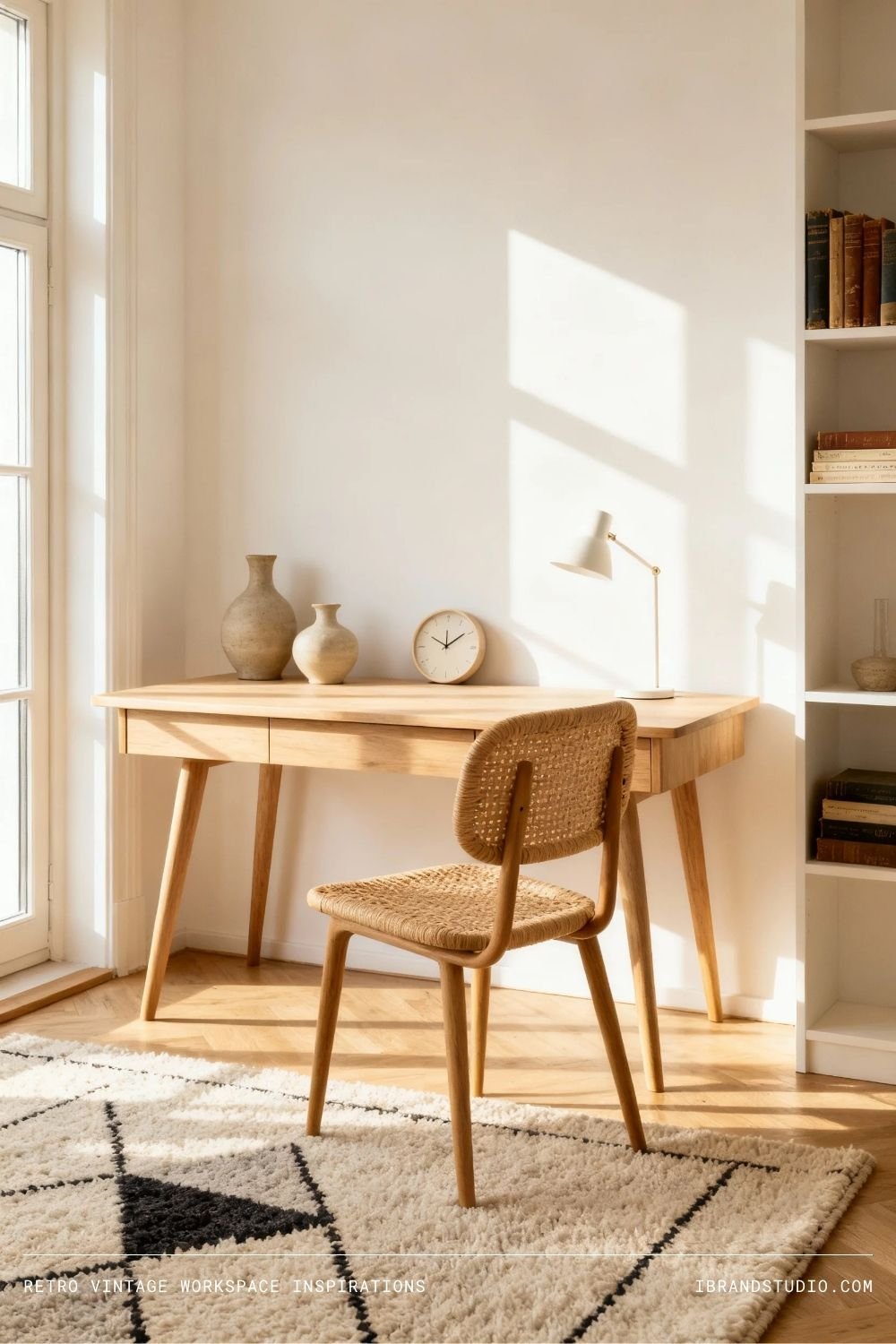
Scandinavian vintage design blends simplicity with warmth, making it ideal for writers who want calm without sterility.
Design features:
- Light wood furniture
- Neutral colors
- Handmade ceramics
- Plenty of natural light
It’s clean, cozy, and highly functional—great for daily blogging routines.
9. Parisian-Inspired Vintage Writing Corner
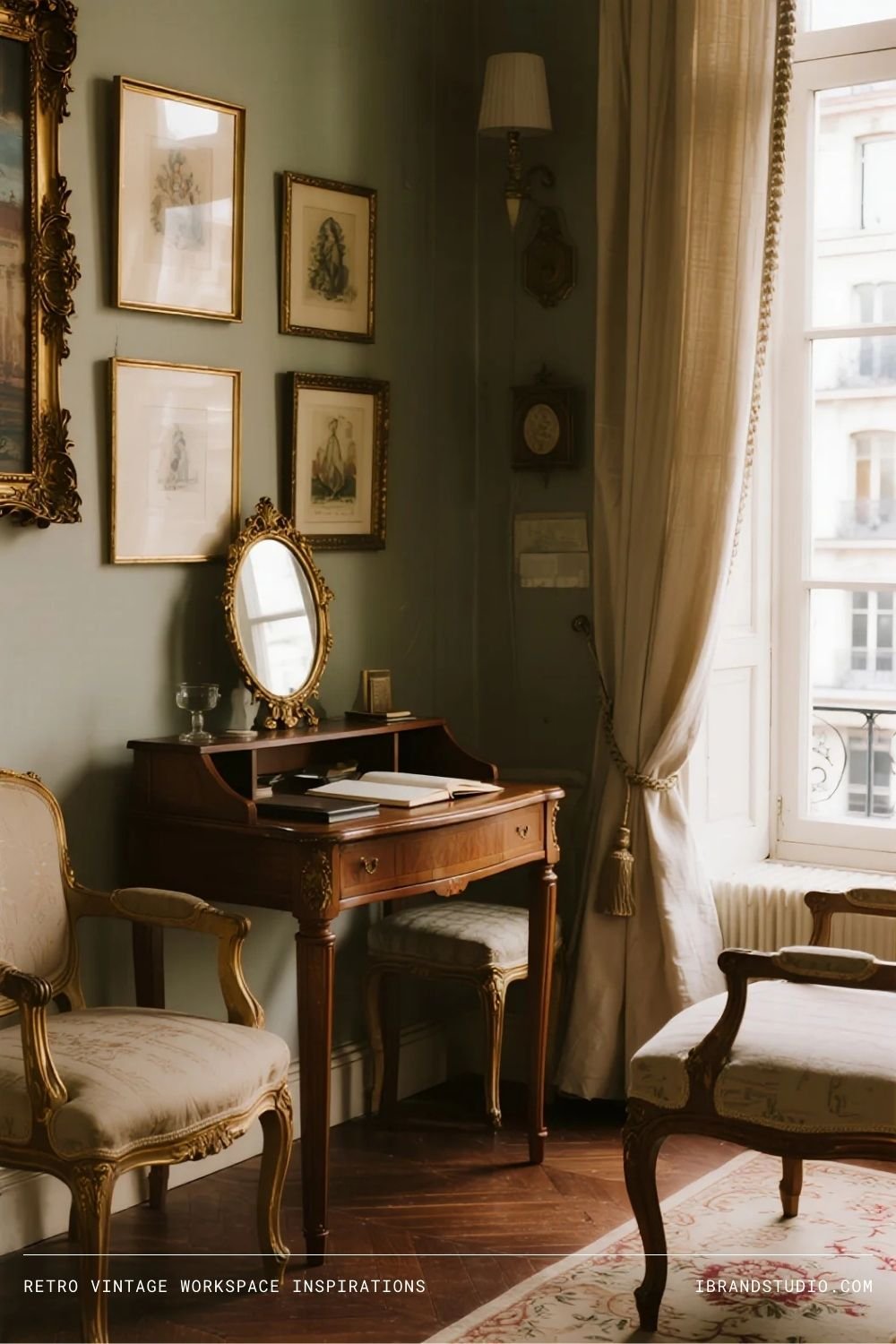
A Parisian vintage workspace feels artistic, romantic, and slightly imperfect—in the best way.
Styling ideas:
- Small antique desk
- Ornate mirror or framed artwork
- Soft curtains or linen fabrics
- Subtle gold accents
This setup is especially appealing for personal bloggers and creatives who value atmosphere.
10. Retro Pop Color Workspace
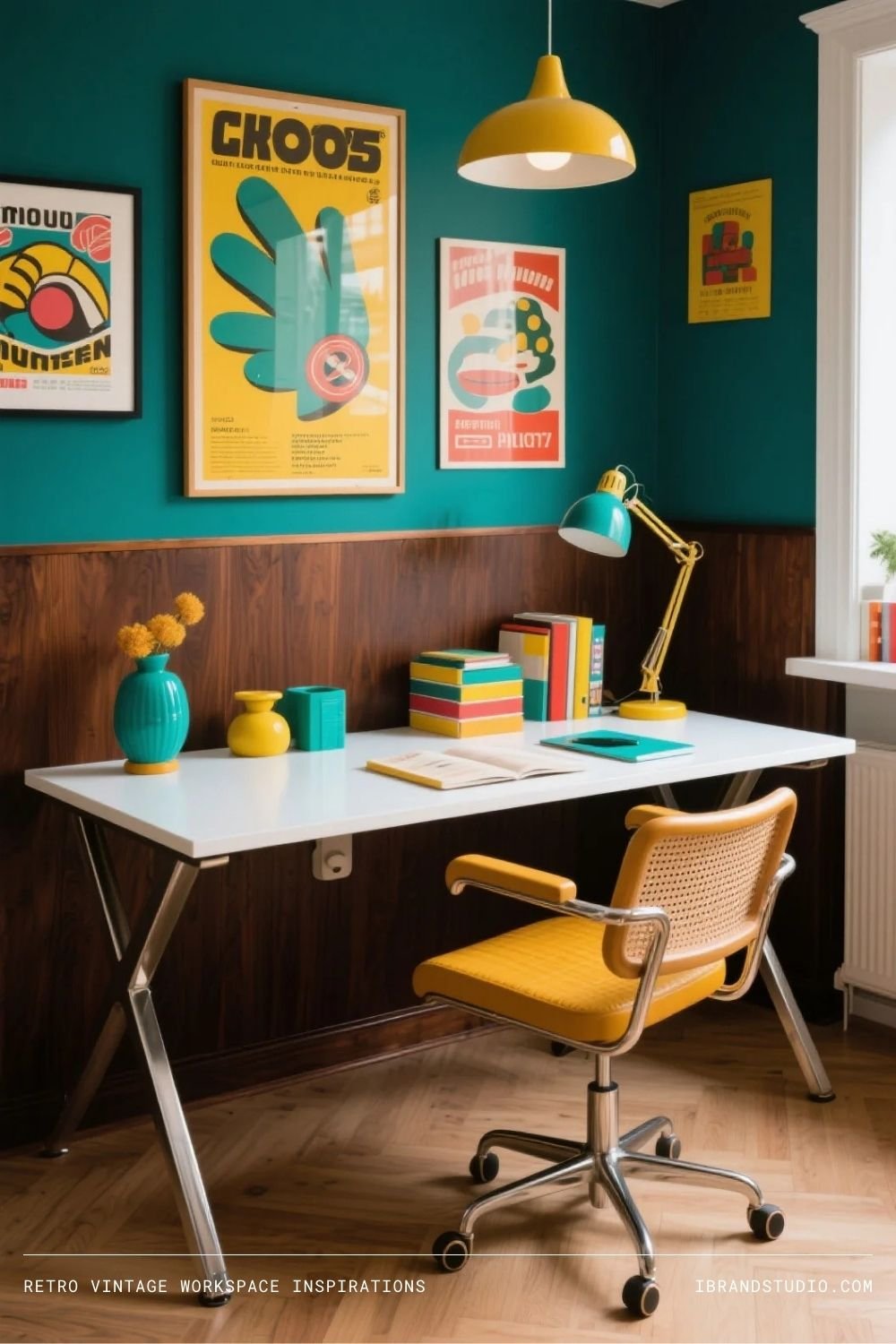
If you love energy and personality, a retro pop workspace inspired by the 1950s and 60s might be your match.
Color ideas:
- Teal, mint, coral, or mustard
- Vintage posters
- Colorful desk accessories
Design tip: Keep your desk neutral so bright colors don’t interfere with focus.
11. Vintage Travel-Inspired Workspace
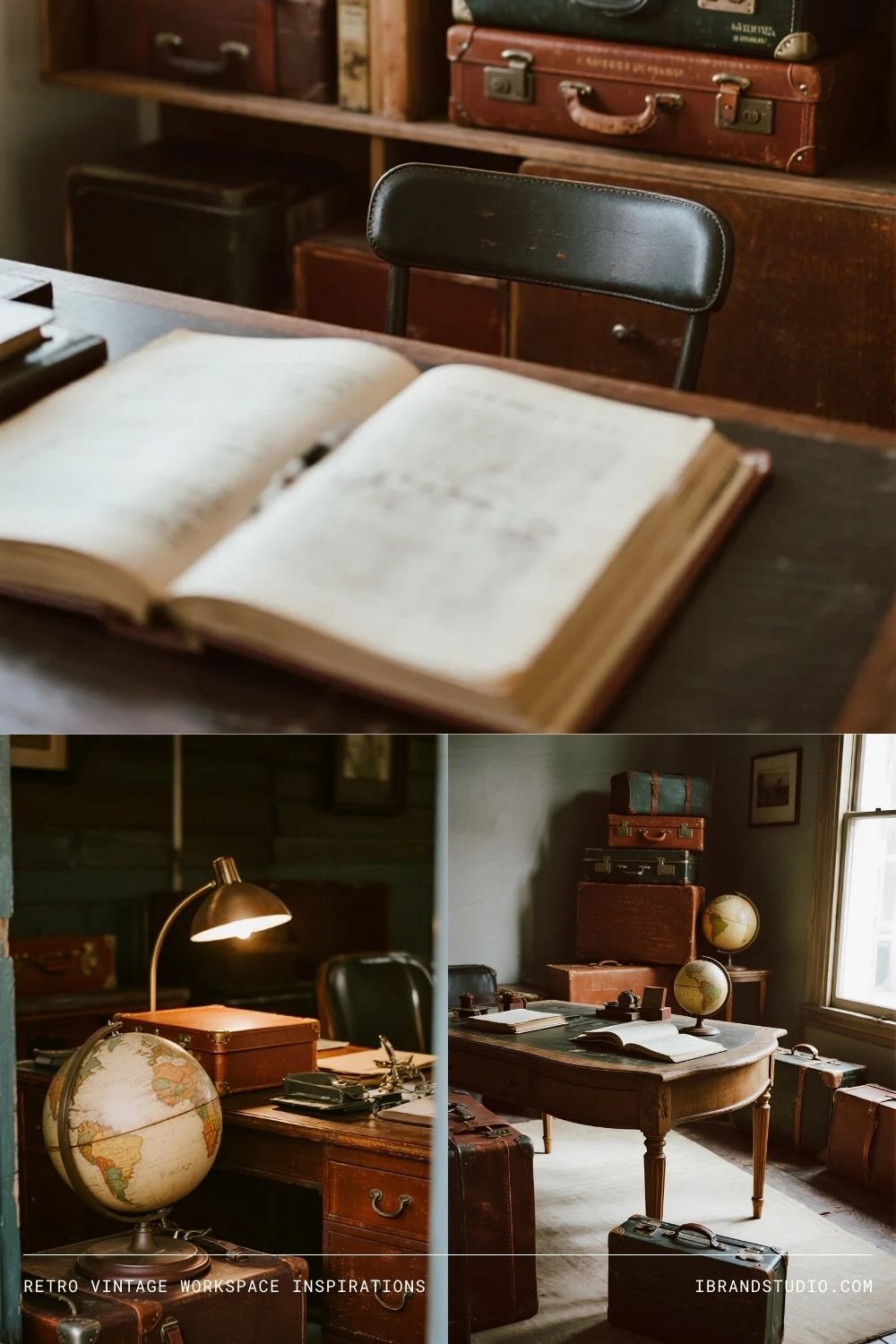
Travel bloggers and storytellers often thrive in spaces that spark curiosity.
Design elements:
- Old globes or maps
- Vintage suitcases
- Leather accents
- Weathered wood furniture
This workspace style reinforces storytelling and works beautifully for personal brands.
12. Eclectic Retro Vintage Workspace
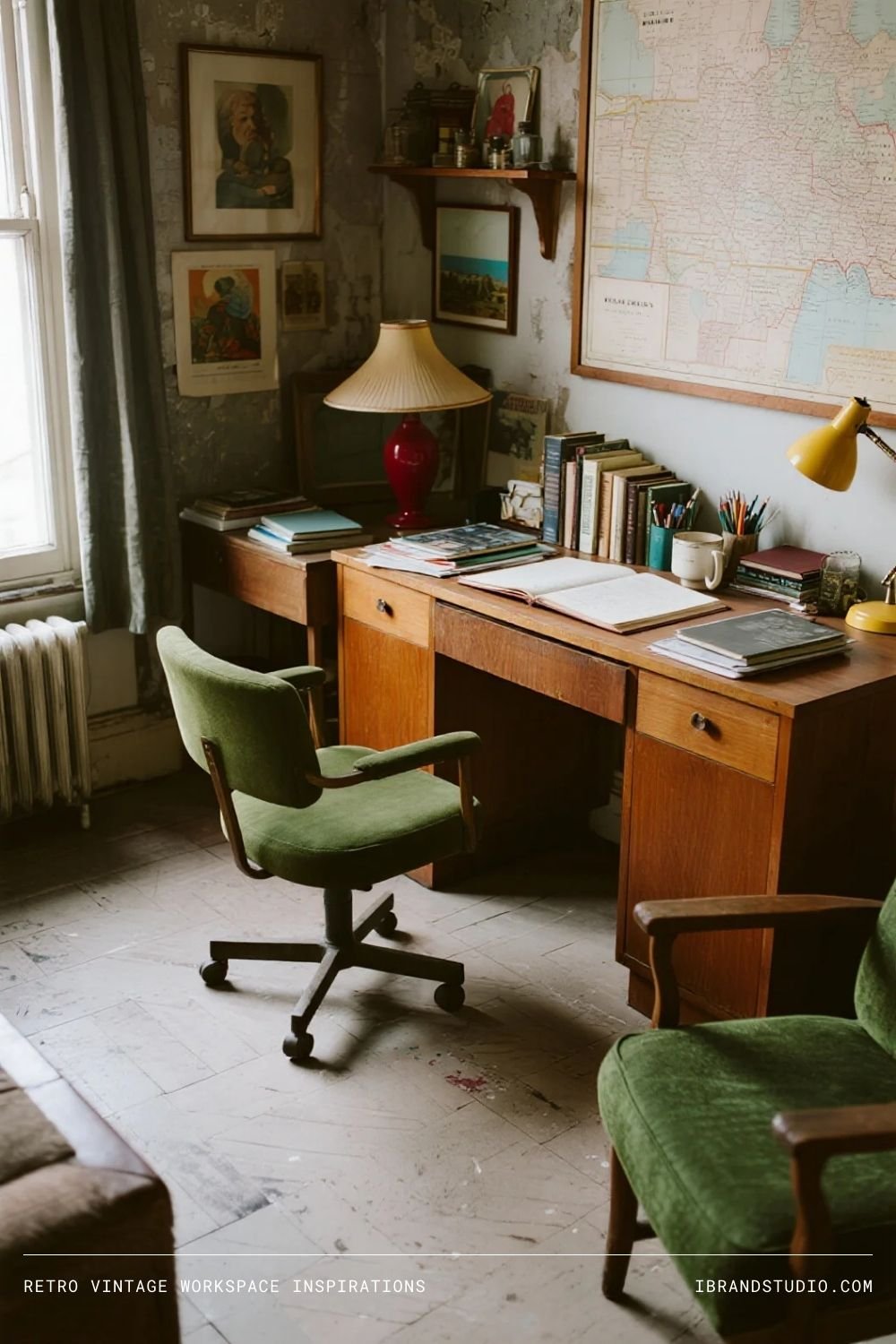
If you love multiple eras, an eclectic vintage workspace lets you mix styles without rules—almost.
How to keep it cohesive:
- Stick to a consistent color palette
- Mix eras intentionally
- Let one main piece anchor the room
When done well, eclectic vintage offices feel personal and deeply creative.
How to Build a Retro Vintage Workspace on a Budget
You don’t need rare antiques or designer furniture to create a great vintage workspace.
Smart budget tips:
- Thrift stores and flea markets are your best friends
- Repurpose furniture with paint or hardware
- Mix authentic vintage with quality reproductions
- Focus on materials and texture over perfection
The goal is character, not museum-level authenticity.
Final Thoughts: Create a Workspace That Inspires You to Write
A retro vintage workspace isn’t just about aesthetics—it’s about how you feel when you sit down to work.
When your space feels meaningful and comfortable, writing becomes easier and more enjoyable.
Choose pieces that resonate with your personality. Let your workspace evolve naturally. And don’t aim for perfection—aim for inspiration. Your creativity deserves a space with history, warmth, and heart.