
Industrial Automation Integration: Systems, Benefits, and Best Practices
Industrial automation integration can turn a collection of disconnected machines into one smarter, more efficient operation. But when systems refuse to communicate, legacy equipment starts causing headaches, and nobody can see what happens across the production floor, automation quickly becomes more complicated than it needs to be.
That’s where industrial automation integration comes in.
I’ve always found the most interesting part of automation isn’t a single robot, PLC, or control panel. It’s the way everything works together. A well-integrated system can help a business optimize processes, improve machine safety, increase product quality, reduce operational risk, and gain better insights from its data.
For example, Pacific Blue Engineering works as a control system integrator that delivers tailored automation solutions for industries including manufacturing, food and beverage, life sciences, entertainment, and transportation. Their expertise helps businesses modernize legacy controls, improve machine safety, enhance product quality, reduce risk, and gain valuable operational insights through advanced systems engineering and automation technologies. That kind of tailored approach matters because no two facilities operate exactly the same way.
So, what does industrial automation integration actually involve? Which systems need to work together? And how can businesses avoid spending a fortune on technology that creates more complexity than value?
Let’s break it down.
What Is Industrial Automation Integration?
Industrial automation integration connects machines, control systems, software, sensors, networks, and data platforms so they can work together as one coordinated operation.
Instead of forcing operators to jump between disconnected systems, integration creates communication between different technologies. A PLC can communicate with a supervisory control and data acquisition system. Sensors can send information to a manufacturing execution system. Business leaders can access production data through dashboards.
That connection creates a much clearer picture of what happens across the operation.
A typical industrial automation integration project might connect:
- Programmable logic controllers (PLCs)
- Human-machine interfaces (HMIs)
- SCADA systems
- Industrial robots
- Sensors and instrumentation
- Variable frequency drives
- Safety systems
- Manufacturing execution systems (MES)
- Enterprise resource planning (ERP) platforms
- Industrial networks and cloud platforms
Ever wondered why one machine can run perfectly while the overall production line still struggles? Disconnected systems often create the answer.
When equipment works in isolation, teams lose visibility. Operators might not see the real cause of a problem until production stops. Managers might receive data hours later. Maintenance teams might rely on guesswork instead of actual equipment performance data.
Industrial control system integration connects those gaps.
The Main Systems Involved in Automation Integration
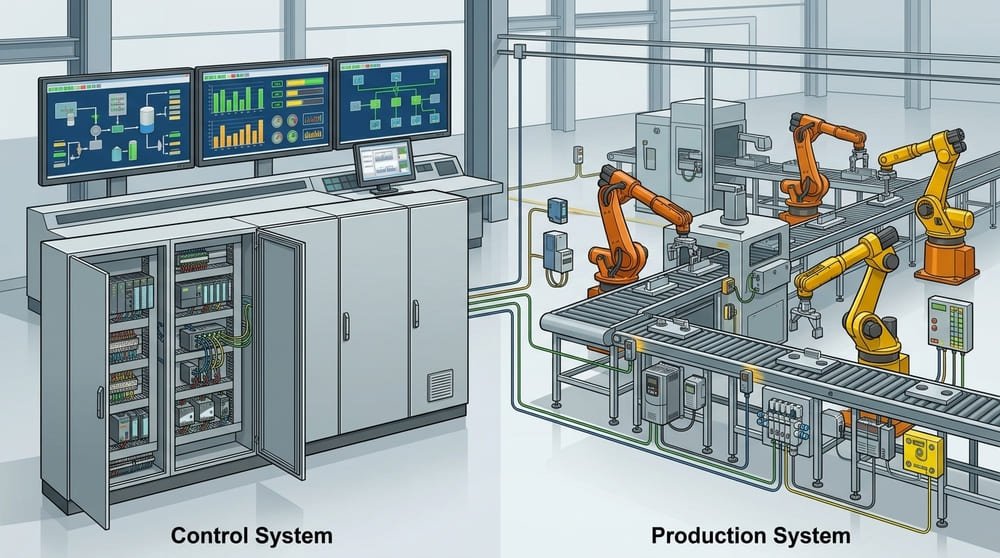
Industrial automation integration involves several layers of technology. Each layer performs a different job, but the real value comes from making those layers communicate effectively.
PLCs and Control Systems
PLCs sit at the heart of many industrial automation environments. They monitor inputs, process logic, and control equipment.
A PLC might control:
- Conveyor systems
- Pumps
- Motors
- Valves
- Packaging equipment
- Temperature systems
- Production machinery
However, a PLC alone cannot provide complete operational visibility. Integration connects the PLC to HMIs, SCADA platforms, databases, safety systems, and other technologies.
The goal involves more than controlling a machine. The goal involves creating a connected control environment.
HMIs and SCADA Systems
HMIs give operators a visual way to interact with machines and processes. SCADA system integration provide broader monitoring and supervisory control across multiple pieces of equipment or entire facilities.
A strong integration strategy can help operators:
- Monitor equipment performance
- View alarms
- Track production data
- Adjust operating parameters
- Identify abnormal conditions
- Respond to problems faster
Nobody wants an operator to stare at five different screens while trying to figure out which machine caused a production issue. That setup might work in a sci-fi movie, but it rarely works well on a busy factory floor.
Industrial Networks and Communication Protocols
Industrial automation systems rely on communication networks to exchange data.
Common technologies and protocols include:
- Ethernet/IP
- Modbus TCP and RTU
- PROFINET
- OPC UA
- EtherCAT
- DeviceNet in legacy environments
The right communication architecture depends on the equipment, operating environment, security requirements, and future expansion plans.
A good integrator does not simply connect everything because a connection exists. They design the communication architecture around the business need.
Safety and Machine Protection Systems
Machine safety deserves special attention during automation integration. Safety systems can include emergency stops, light curtains, safety scanners, interlocks, safety relays, and safety PLCs.
When engineers integrate safety systems correctly, businesses can protect employees while maintaining efficient machine operation.
A poorly planned safety system can create unnecessary downtime. A poorly maintained system can create serious risks. The best approach balances worker protection, regulatory requirements, machine performance, and operational efficiency.
The Benefits of Industrial Automation Integration
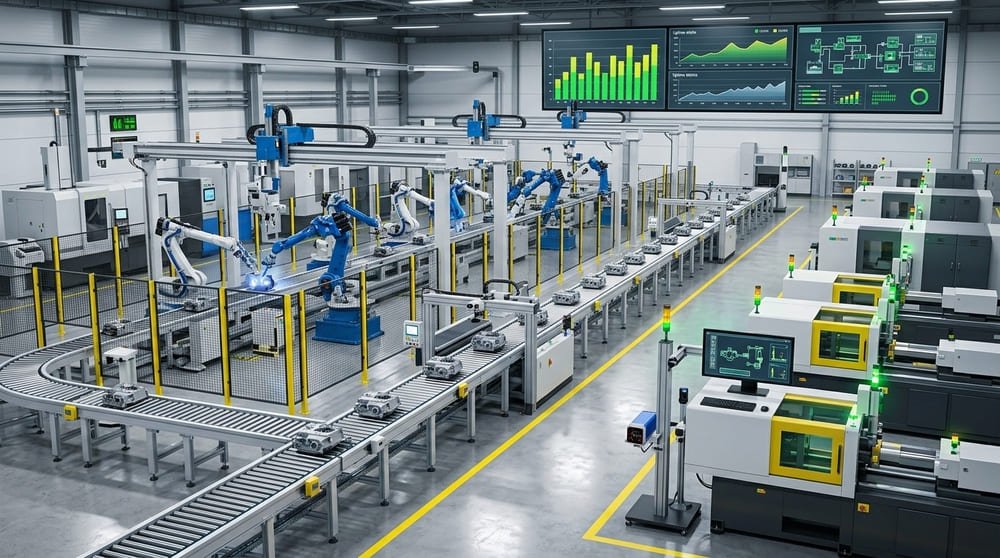
Why should a business invest in industrial automation integration instead of simply replacing individual machines whenever something breaks?
Because integration can create benefits across the entire operation.
1. Better Operational Efficiency
Integrated systems can reduce manual data entry and eliminate unnecessary steps between processes.
For example, a production system might automatically share information between an order management platform and a manufacturing system. The production team can receive accurate information without manually entering the same data multiple times.
That saves time and reduces errors.
Automation integration can help businesses produce more while using fewer manual resources for repetitive tasks.
2. Improved Visibility and Data Access
Data becomes far more useful when the right people can access it at the right time.
An integrated automation system can provide information about:
- Production rates
- Equipment status
- Downtime
- Energy consumption
- Quality performance
- Maintenance requirements
- Alarm history
This information helps teams make better decisions.
Instead of asking, “Why did production slow down yesterday?” managers can examine actual data and identify patterns. That shift from guessing to analyzing can make a significant difference.
3. Easier Legacy System Modernization
Many industrial facilities still rely on equipment that performs well but uses outdated controls.
Replacing everything might sound simple, but it often creates huge costs, long installation periods, and unnecessary disruption.
Control system integration can modernize legacy equipment without forcing a business to replace every machine at once.
An integrator can often connect older equipment with newer control platforms, communication networks, HMIs, and data systems.
This approach can extend the useful life of existing assets while creating a path toward future upgrades.
IMO, this often makes more financial sense than throwing away perfectly functional equipment just because its control system looks like it came from another decade.
4. Enhanced Product Quality
Automation integration can improve consistency across production processes.
Integrated systems can monitor important parameters such as:
- Temperature
- Pressure
- Speed
- Flow
- Weight
- Timing
- Material usage
When the system detects a deviation, operators can respond faster.
Businesses can also use historical production data to identify recurring quality problems. That information helps teams address root causes instead of repeatedly fixing the same symptoms.
5. Stronger Machine Safety
Integrated automation systems can improve how machines respond to hazardous conditions.
For example, a safety system might detect an unsafe condition and trigger a controlled shutdown. The system can also send alerts to operators or maintenance personnel.
Safety integration should form part of the original system design rather than serve as an afterthought.
Why? Because adding safety features after installation often creates unnecessary complexity. A thoughtful design from the beginning usually produces a cleaner and more effective solution.
6. Reduced Operational Risk
Industrial operations face many risks, including equipment failure, cybersecurity threats, human error, poor visibility, and outdated technology.
Automation integration helps reduce some of these risks by creating:
- Better system monitoring
- More reliable data
- Improved alarm management
- Stronger control over processes
- Better documentation
- More consistent operating procedures
Of course, automation cannot eliminate every risk. Anyone promising that probably also sells magic beans. But a well-designed system can make risks easier to identify and manage.
Common Challenges in Industrial Automation Integration
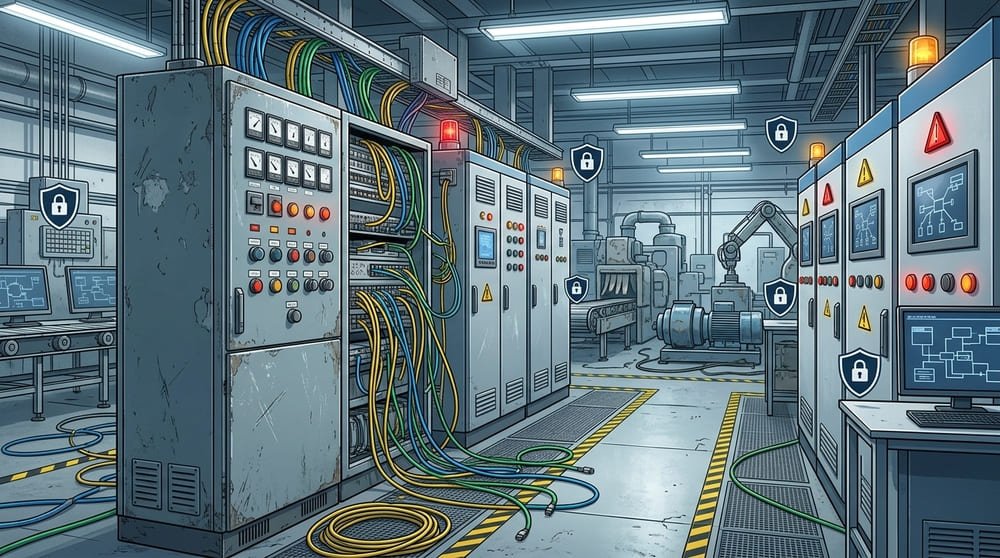
Automation integration offers plenty of benefits, but businesses should not underestimate the challenges.
Legacy Equipment and Compatibility Issues
Older equipment might use outdated protocols or proprietary systems. New equipment might rely on modern Ethernet-based communication.
Getting these systems to communicate can require gateways, protocol converters, custom programming, or hardware upgrades.
Compatibility should remain a major consideration during the planning stage.
Poor Documentation
Some facilities lack accurate documentation for existing control systems.
Engineers may need to investigate:
- Existing PLC programs
- Network connections
- Electrical drawings
- Control panels
- Machine sequences
- Safety circuits
Without accurate information, integration projects can take longer and cost more.
Cybersecurity Concerns
Connecting industrial systems creates new communication pathways. Businesses must protect those pathways.
Important cybersecurity practices include:
- Network segmentation
- Access controls
- Strong authentication
- Regular software updates
- Secure remote access
- Backup and recovery planning
- Monitoring for suspicious activity
Industrial cybersecurity should form part of the integration strategy from the beginning.
Change Management
Even the best automation system can struggle if employees do not understand how to use it.
Operators and maintenance teams need proper training. They also need clear documentation and practical support.
After all, what good does a beautiful new HMI provide if nobody knows which button to press? Exactly.
Best Practices for Successful Automation Integration
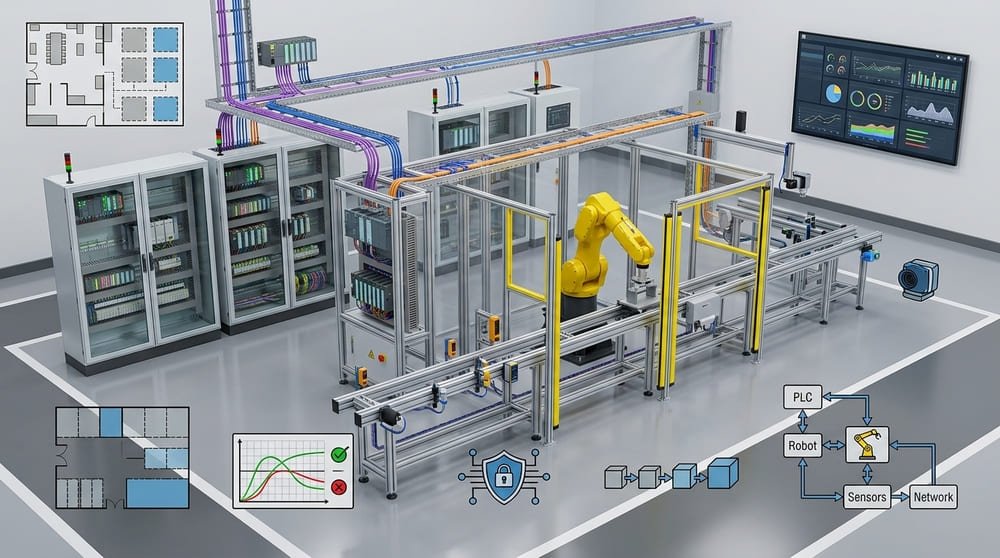
A successful project requires more than selecting the newest technology.
Start With Business Goals
Before choosing hardware or software, identify the actual business problem.
Ask questions such as:
- What process creates the biggest bottleneck?
- Where does downtime cost the most money?
- Which manual tasks create the most errors?
- What data do managers currently lack?
- Which legacy systems create the greatest risk?
Technology should support the business goal, not become the goal itself.
Create a Clear System Architecture
A well-planned architecture defines how systems connect and exchange information.
The design should consider:
- Control levels
- Network structure
- Data flow
- Cybersecurity
- Scalability
- Redundancy
- Maintenance requirements
A clear architecture makes future expansion easier.
Design for Scalability
Businesses rarely remain the same size forever.
A system that works today might struggle after a new production line, facility, or data platform arrives. Smart integration planning leaves room for expansion.
Scalable automation reduces the need for expensive redesigns later.
Prioritize Data Quality
More data does not automatically create better decisions.
Businesses should focus on collecting accurate, relevant, and useful data. Teams should also decide who needs access to that information and how they will use it.
A dashboard with 400 metrics might look impressive, but most people probably need fewer than 20 to make a useful decision.
Test Before Full Deployment
Testing helps identify problems before they affect production.
A strong testing process can include:
- System design reviews
- Factory acceptance testing
- Software testing
- Network testing
- Safety validation
- Site acceptance testing
- Operator training
Testing protects the project from expensive surprises during startup.
Choose the Right Integration Partner
The right control system integrator brings more than programming skills.
Look for experience with:
- Your industry
- Your existing equipment
- Your required control platforms
- Machine safety
- Industrial networks
- Data systems
- Legacy modernization
A good integrator should also listen carefully.
Why? Because the people who operate the equipment every day often understand problems that never appear in a project specification.
How Industrial Automation Integration Supports the Future
Industrial automation integration continues to evolve as businesses adopt more connected technologies.
Modern systems increasingly combine automation with:
- Industrial Internet of Things (IIoT) devices
- Cloud platforms
- Artificial intelligence
- Machine learning
- Predictive maintenance
- Digital twins
- Advanced analytics
These technologies can help businesses identify patterns, predict equipment problems, and improve decision-making.
However, businesses should avoid chasing every new technology simply because it sounds impressive.
The best automation strategy combines proven systems with carefully selected emerging technologies.
That balance matters. A flashy technology that solves no real problem wastes money. A practical upgrade that improves safety, efficiency, or visibility can create lasting value.
Final Thoughts on Industrial Automation Integration
Industrial automation integration connects the systems that keep modern operations moving. By bringing together PLCs, HMIs, SCADA platforms, safety systems, industrial networks, production equipment, and business software, companies can create more efficient and connected operations.
The biggest benefits often include:
- Improved operational efficiency
- Better production visibility
- Legacy control modernization
- Enhanced product quality
- Stronger machine safety
- Reduced operational risk
- Better use of industrial data
The best projects start with clear business goals, thoughtful system architecture, strong cybersecurity, scalable technology, proper testing, and the right integration partner.
So, before you start buying new equipment, ask yourself one simple question: Will this technology work better alone, or will it create more value when it connects with everything else?
That question can shape the entire success of an automation project.
And honestly, when your machines, data, people, and systems finally start communicating properly, the production floor feels a lot less like a collection of stubborn gadgets and a lot more like one intelligent operation.