
Influencer Marketing in Beauty Industry: What Actually Works Today
Influencer marketing in the beauty industry has become one of the main ways brands reach and influence consumers.
Traditional advertising still exists, but much of the attention has shifted toward creators who demonstrate products, share routines, and build trust with their audiences.
For many consumers, especially younger ones, product discovery now happens through social media rather than through ads.
The beauty category is particularly suited to influencer marketing. Products are visual, results can be shown directly, and consumers often look for opinions before making a purchase.
This creates an environment where content from creators can influence both awareness and buying decisions.
Why Influencer Marketing Dominates the Beauty Industry
Influencer marketing has a stronger impact in beauty than in many other industries. This is largely due to how consumers evaluate products and the role content plays in their decision-making process.
Shift From Traditional Ads to Creator-Led Content
Consumers have become less responsive to traditional advertising formats. Instead, they rely more on content created by individuals they follow and trust.
- Ads are often skipped or ignored
- Creator content feels more natural and relatable
- Recommendations come across as more credible
This shift has made influencer marketing a central part of how beauty brands communicate with their audience.
The Role of Trust and Authenticity in Beauty
Trust is a key factor in beauty purchasing decisions. Consumers want to know how products perform in real situations before buying.
- Reviews and demonstrations reduce uncertainty
- Honest opinions influence perception
- Consistent creators build long-term credibility
Without trust, even well-known brands can struggle to convert attention into sales.
How Social Media Drives Product Discovery
Social platforms are now one of the main discovery channels for beauty products.
- Users discover new products through feeds and recommendations
- Short-form videos highlight results quickly
- Trends and viral content can accelerate visibility
This makes social media, combined with influencer content, a powerful driver of both awareness and demand.
How Influencer Marketing Works in the Beauty Industry
Influencer marketing in beauty follows a pattern that aligns closely with how consumers move from discovery to purchase. Understanding this process helps brands structure campaigns more effectively.
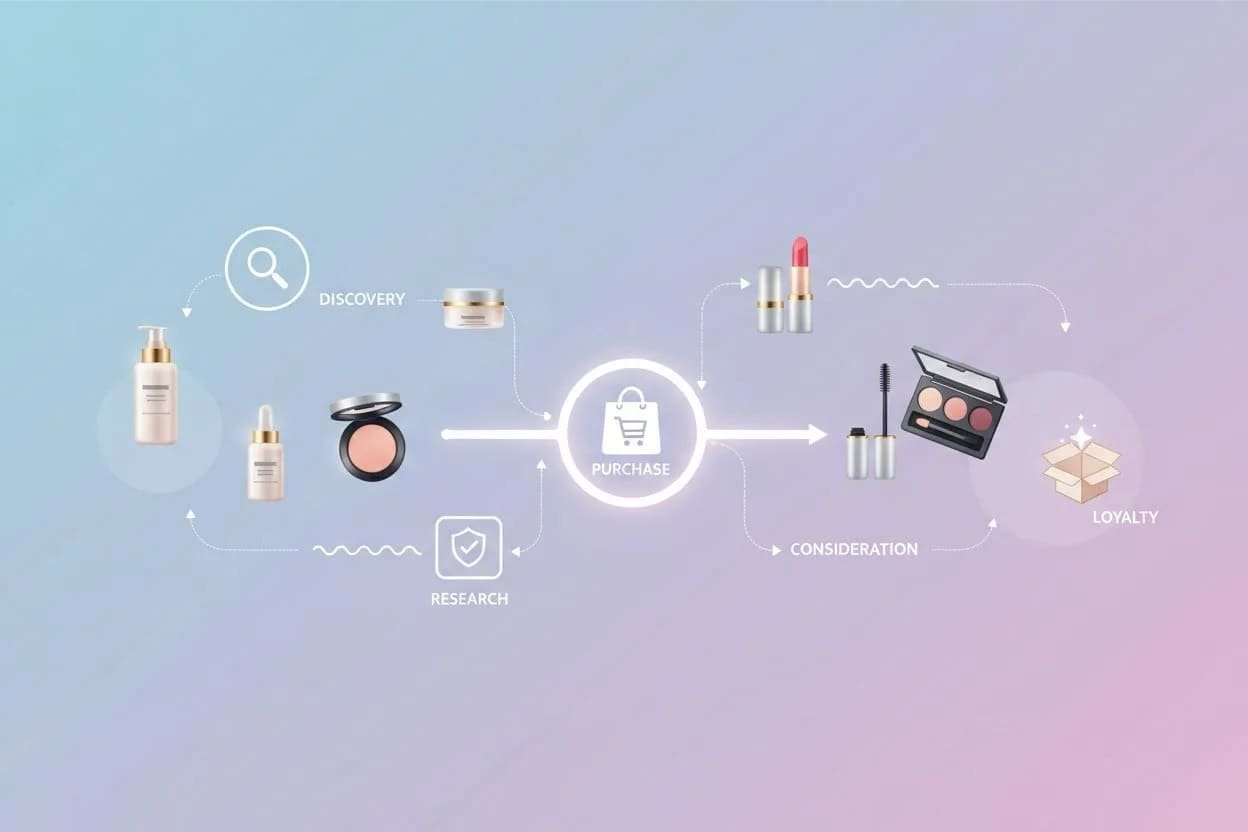
The Beauty Consumer Journey (Discovery to Purchase)
The journey usually begins with discovery and moves through several stages.
- Discovery through social media or influencer content
- Research through reviews, tutorials, and comparisons
- Decision based on trust, price, and perceived results
Influencers often play a role at each stage, not just at the point of purchase.
Why Demonstration Content Converts Better
One of the reasons influencer marketing works so well in beauty is the ability to show results.
- Before-and-after comparisons
- Application tutorials
- Real-time product use
This type of content helps consumers understand what to expect, making it easier to decide.
The Power of Repetition and Familiarity
Repeated exposure plays an important role in influencing decisions.
- Seeing a product multiple times builds familiarity
- Different creators reinforce the same message
- Consistent presence increases trust over time
Rather than relying on a single post, many successful campaigns focus on repeated exposure across multiple creators and formats.
Types of Beauty Influencers Brands Work With
Not all beauty influencers serve the same purpose. Different creator types influence different audiences and stages of the buying process.
Understanding these categories helps brands choose the right mix for their campaigns.
Makeup Influencers and Tutorial Creators
Makeup influencers are among the most visible in the beauty space. Their content focuses on product application and visual results.
- Tutorials showing step-by-step application
- Product reviews and comparisons
- Trend-based looks and styles
These creators are effective for showcasing color products and driving interest through visual transformation.
Skincare Experts and “Skinfluencers”
Skincare creators focus more on routines, consistency, and long-term results.
- Daily or weekly skincare routines
- Product layering and ingredient combinations
- Progress-based content over time
Their content tends to build trust gradually, making them effective for products that require continued use.
Dermatologists and Credibility-Based Creators
Medical professionals and experts bring a different level of authority.
- Ingredient analysis and product breakdowns
- Professional opinions on effectiveness
- Educational content focused on skin health
These creators are especially important for brands that want to position themselves as reliable and science-based.
Lifestyle and Everyday Beauty Creators
Lifestyle influencers integrate beauty products into their daily content.
- Casual product mentions within routines
- “Get ready with me” formats
- Real-life use cases
This type of content feels less promotional and often resonates with broader audiences.
Micro vs Macro Influencers in Beauty Marketing
Choosing between different influencer sizes is a common decision for beauty brands. Each tier offers different advantages depending on campaign goals.
When to Use Micro Influencers
Micro influencers typically have smaller but more engaged audiences.
- Higher engagement rates
- More niche and targeted communities
- Lower cost per collaboration
They are often used for building trust, testing products, and creating a large volume of content.
When to Use Macro and Celebrity Influencers
Macro influencers and celebrities provide wider reach.
- Larger audience exposure
- Faster awareness at scale
- Strong visibility for product launches
However, engagement rates are often lower compared to smaller creators.
Combining Both for Better Results
Many brands use a mix of influencer sizes to balance reach and engagement.
- Micro influencers for trust and conversions
- Macro influencers for visibility
- Combined campaigns for broader impact
This approach allows brands to cover multiple stages of the customer journey.
Content Strategies That Work in Beauty Influencer Marketing
Content plays a central role in how beauty products are perceived. Certain formats consistently perform better because they align with how consumers evaluate products.
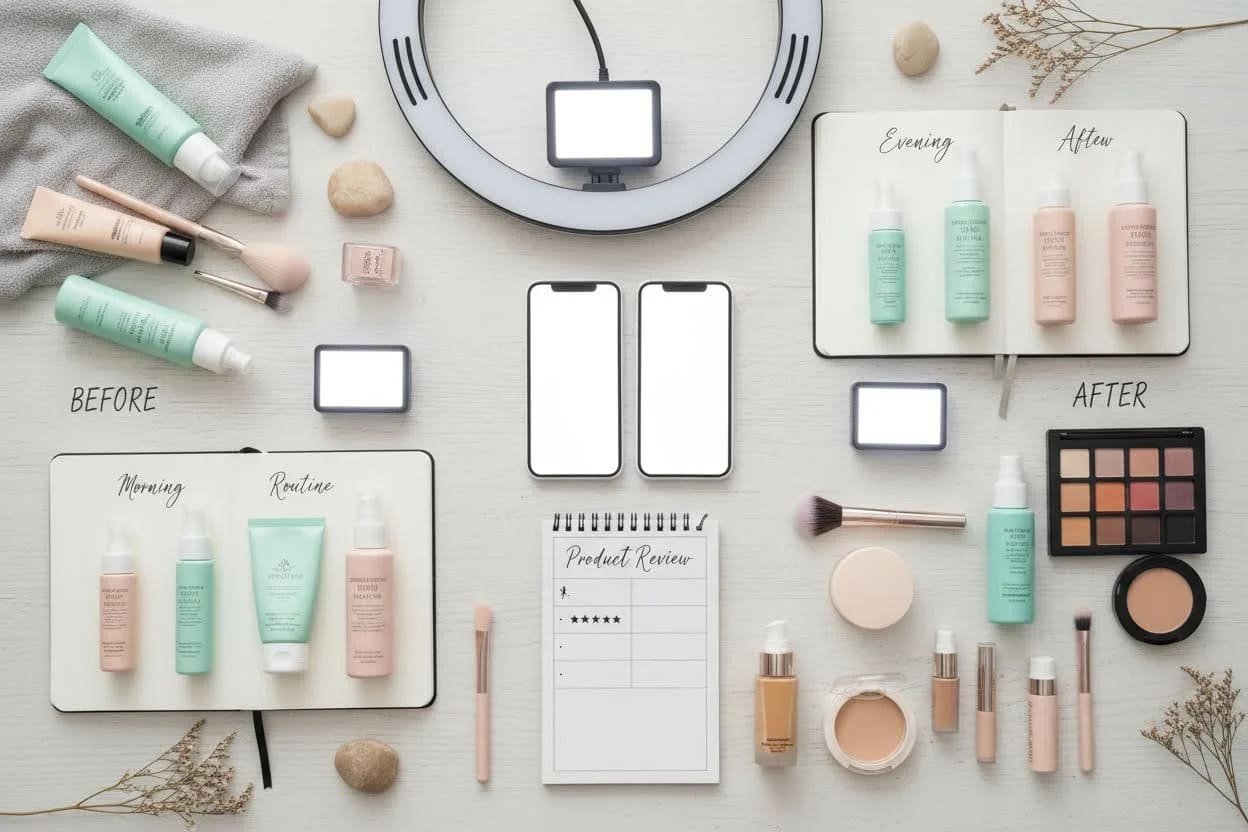
Before-and-After Demonstrations
Visual proof is one of the strongest drivers of conversion.
- Showing clear results
- Highlighting product effectiveness
- Reducing uncertainty for the buyer
This format is widely used for skincare and transformation-based products.
Routine-Based Content (Morning/Night Skincare)
Routine content integrates products into everyday use.
- Step-by-step routines
- Multiple products used together
- Consistent usage over time
This helps position products as part of a regular habit rather than a one-time purchase.
Product Reviews and Ingredient Education
Consumers are increasingly interested in understanding what they use.
- Honest product reviews
- Ingredient explanations
- Comparisons between alternatives
Educational content builds trust and supports more informed decisions.
Short-Form Video (TikTok, Reels)
Short-form video has become a dominant format in beauty.
- Quick demonstrations
- Fast-paced, engaging content
- High reach through platform algorithms
This format is effective for both discovery and engagement.
Building Effective Influencer Campaigns in Beauty
Running successful influencer campaigns in the beauty industry requires more than selecting creators and sending products. Clear structure, expectations, and consistency play a key role in achieving results.
Setting Clear Campaign Goals
Every campaign should start with a defined objective.
- Brand awareness and reach
- Product education and demonstrations
- Conversions and sales
Clear goals help determine which influencers to work with, what type of content to create, and how success will be measured.
Giving Creators Creative Freedom
While guidelines are important, overly controlling content can reduce effectiveness.
- Creators understand their audience best
- Authentic content performs better than scripted messages
- Flexibility leads to more natural integration of products
Allowing creators to adapt messaging to their style often results in stronger engagement.
Structuring Long-Term Partnerships
Short-term collaborations can generate visibility, but long-term partnerships tend to deliver better results.
- Repeated exposure builds familiarity
- Consistent messaging strengthens trust
- Ongoing collaborations feel more authentic
Working with the same creators over time helps position products as part of a real routine rather than a one-time promotion.
Compliance and Transparency in Beauty Content
Beauty content is often subject to regulations and platform guidelines.
- Disclose paid partnerships clearly
- Avoid misleading claims about results
- Ensure accuracy when discussing ingredients or benefits
Transparent communication helps maintain trust and avoids potential issues with compliance.
Choosing the Right Influencers for Your Beauty Brand
Selecting the right influencers is one of the most important decisions in any campaign. The wrong choice can lead to poor results, even with a strong product.
If you want to collaborate with beauty influencers who truly match your brand’s style and audience, you can try Hypefy’s Find and Hire Beauty Influencers Tool, connect with them directly, and manage your entire campaign in one simple, efficient platform.
Audience Fit vs Follower Count
Follower count alone does not determine effectiveness.
- Audience demographics should match your target market
- Interests and content style should align with your product
- Smaller, relevant audiences often perform better
Focusing on audience fit increases the likelihood of meaningful engagement and conversions.
Engagement and Content Quality
High-quality content and active audiences are strong indicators of performance.
- Look at likes, comments, and saves
- Evaluate how followers interact with content
- Assess consistency in posting and style
Creators with engaged audiences are more likely to influence decisions.
Brand Alignment and Values
Alignment between the brand and the creator is essential for credibility.
- Similar values and messaging
- Consistent tone and positioning
- Authentic use of products
When alignment is strong, collaborations feel more natural and are more likely to resonate with the audience.
Measuring Performance and ROI in Beauty Influencer Campaigns

Measuring performance is essential to understand whether influencer marketing efforts are delivering results.
In the beauty industry, where content and perception play a large role, evaluation should go beyond basic reach and focus on how audiences respond and convert.
Key Metrics (Engagement, Saves, Conversions)
Different metrics reflect different stages of impact.
- Engagement (likes, comments, shares) shows how content resonates
- Saves indicate long-term interest, especially for routines or tutorials
- Conversions reflect direct impact on sales or actions
Looking at these together provides a more complete picture of performance.
Tracking Sales and Attribution
Attributing sales to influencer campaigns can be challenging, but there are practical ways to track results.
- Use unique discount codes for each creator
- Track links with UTM parameters
- Monitor traffic and conversions during campaign periods
While not all sales can be directly attributed, these methods help estimate impact more accurately.
Evaluating Content Performance
Not all content performs equally, even within the same campaign.
- Compare formats (video vs static, tutorials vs reviews)
- Identify which creators drive the most engagement or conversions
- Analyze which messages resonate most with the audience
These insights help refine future campaigns and improve efficiency over time.
Influencer Marketing Trends in the Beauty Industry
The beauty industry evolves quickly, and influencer marketing trends continue to shift alongside consumer expectations.
Staying aligned with these changes helps brands remain relevant and competitive.
Rise of Dermatologists and Expert Creators
Consumers are increasingly looking for credible, science-based information.
- Dermatologists and experts provide authority
- Educational content builds trust
- Brands benefit from association with expertise
This trend is especially important for skincare and ingredient-focused products.
Focus on Ingredients and Education
Beauty consumers are more informed and selective than before.
- Interest in ingredients and formulations
- Demand for transparency and explanations
- Preference for educational content over purely promotional messaging
Brands that support this type of content tend to build stronger trust.
Shift From Reach to Trust and Relevance
Large audiences are no longer the main priority.
- Smaller, engaged communities often perform better
- Relevance matters more than scale
- Authenticity influences decision-making
This shift changes how brands select influencers and structure campaigns.
Growth of User-Generated Content (UGC)
User-generated content has become an important part of beauty marketing.
- Real customer experiences increase credibility
- Content can be reused across marketing channels
- UGC supports both organic and paid campaigns
Encouraging customers and creators to produce content helps build a more authentic brand presence.
Conclusion
Influencer marketing in the beauty industry is driven by trust, relevance, and consistent exposure.
Consumers respond best to authentic content that demonstrates products and fits naturally into real routines.
Instead of one-off campaigns or focusing only on large influencers, brands see better results by working with the right creators and building long-term partnerships.
Over time, a structured approach helps turn influencer marketing into a reliable channel for both visibility and growth.