
Designing Calm: Workspace Design Ideas That Reduce Stress and Support Creative Focus
Your workspace is more than a place to work—it’s a visual system that constantly communicates with your mind.
For entrepreneurs, designers, and creative professionals, a stressful workspace doesn’t just feel uncomfortable; it quietly affects focus, confidence, and decision-making.
At ibrandstudio.com, we believe good design should support how you live and work, not overwhelm you.
That includes workspace design. A well-designed workspace can reduce stress, improve mental clarity, and help you stay creatively energized—especially when workdays are long and responsibilities overlap.
In this article, we’ll explore workspace design ideas that reduce stress, blending interior design principles with practical, real-life tips you can apply to home offices, studios, or small creative spaces.
Why a Calm Workspace Matters More Than Ever
Stress in a workspace often comes from invisible design issues:
- Visual clutter
- Poor lighting
- Uncomfortable furniture
- Noise distractions
- Lack of structure
Your brain processes these signals constantly. When a space feels chaotic or uncomfortable, your nervous system stays on high alert.
Calm design, on the other hand, supports focus, emotional balance, and creative flow.
Think of your workspace as part of your personal brand—it should reflect clarity, intention, and ease.
1. Let Natural Light Lead the Design
Natural light is one of the most effective ways to reduce stress in any workspace.
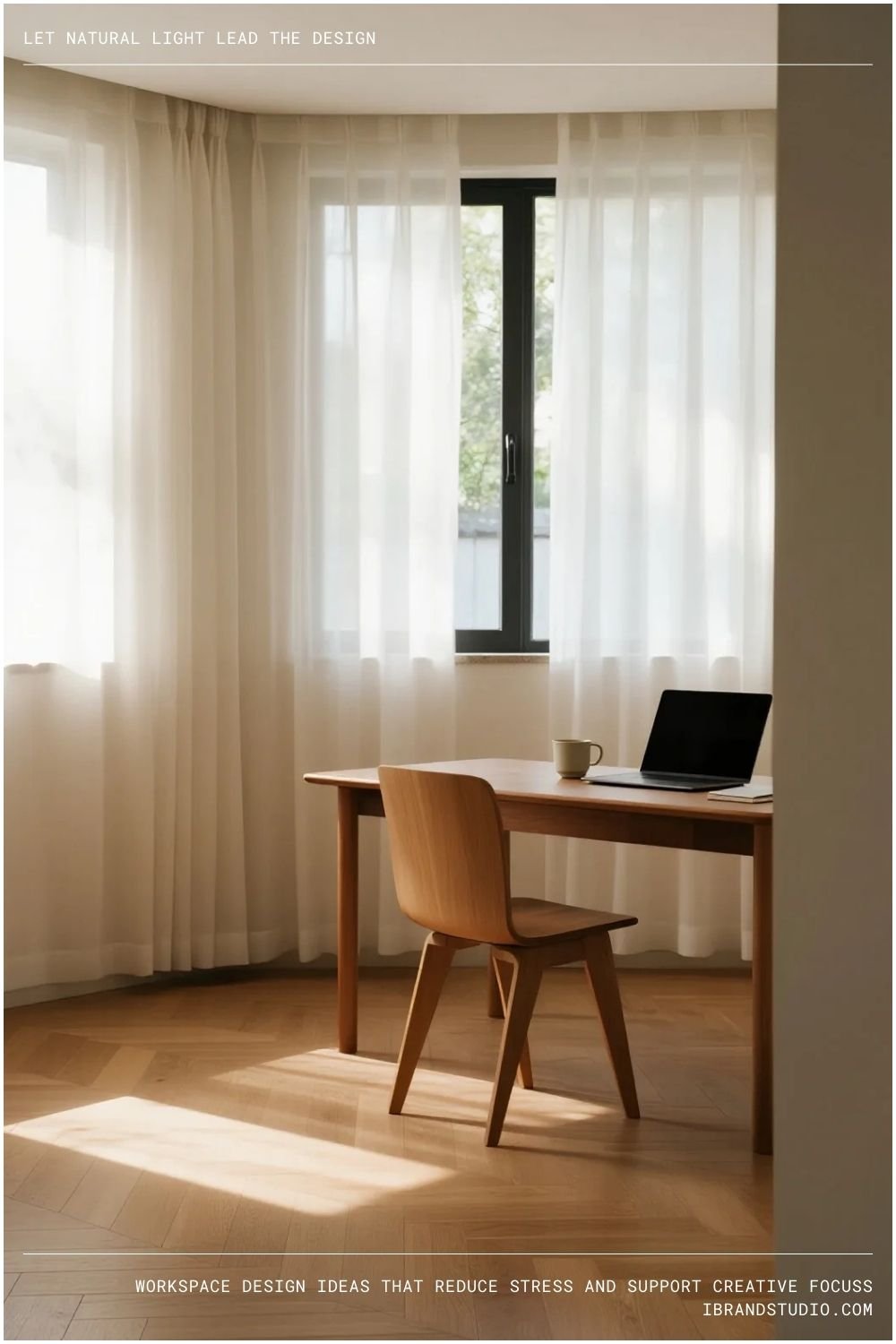
Why it works:
- Supports circadian rhythm
- Improves mood and alertness
- Reduces eye strain
- Makes a space feel more open and breathable
Design tip:
Position your desk near a window, but slightly angled to avoid glare. Use sheer curtains or light-filtering blinds to soften harsh sunlight while maintaining brightness.
If natural light is limited, choose soft daylight LED bulbs that mimic the feel of sunlight.
2. Choose a Calm, Brand-Aligned Color Palette
Color has a direct impact on mood—and overstimulating colors can quietly increase stress.
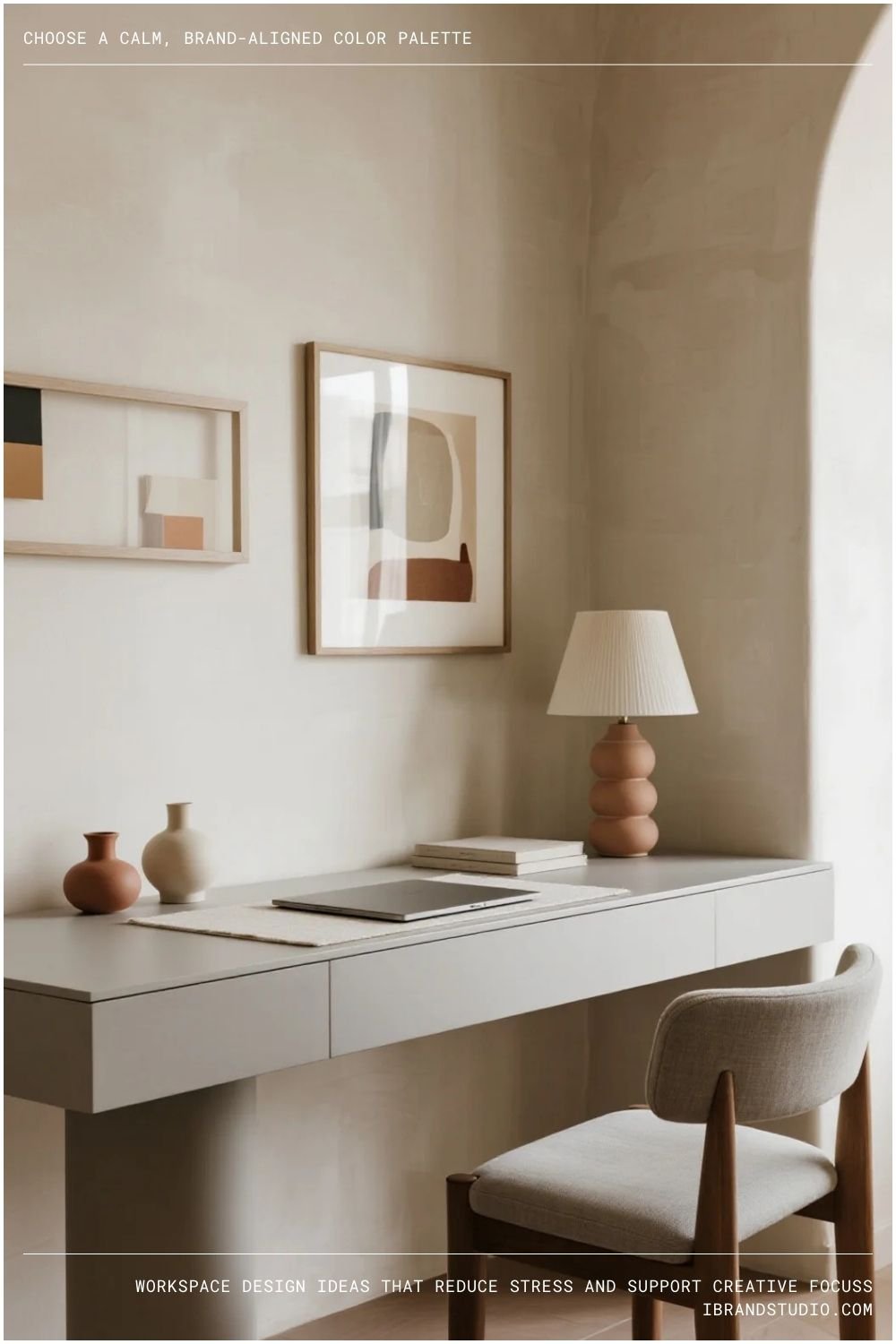
Stress-reducing workspace colors:
- Warm whites and soft neutrals
- Muted greens inspired by nature
- Gentle blues for mental clarity
- Earth tones for grounding
For a clean, editorial look (very ibrandstudio), keep walls neutral and introduce color through:
- Desk accessories
- Art prints
- Textiles
- Storage pieces
This keeps the space flexible and visually balanced.
3. Design for Visual Simplicity, Not Just Minimalism
A workspace doesn’t need to be empty to feel calm—it needs visual hierarchy.
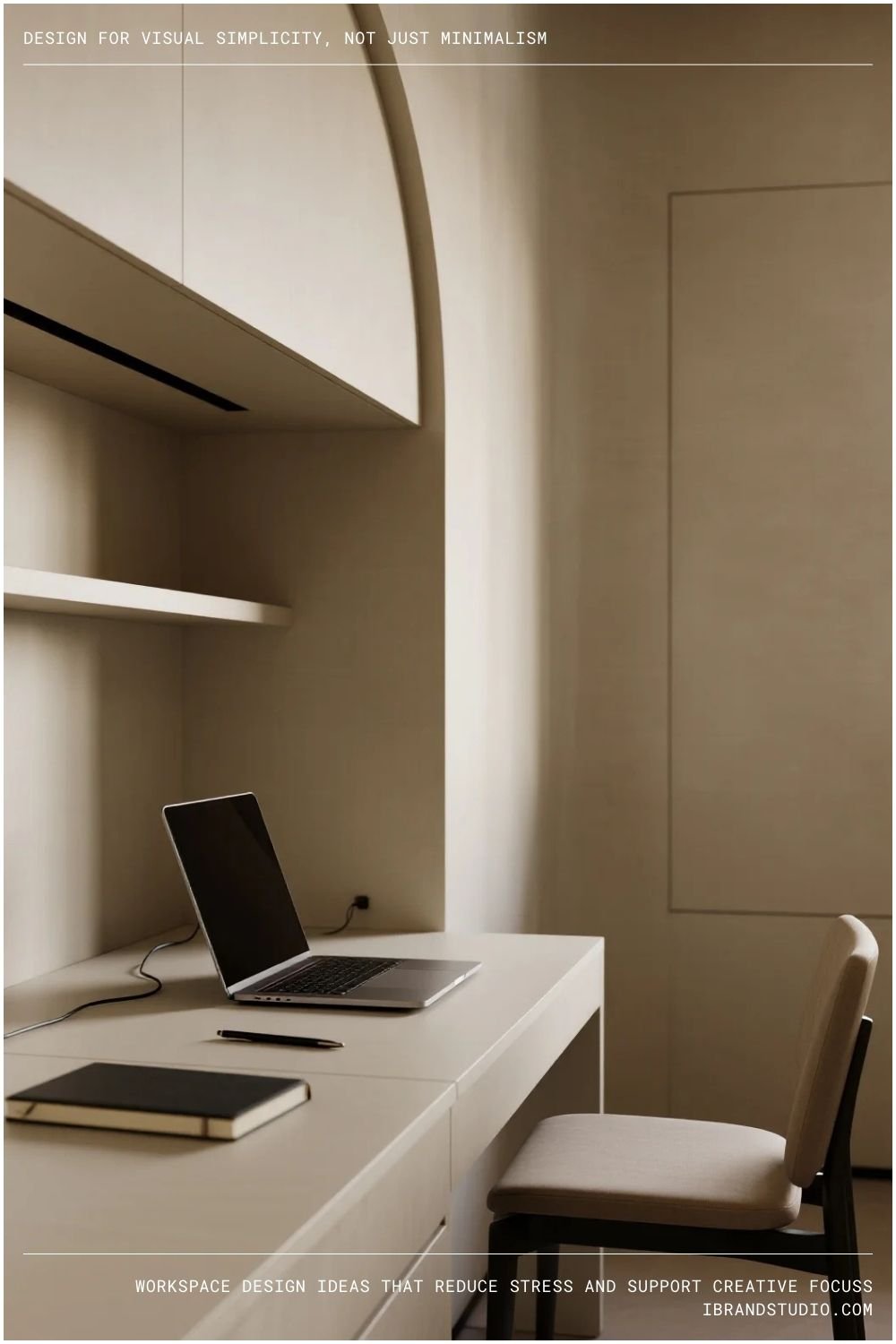
Reduce visual stress by:
- Limiting items on your desk to daily essentials
- Using closed storage instead of open shelves
- Choosing furniture with clean lines
- Hiding cables and chargers
Visual simplicity allows your ideas—not your surroundings—to take center stage.
4. Make Ergonomics Part of the Aesthetic
Good design should support the body as much as the eyes.
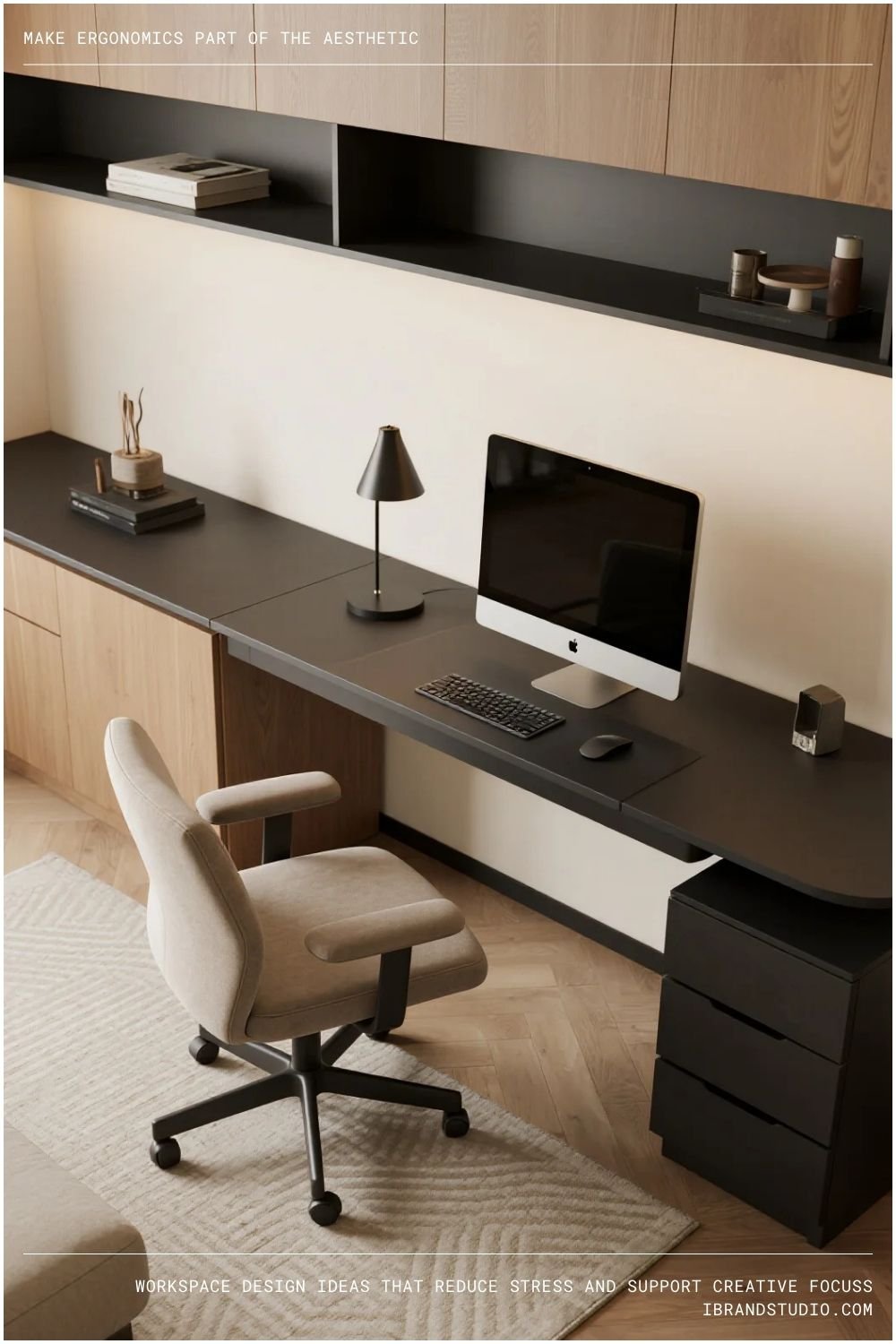
Key ergonomic essentials:
- A chair with proper back and lumbar support
- Desk height that keeps arms relaxed
- Monitor positioned at eye level
- Feet resting flat or on a footrest
When your body feels supported, mental tension naturally decreases—especially during long creative sessions.
5. Bring Nature In with Biophilic Design
Biophilic design connects indoor spaces with natural elements, which has been shown to reduce stress and improve focus.
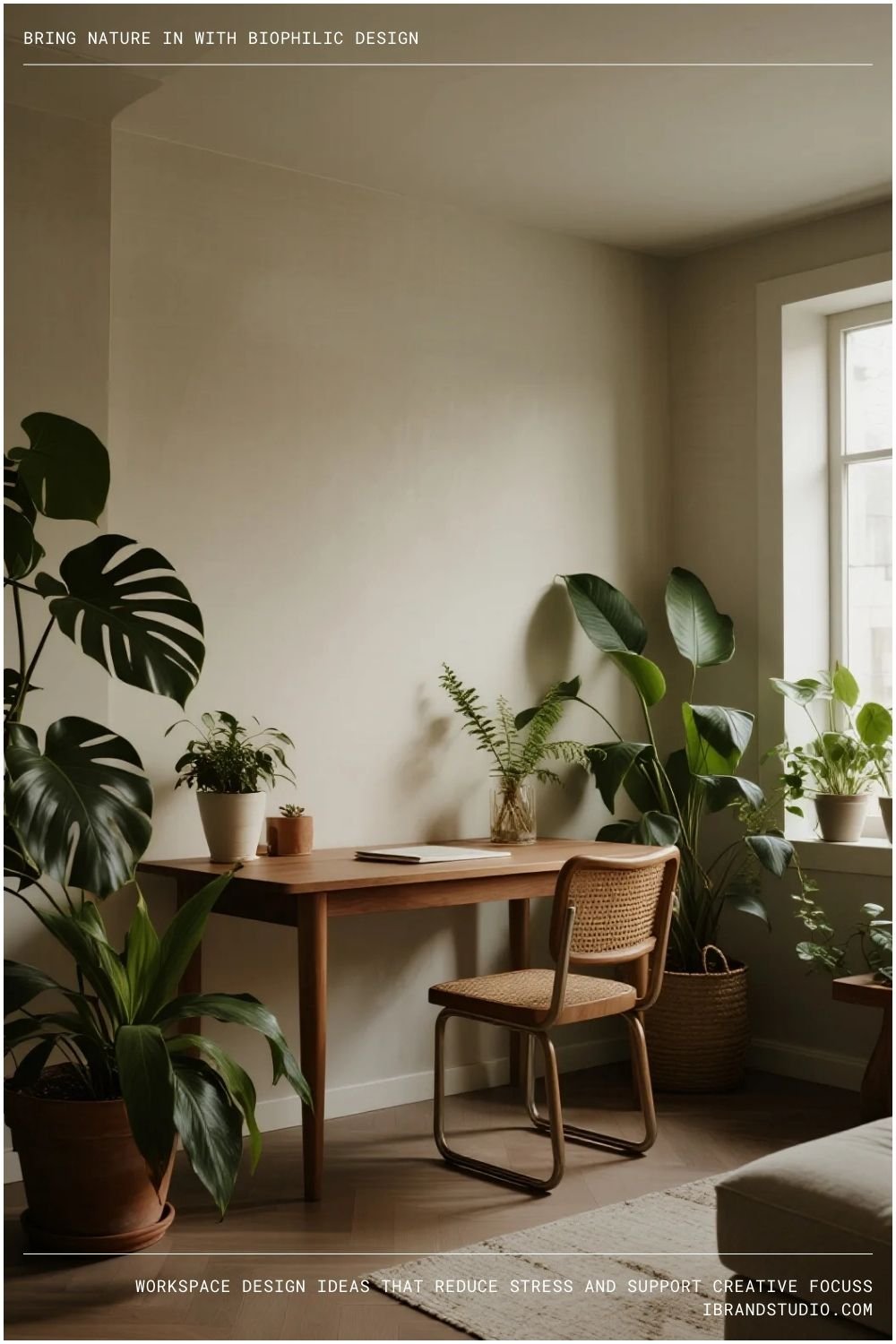
Easy ways to apply it:
- Low-maintenance plants like snake plants or pothos
- Natural wood desks or shelves
- Woven textures (rattan, linen, cotton)
- Nature-inspired art or color palettes
Even subtle natural elements can make a workspace feel calmer and more human.
6. Reduce Noise Through Thoughtful Design
Noise is one of the most overlooked workspace stressors, especially in home offices.
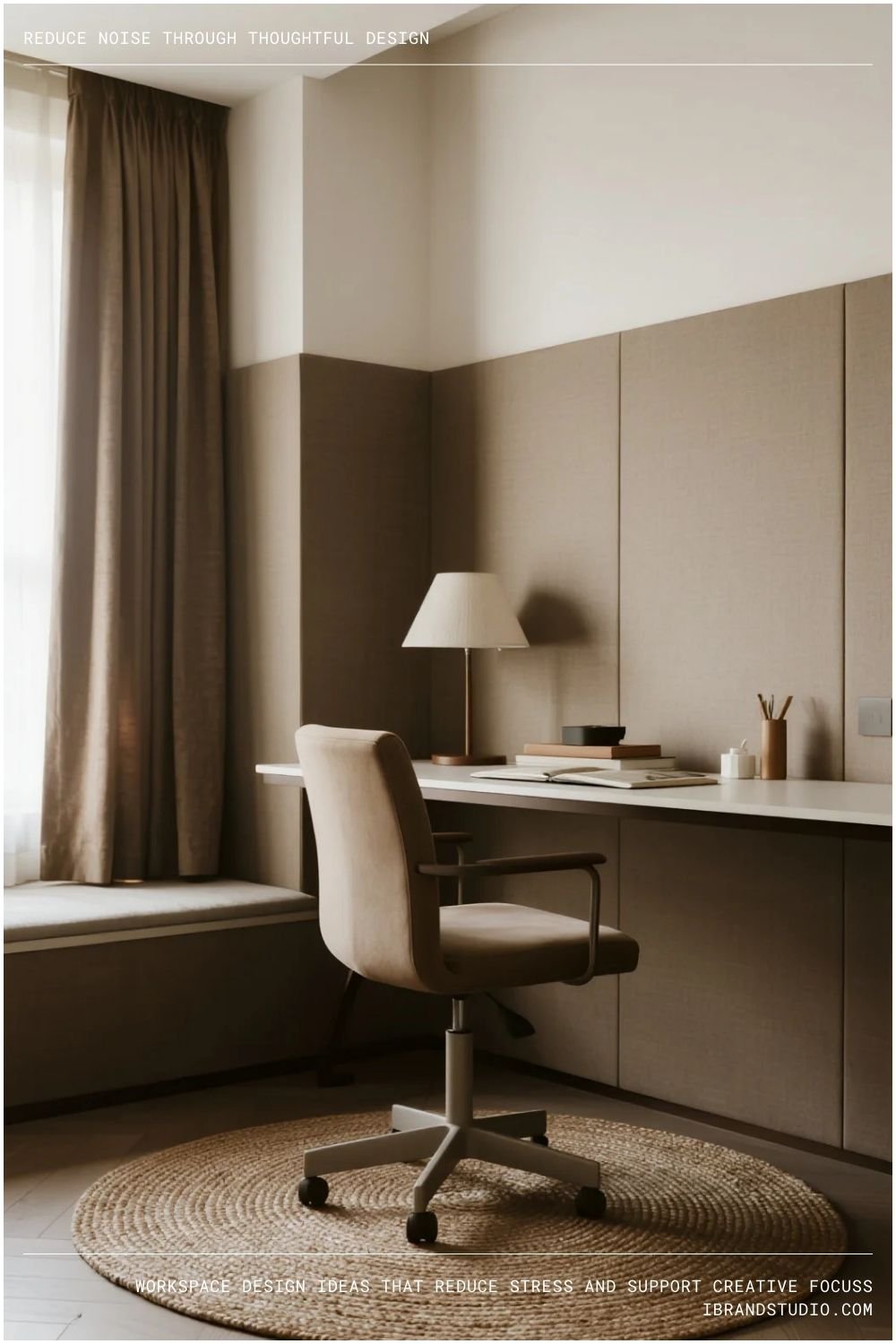
Design-based noise solutions:
- Soft rugs to absorb sound
- Curtains or fabric panels
- Cork boards or acoustic wall panels
- Noise-canceling headphones for deep work
Sound control is part of good interior design—even if it’s invisible.
7. Create Clear Zones for Focus and Creativity
Blending every activity into one desk increases mental fatigue.
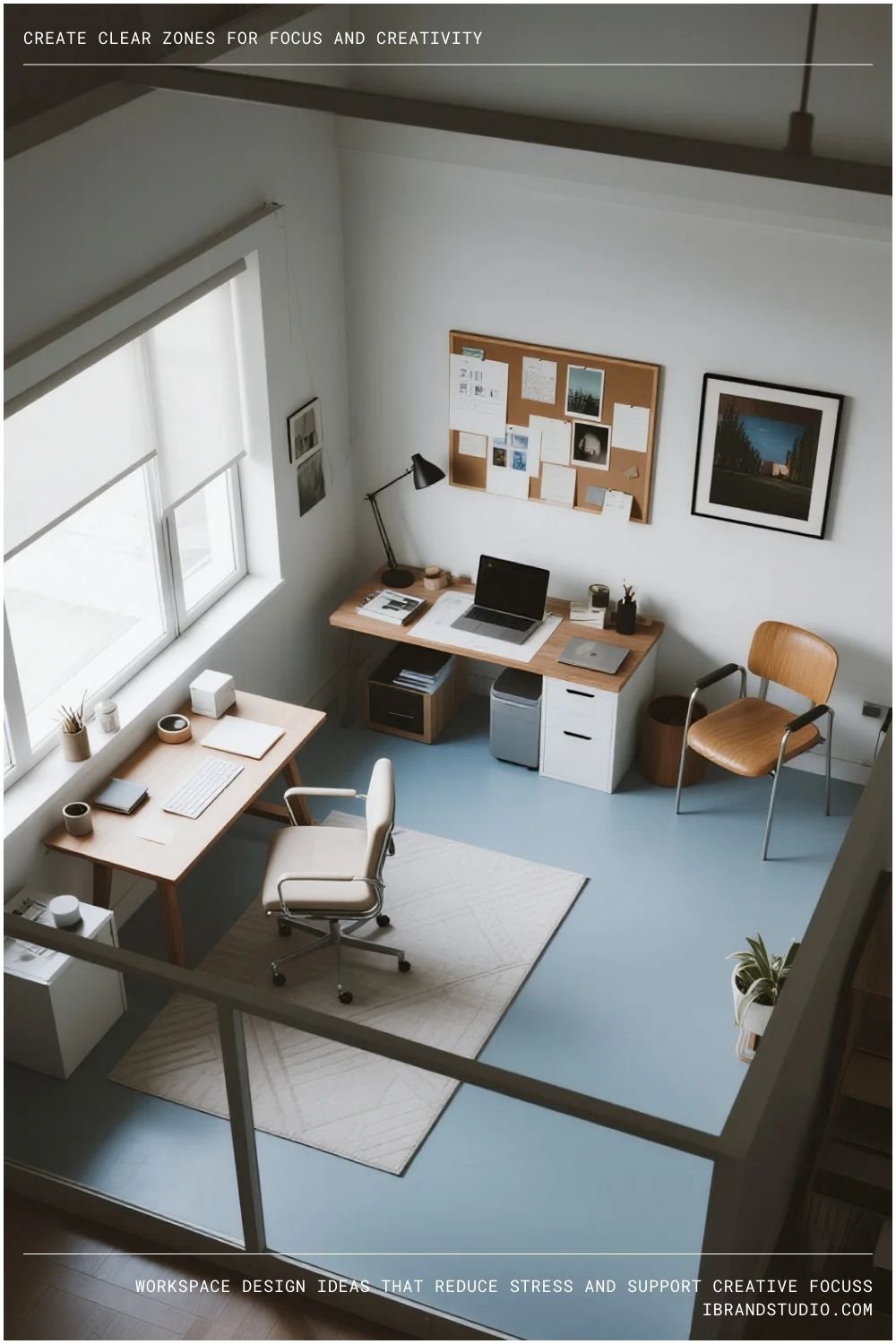
Try zoning your workspace:
- A primary desk for focused tasks
- A secondary area for reading or planning
- A small inspiration zone with mood boards or samples
Clear zones help your brain switch tasks more smoothly, reducing stress and decision overload.
8. Layer Lighting for a Softer Atmosphere
Harsh overhead lighting can cause headaches and eye strain.
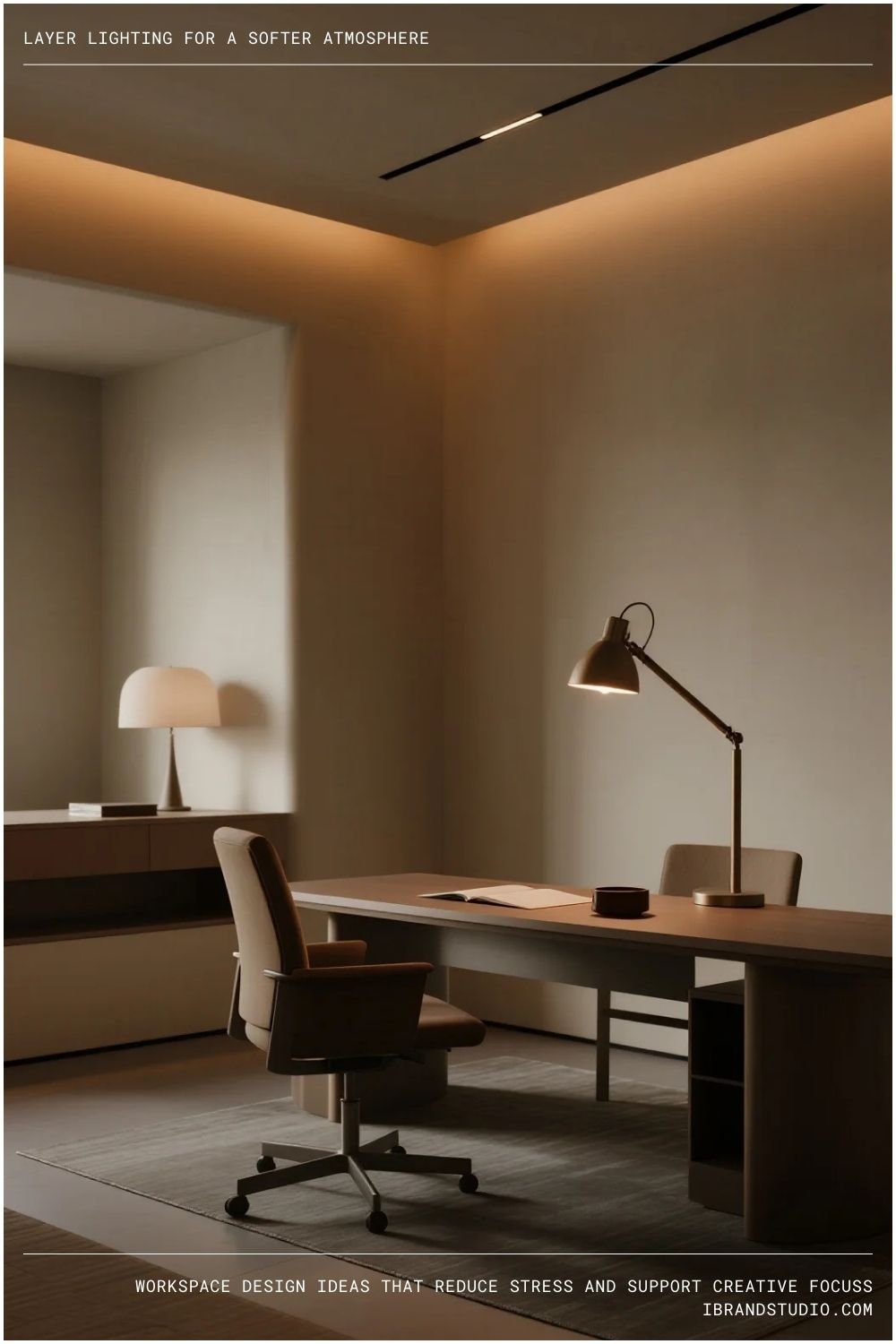
A stress-reducing lighting setup includes:
- Ambient lighting for the room
- Adjustable task lighting for work
- Warm accent lighting for atmosphere
Stick to warm or neutral light temperatures to maintain a calm, editorial feel.
9. Add Personal Details—With Intention
Personal elements make a workspace feel emotionally safe, but too many can feel distracting.
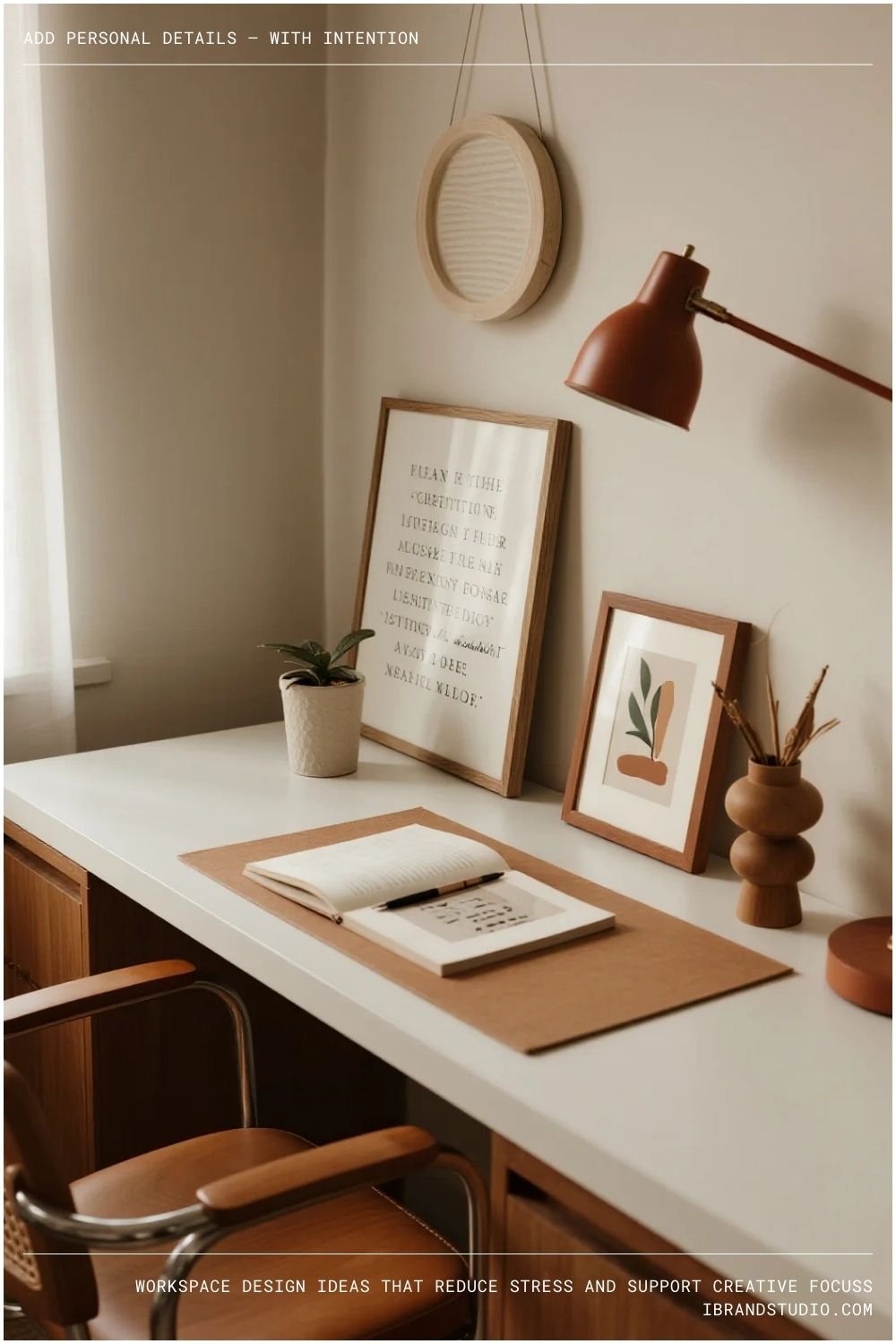
Choose items that:
- Inspire you
- Reflect your creative identity
- Have emotional meaning
One framed quote, one artwork, or one personal object is often enough.
10. Use Storage to Hide Visual Chaos
Smart storage keeps stress out of sight.
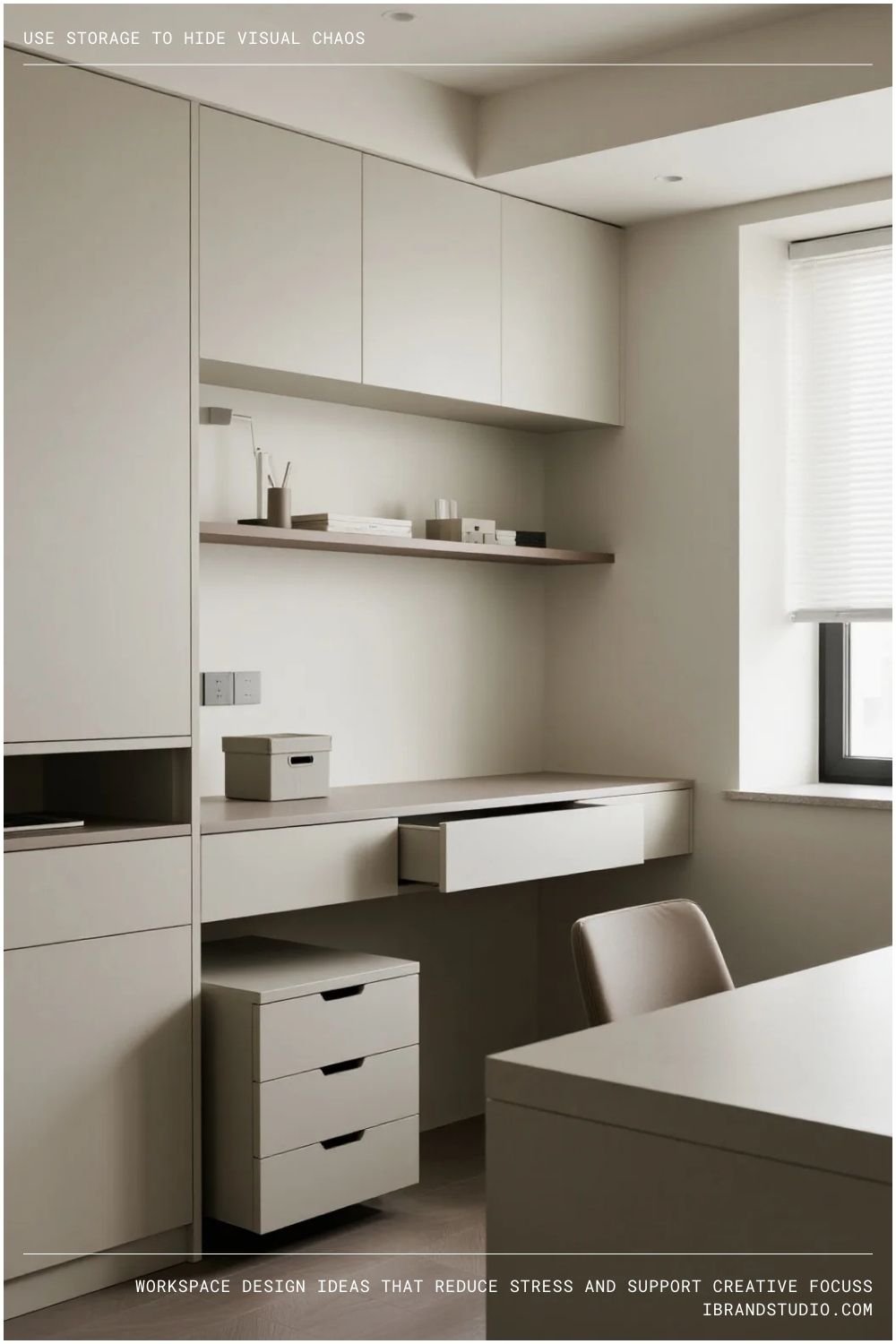
Storage ideas that align with clean design:
- Drawers with organizers
- Cabinets with doors
- Vertical storage to free desk space
- Matching containers for a cohesive look
When everything has a place, your mind feels lighter.
11. Focus on Texture and Material Choices
Texture influences how calm a space feels.
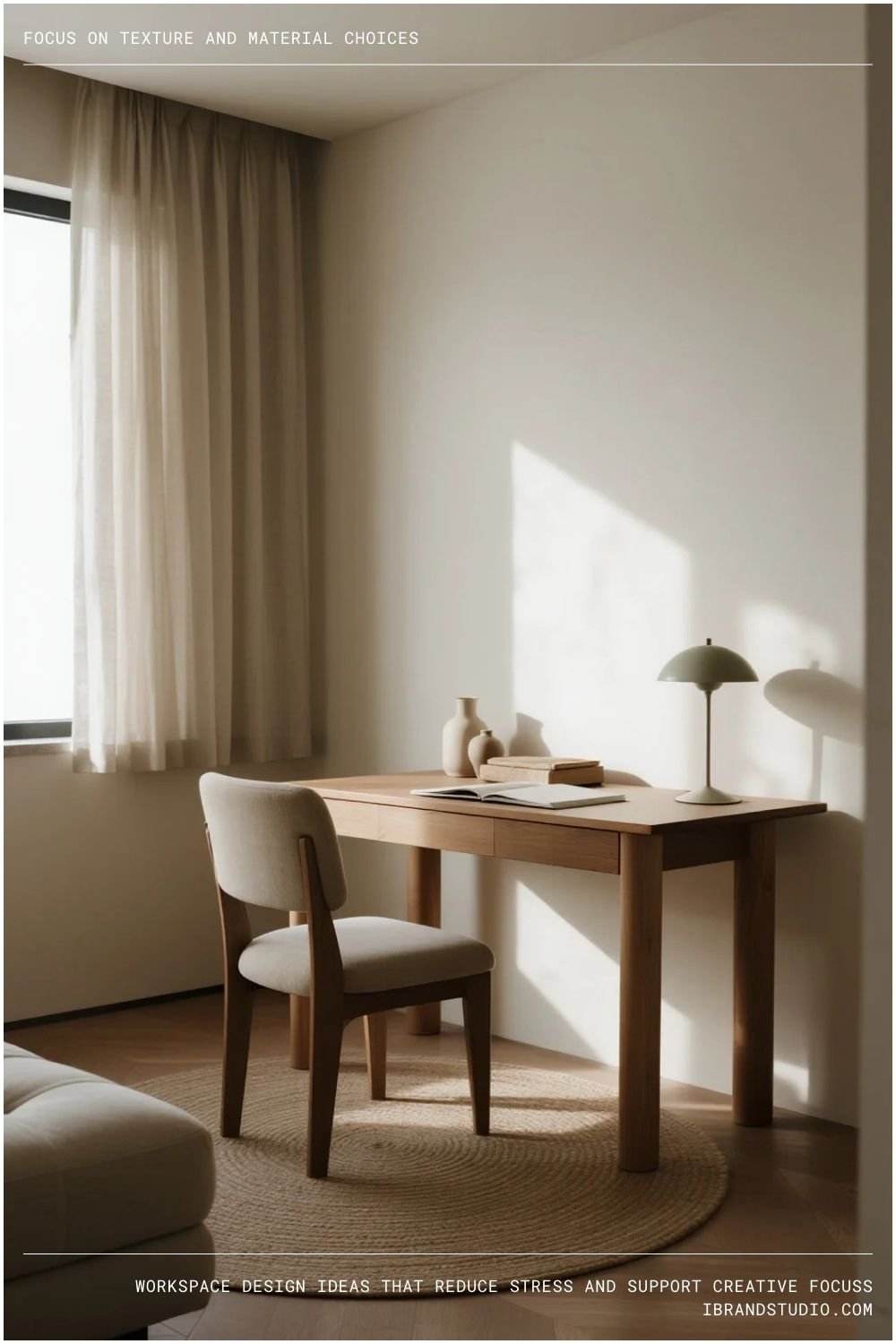
Calming materials include:
- Matte finishes
- Natural wood
- Soft fabrics
- Neutral-toned rugs
Avoid overly glossy, cold, or industrial finishes if stress reduction is the goal.
12. Design for Flexibility and Control
A workspace should evolve with you.
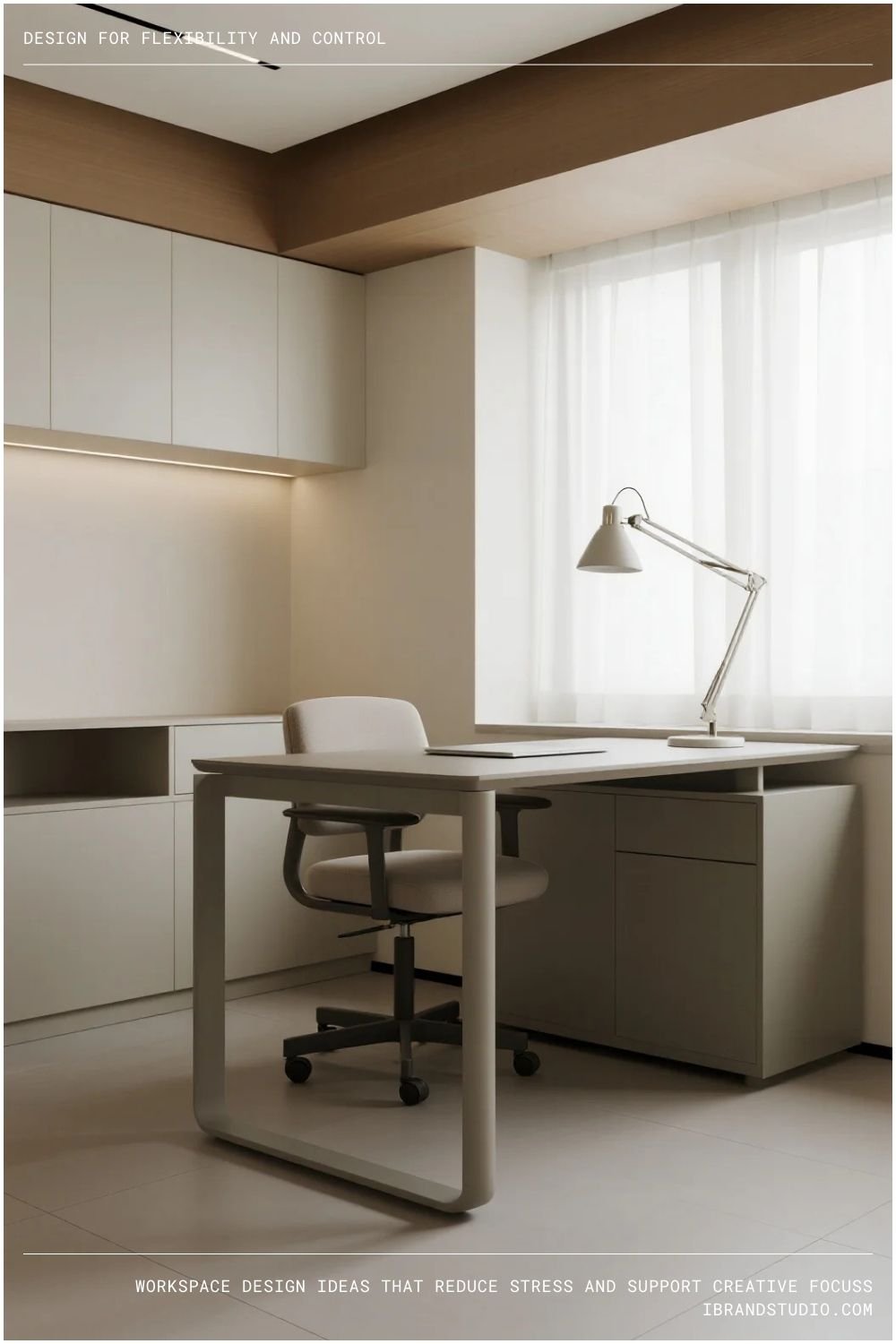
Flexible design features:
- Adjustable chairs and desks
- Moveable lighting
- Modular storage
- Space to rearrange when needed
Feeling in control of your environment reduces mental tension—especially for entrepreneurs managing many roles.
Final Thoughts: Calm Is a Design Decision
A stress-reducing workspace doesn’t happen by accident—it’s the result of intentional design choices.
When your workspace feels calm, clear, and supportive, your work naturally improves.
At ibrandstudio.com, we see workspace design as an extension of personal branding: thoughtful, functional, and visually aligned with who you are and how you work.
Start small. Refine gradually. Design a workspace that helps you stay focused, creative, and grounded—every single day.