
From Concept to Cult Brand: 12 Clothing Brand Identities Designers & Founders Can Steal From
Building a successful clothing brand isn’t about chasing trends or designing a cool logo and hoping for the best.
The brands that last—the ones people actually remember—are built on clear identity, strong positioning, and emotional connection.
For graphic designers, fashion brands are some of the best real-world examples of identity systems in action. For entrepreneurs, they’re proof that clarity beats complexity every time.
In this article, we’ll break down 12 original clothing brand identity concepts, each with a name, concept, and tagline.
More importantly, we’ll look at why they work, what makes them compelling, and how you can apply these lessons to your own branding projects or business ideas.
If you’re interested in fashion branding, streetwear brands, or building a clothing label from scratch, this guide will give you both inspiration and practical direction.
You Might Also Like:
- 10 Coffee Shop Brand Identity Concepts That Go Beyond the Logo
- 50+ Creative Brand Identity Examples of Clothing Store
Why Clothing Brand Identity Is Everything
Fashion is brutally competitive. New brands launch every day, and most disappear just as quickly.
The difference between the brands that fade out and the ones that grow cult followings usually comes down to one thing: identity.
A strong clothing brand identity:
- Makes design decisions easier
- Attracts the right audience (not everyone)
- Builds emotional loyalty
- Increases perceived value and pricing power
Before a single garment is produced, the best brands answer three questions clearly:
- Who is this for?
- What do we stand for?
- Why should anyone care?
The 12 brands below all answer those questions in different—but equally effective—ways.
Also Read: Top 15 Most Influential eCommerce Brands Shaping Online Shopping in 2025
1. EMBERLINE
Concept: Inner fire, ambition, and controlled rebellion
Tagline: Built From the Fire.

EMBERLINE isn’t loud streetwear. It’s confident streetwear. The brand speaks to people driven by ambition and self-belief rather than hype.
Why it works: It sells a mindset first, clothing second.
Branding tip: Use minimal palettes, sharp typography, and intentional spacing. Confidence shows through restraint.
2. NOMAD & THREAD
Concept: Travel, movement, and cultural storytelling
Tagline: Wear the Journey.
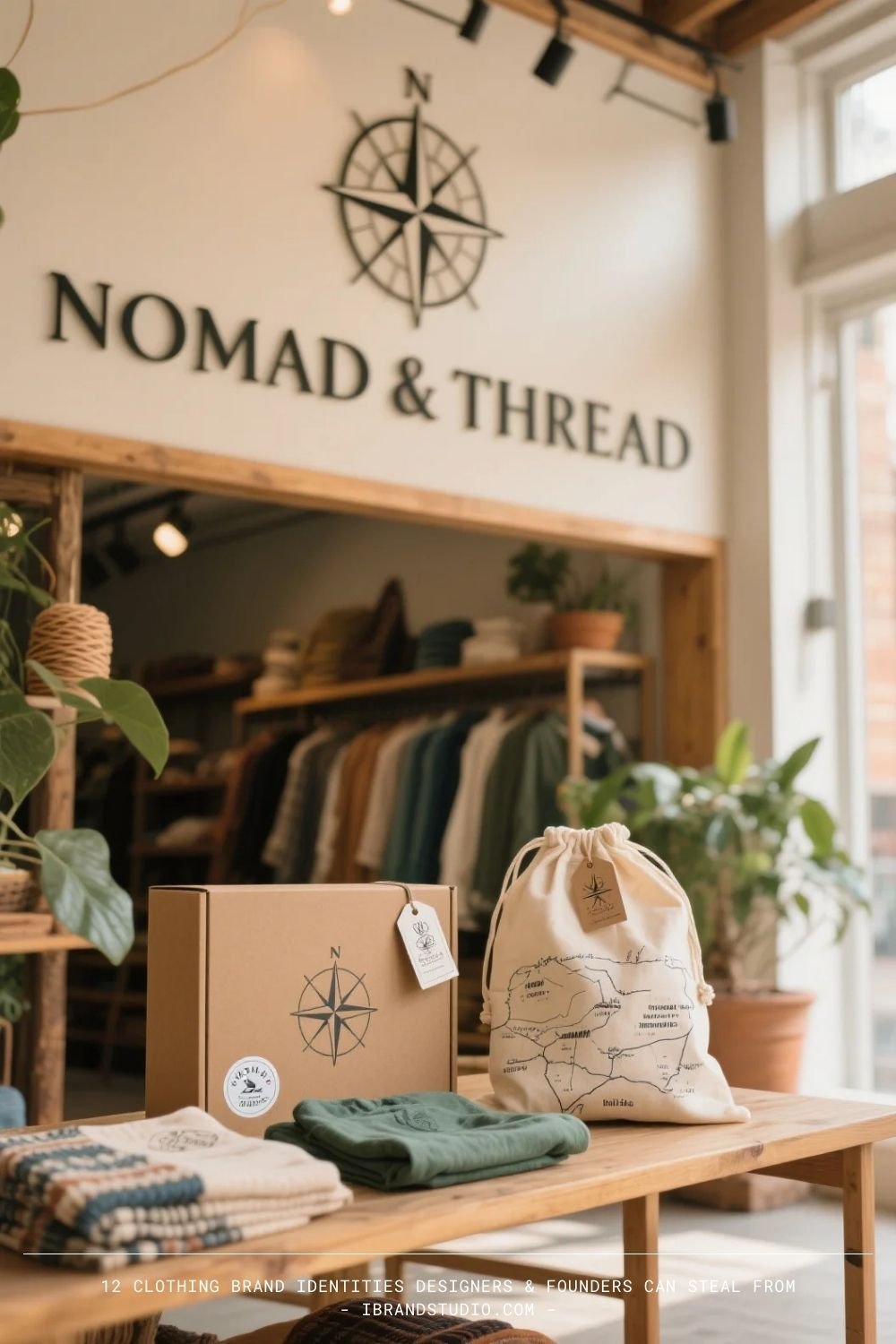
NOMAD & THREAD is built for people who value experiences over possessions. Each collection can tie back to a place, a story, or a journey.
Why it works: It creates endless content and storytelling opportunities.
Branding tip: Design a flexible brand system that allows variation while keeping core elements consistent.
3. NOIR SIGNAL
Concept: Dark, cyber-influenced high-fashion streetwear
Tagline: Broadcast in Silence.
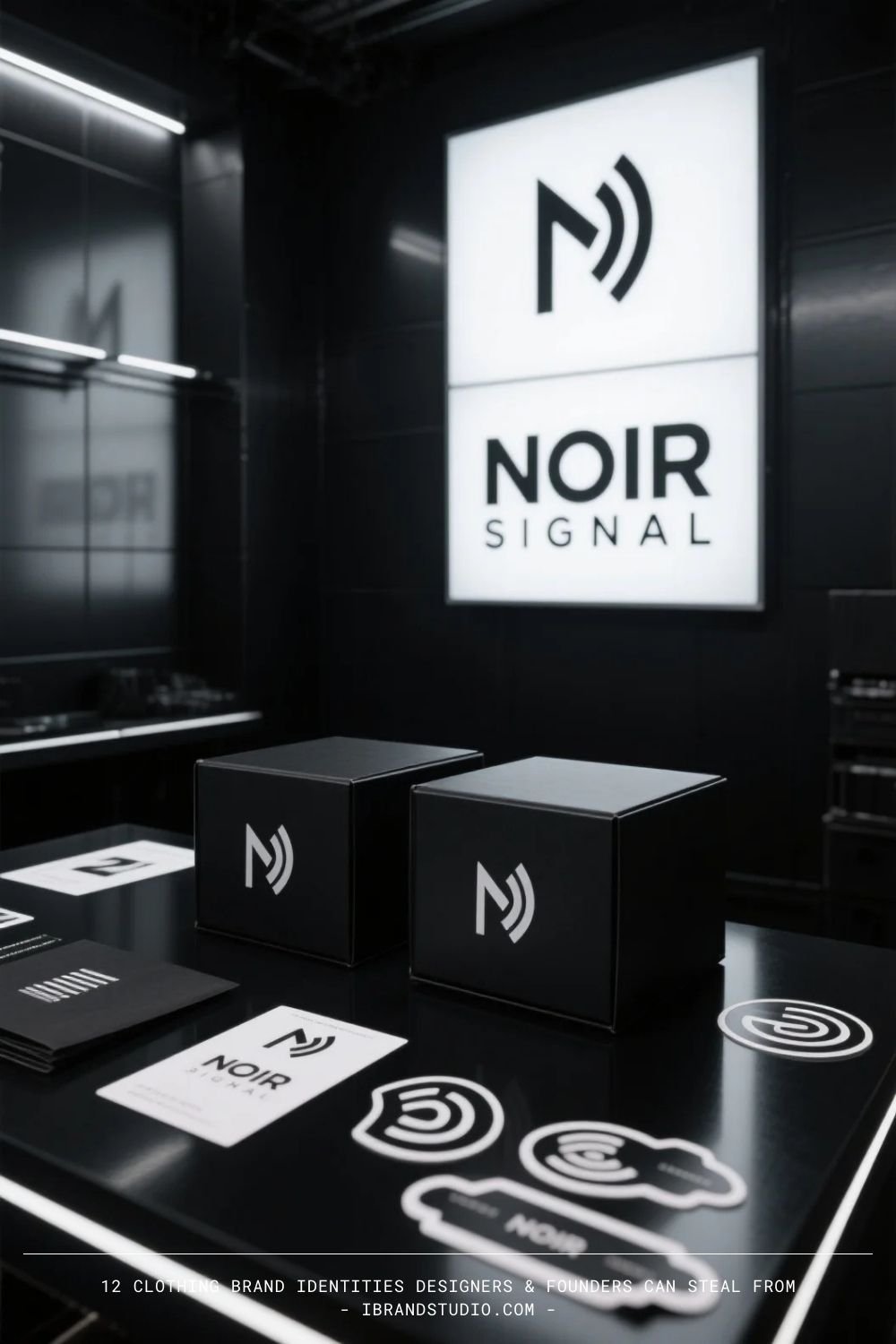
NOIR SIGNAL thrives on mystery. It doesn’t explain itself—and that’s the point. This brand is for people who want presence without noise.
Why it works: Scarcity and subtlety increase desirability.
Branding tip: Lean into monochrome, negative space, and strong typographic hierarchy.
4. HERIT FORM
Concept: Cultural roots meets modern tailoring
Tagline: Made of Where You’re From.
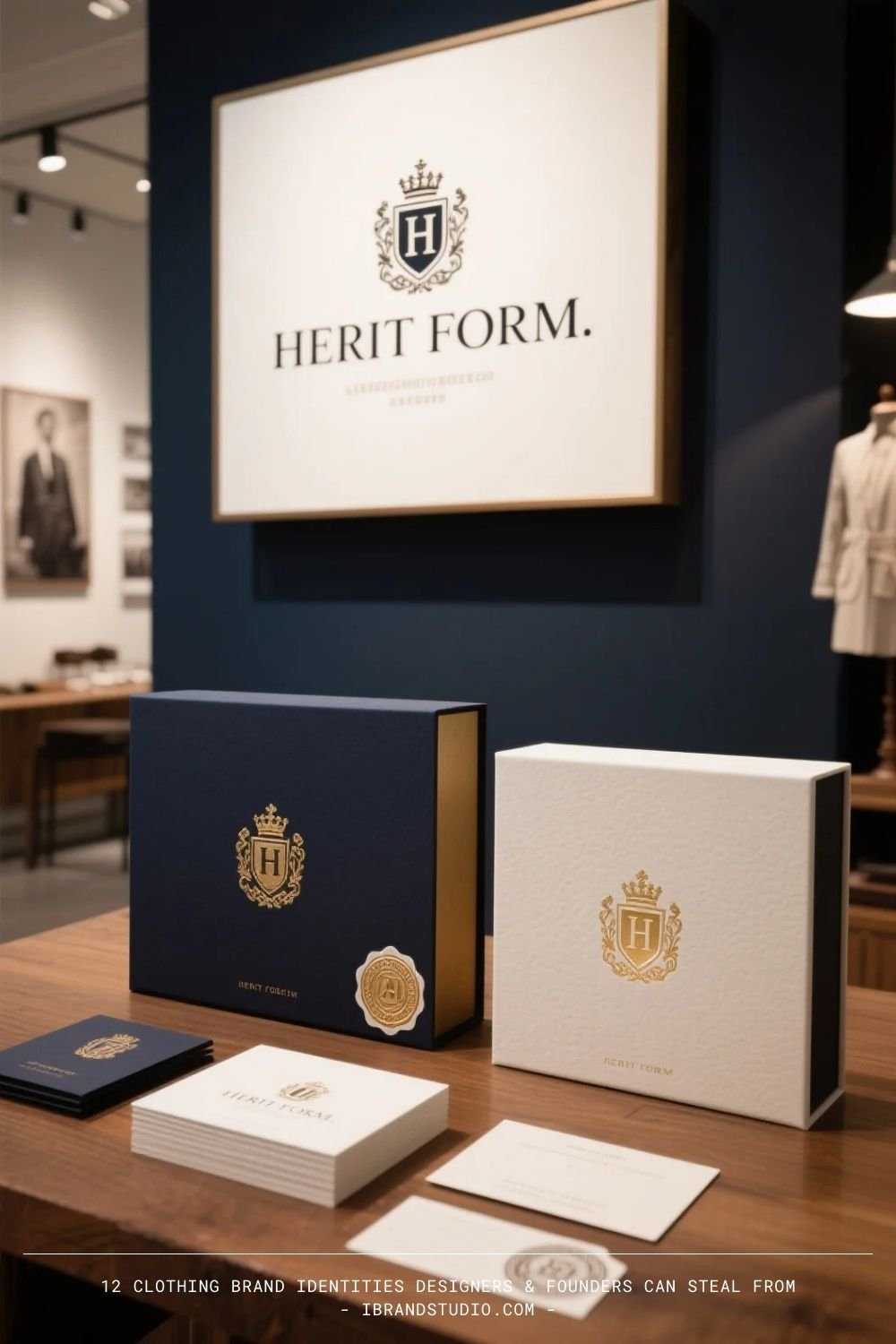
HERIT FORM is about lineage, identity, and craftsmanship. It feels premium without being flashy.
Why it works: People connect deeply to brands that honor origin and meaning.
Branding tip: Blend modern layouts with classic design cues like serif fonts, textures, and symbolic marks.
5. SECOND SKIN CO.
Concept: Elevated everyday essentials
Tagline: Nothing Extra. Everything You Need.
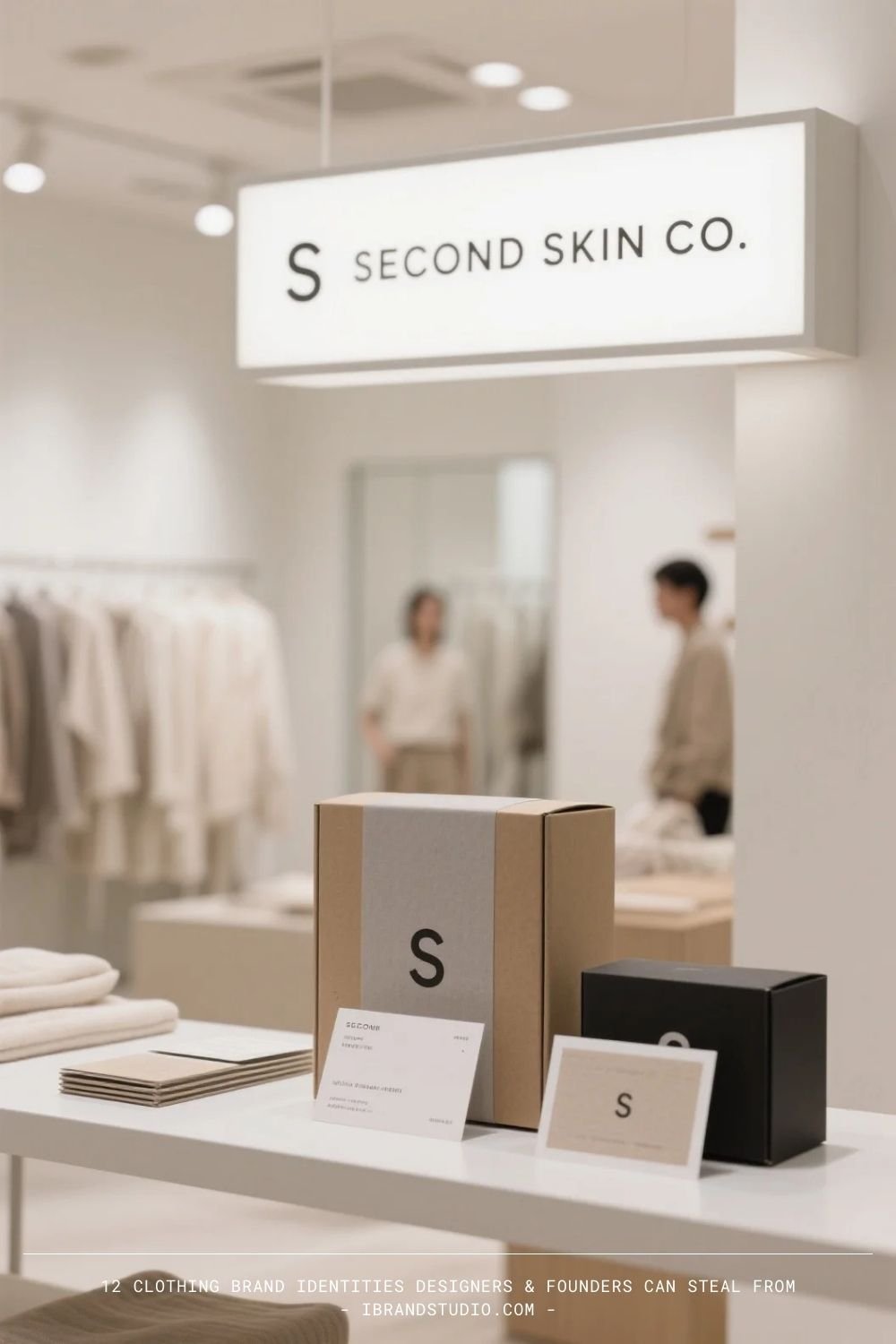
This brand focuses on comfort, fit, and reliability. No gimmicks—just pieces people reach for every day.
Why it works: It removes decision fatigue and builds trust.
Branding tip: Minimal branding only works when execution is flawless—spacing, materials, and consistency matter.
6. OUTLAST SOCIETY
Concept: Resilience, grit, and mental toughness
Tagline: We Don’t Break.
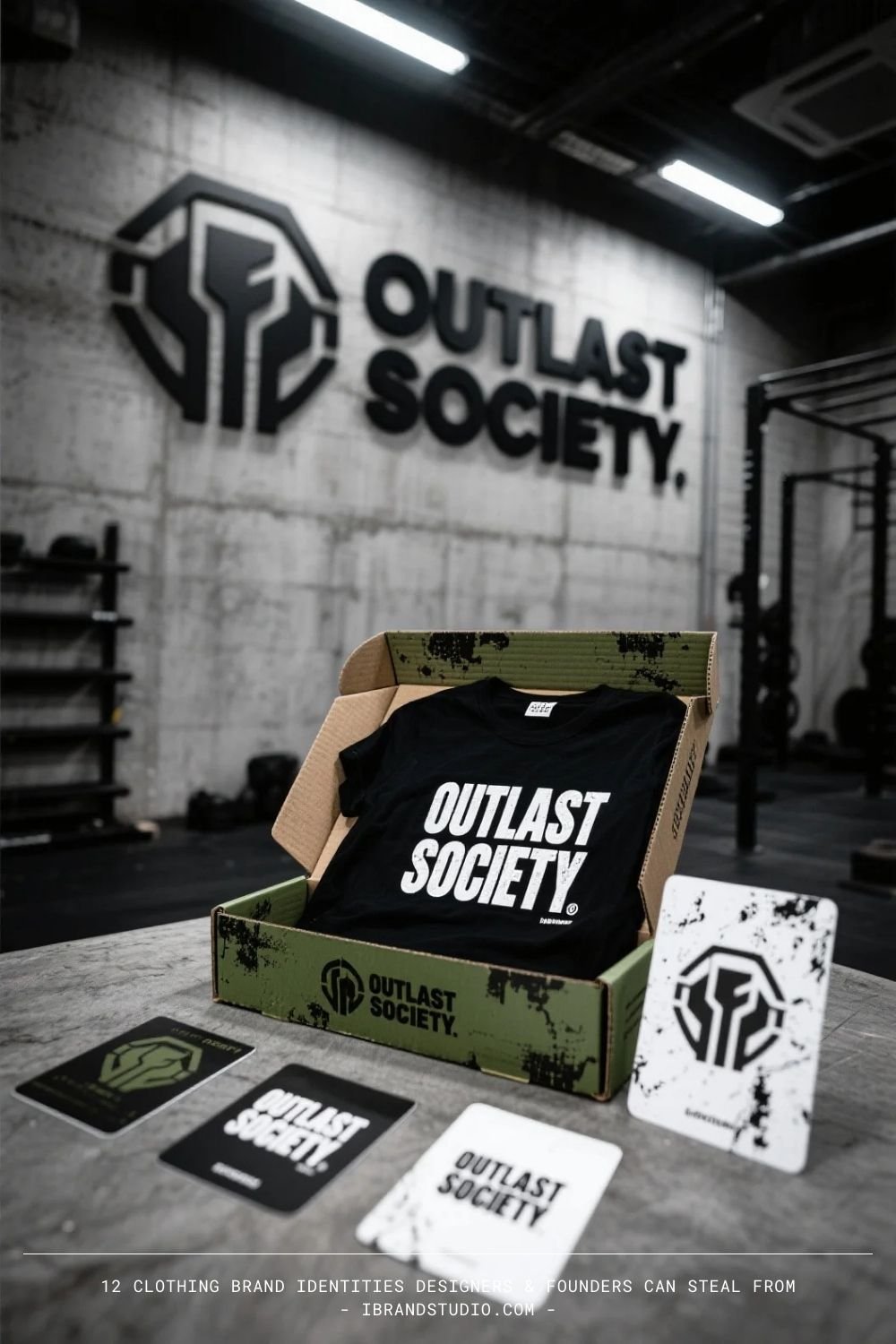
OUTLAST SOCIETY speaks directly to people who define themselves through endurance—physically, mentally, or creatively.
Why it works: Clear values attract deeply loyal customers.
Branding tip: Bold typography and direct messaging are powerful when the philosophy is strong.
7. IRON LOTUS
Concept: Strength balanced with calm
Tagline: Strength, Refined.
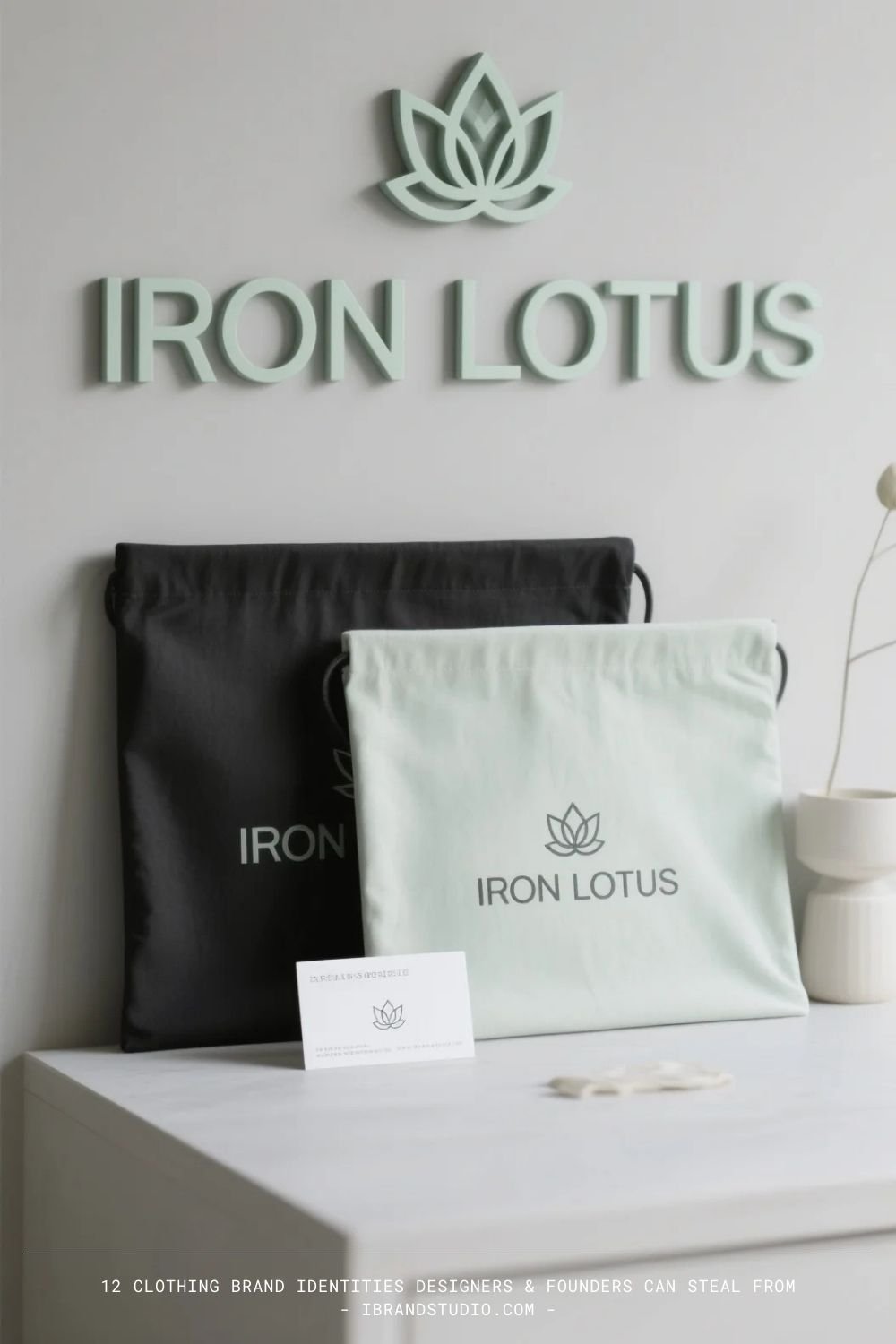
IRON LOTUS is built on contrast—discipline and serenity, structure and softness.
Why it works: Opposites create tension, and tension creates memorability.
Branding tip: Pair strong forms with gentle color palettes and breathable layouts.
8. AFTER HOURS CLUB
Concept: Nightlife, ambition, and late-night creativity
Tagline: When the City Sleeps.
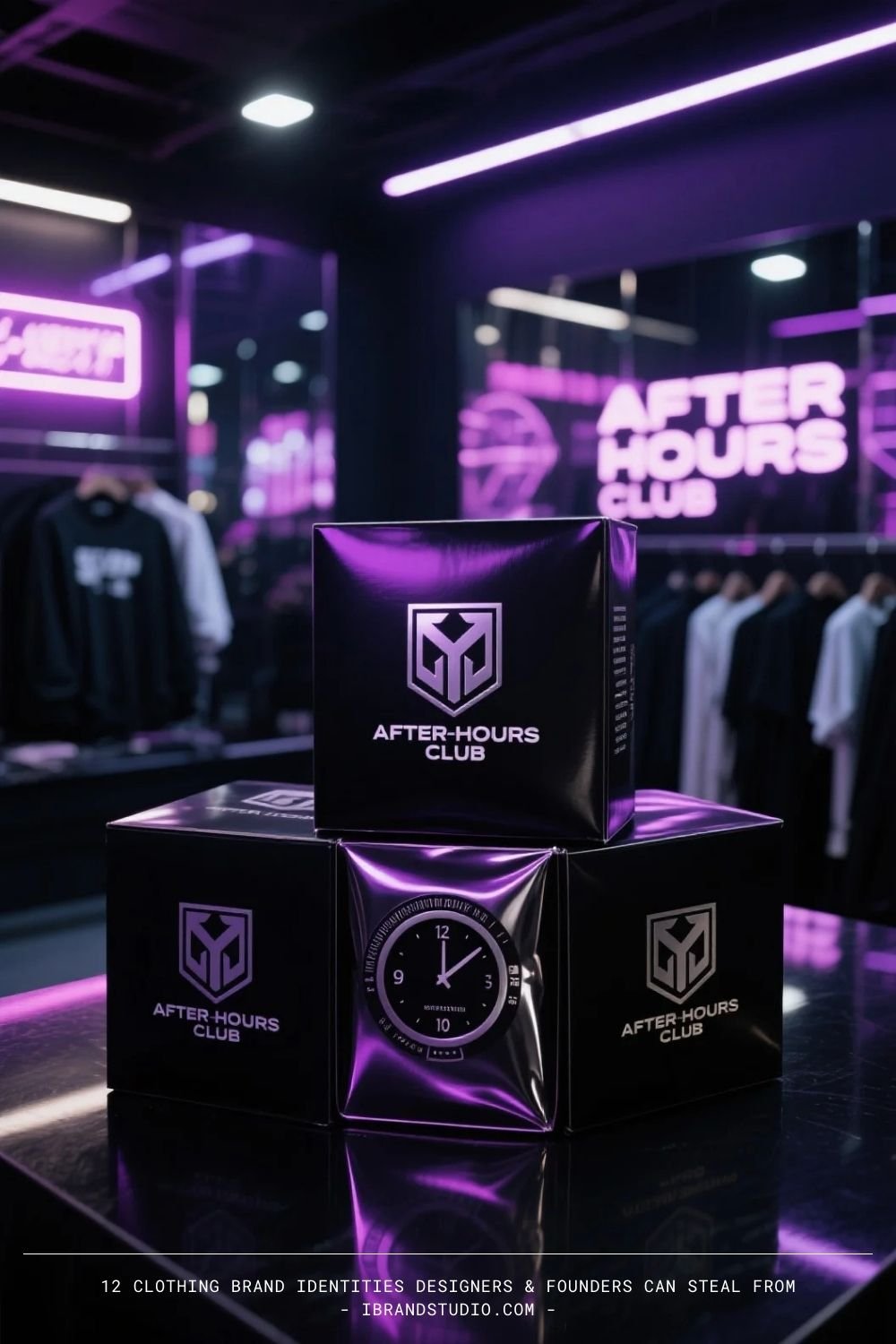
This brand captures a specific moment in time—the hours when creatives, hustlers, and dreamers are most alive.
Why it works: Mood-based branding is emotionally sticky.
Branding tip: Design for atmosphere. Think dark tones, subtle reflections, and cinematic visuals.
9. COMMON RARE
Concept: Premium essentials, perfected
Tagline: Ordinary, Perfected.
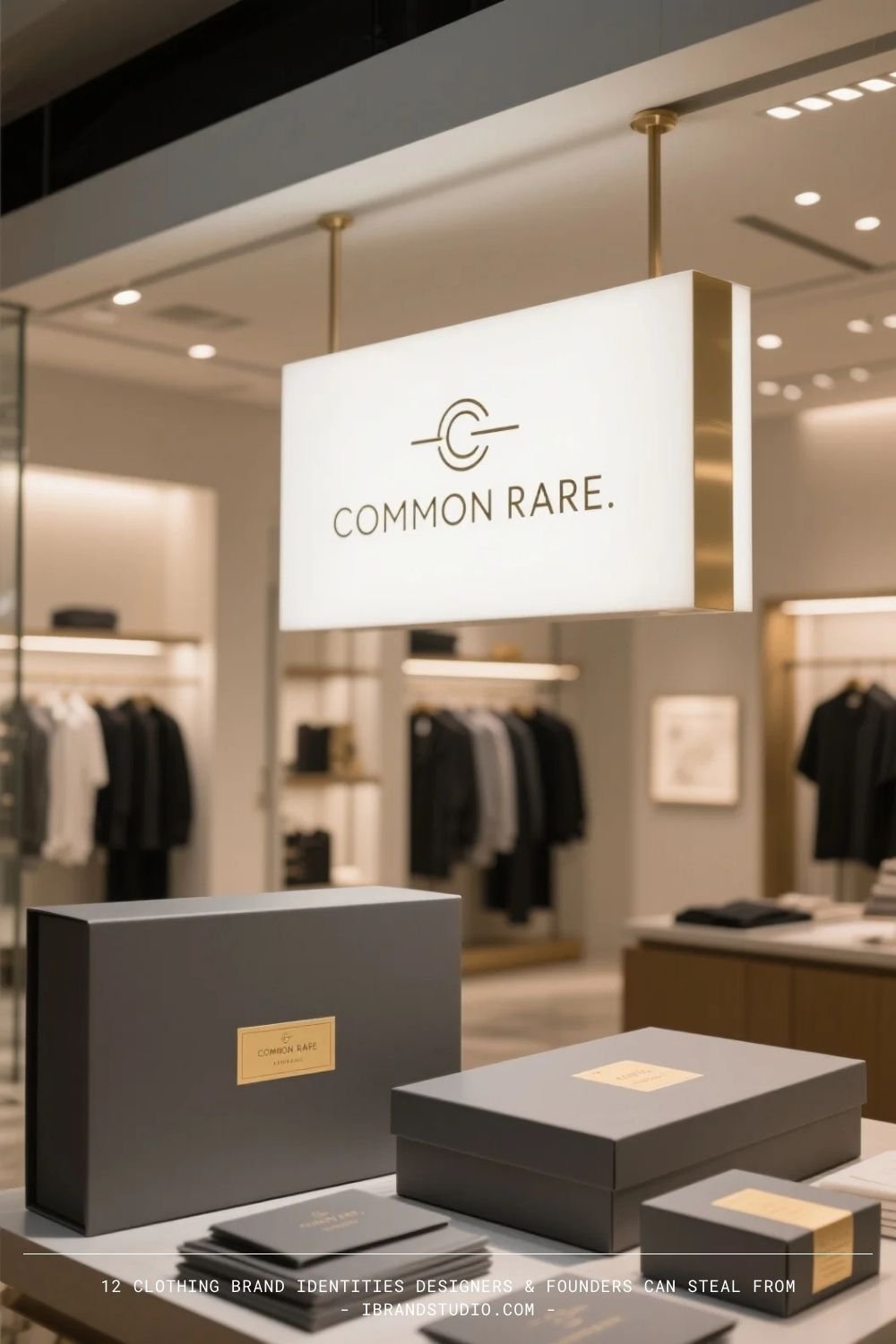
COMMON RARE proves that simplicity doesn’t mean boring. It means intentional.
Why it works: It elevates the familiar instead of reinventing it.
Branding tip: Luxury comes from consistency, not decoration.
10. WILD STATIC
Concept: Youth, chaos, and raw expression
Tagline: Feel the Noise.
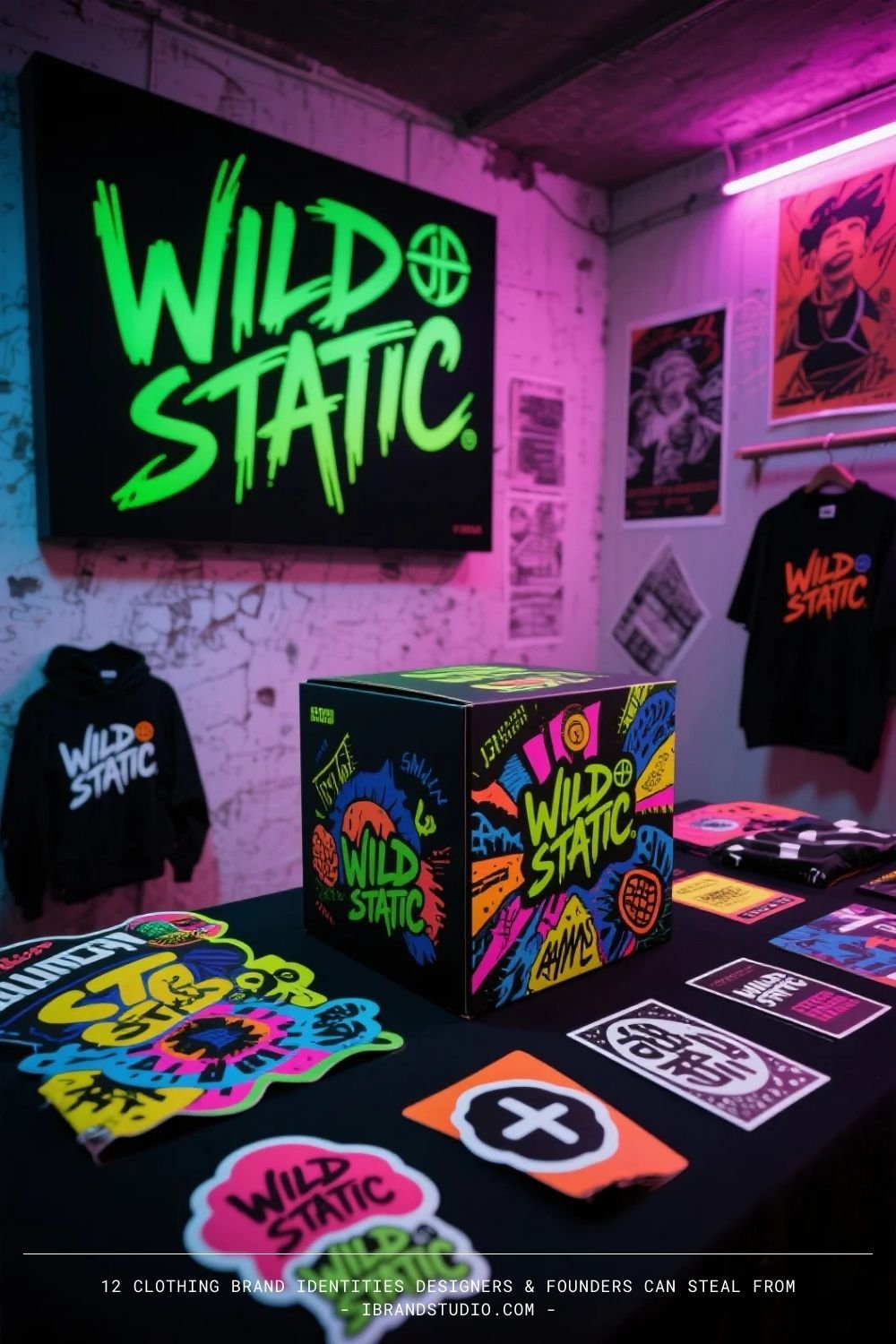
WILD STATIC embraces imperfection and emotional honesty. It’s messy on purpose—and that’s why it resonates.
Why it works: Gen Z values authenticity over polish.
Branding tip: Controlled chaos still needs rules. Build structure beneath the energy.
11. STILLFORM
Concept: Calm, architectural fashion
Tagline: Move Quietly.
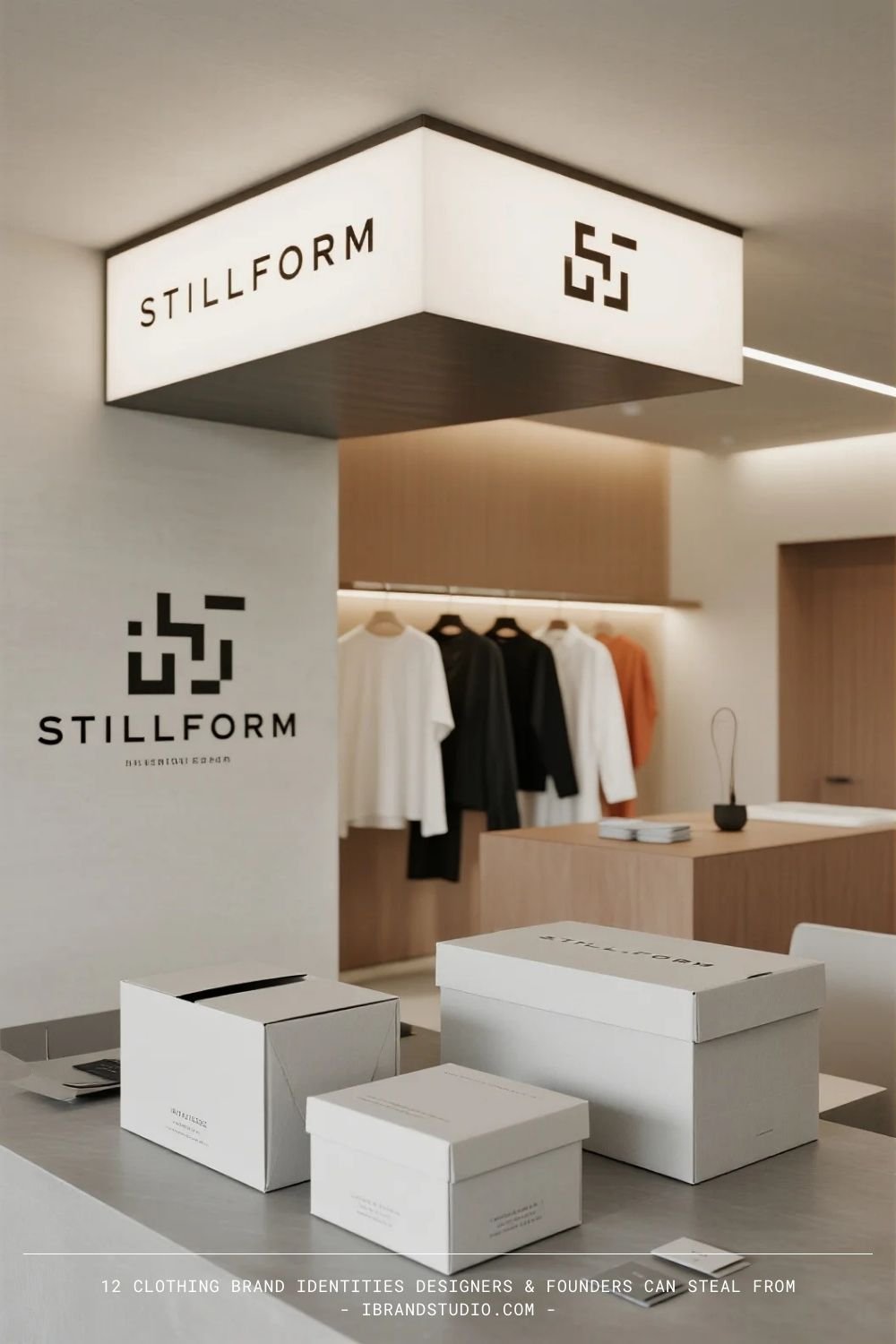
STILLFORM is a quiet brand in a loud market. It doesn’t compete for attention—it creates space.
Why it works: Calm is a differentiator.
Branding tip: Whitespace, neutral tones, and modular systems can be incredibly powerful.
12. LAST GOOD THING
Concept: Nostalgia, hope, and emotional storytelling
Tagline: Hold Onto Something.
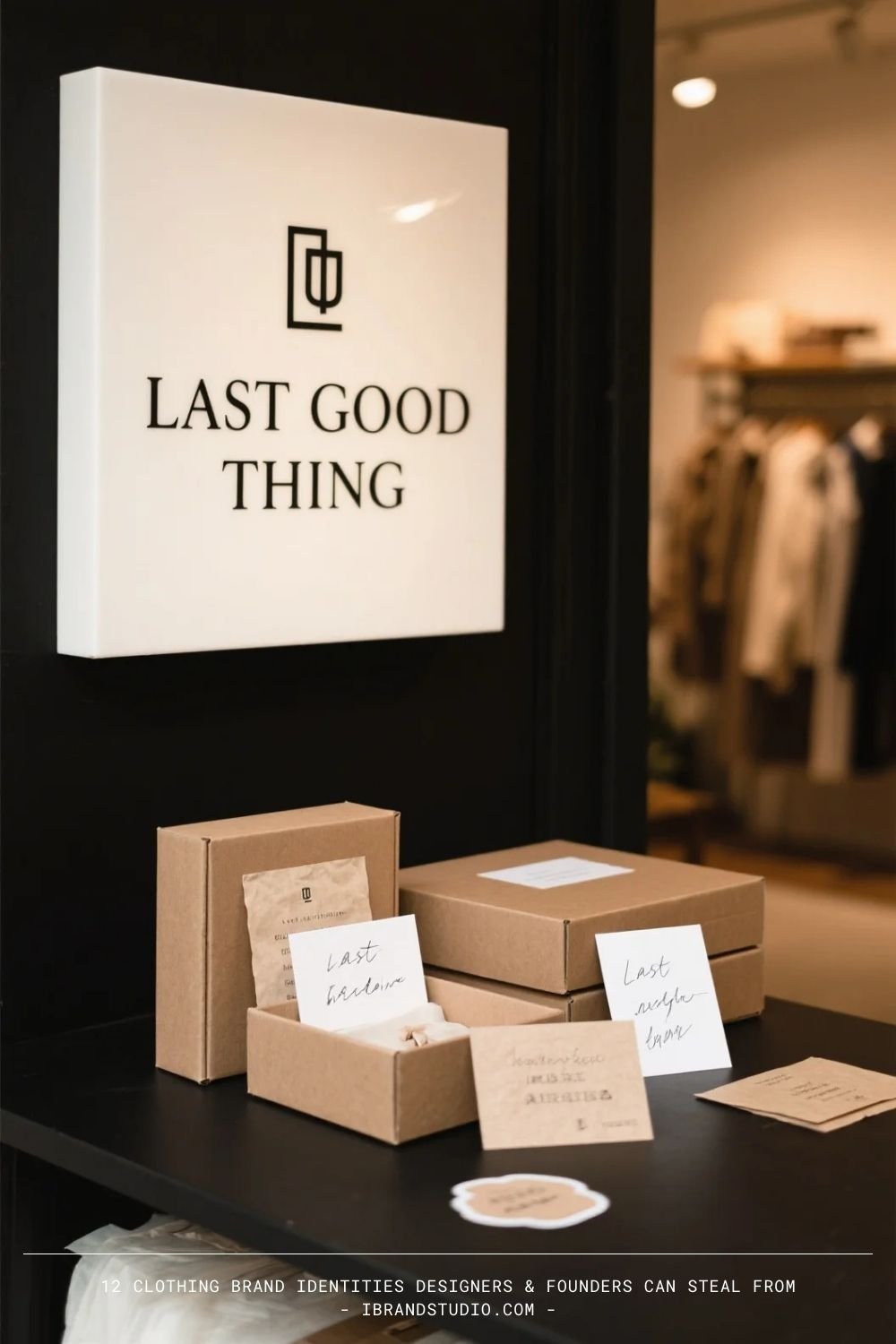
This brand leans into vulnerability and memory. It feels personal, almost handwritten.
Why it works: Emotion builds loyalty faster than aesthetics alone.
Branding tip: Let copywriting and typography feel human, not overproduced.
Also See: From Soles to Symbols: Logos of the 12 Most Famous Footwear Brands
Practical Branding Advice for Designers & Entrepreneurs
1. Start with positioning, not visuals.
A logo won’t save a weak idea.
2. Design for one person first.
Strong brands choose a lane and commit.
3. Use constraints as creative fuel.
Limit colors, fonts, and themes to sharpen the identity.
4. Consistency beats virality.
Brands grow by being recognizable over time.
5. If you can’t explain it simply, it’s not ready.
Clarity always wins.
Recommended Reading: How to Market Your Clothing Brand Like a Pro
Final Thoughts
For graphic designers, clothing brands are some of the best examples of full identity systems at work.
For entrepreneurs, they’re proof that a clear brand beats a clever one every time.
Every brand in this list works because it knows:
- Who it’s for
- What it stands for
- Why it exists
Get those right, and everything else—logos, websites, campaigns—becomes easier.
Like these Brand Identity Design Concepts? We can make a custom design just for you. Send us a message!