
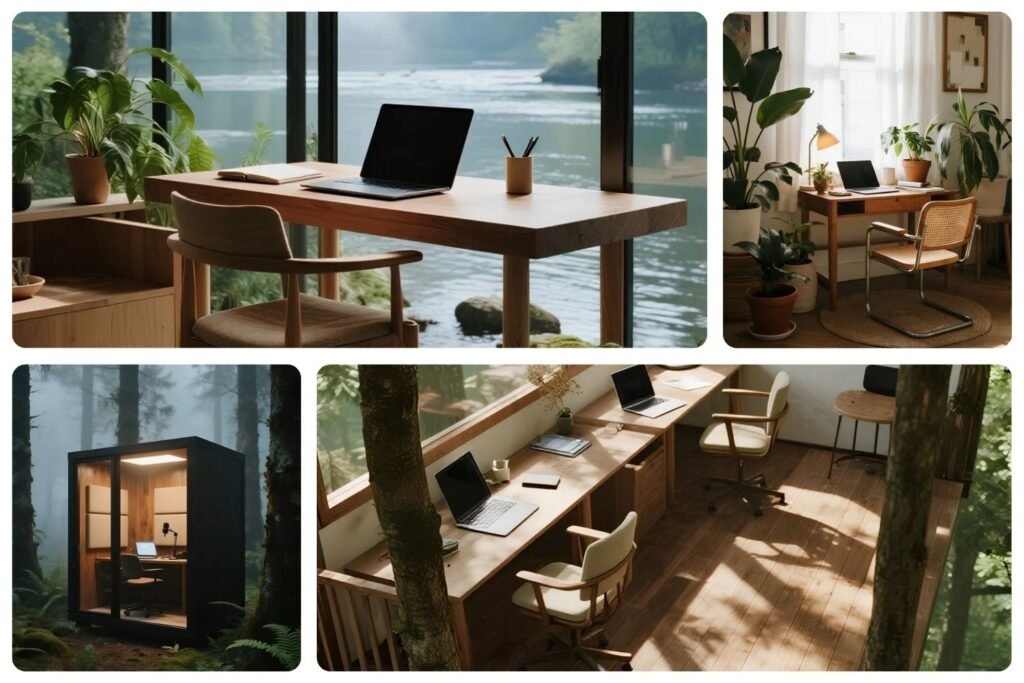
For graphic designers and entrepreneurs, focus is everything. When your work depends on ideas, judgment, and taste, distraction isn’t just annoying—it’s expensive.
That’s why more creatives are rethinking the traditional office and moving toward forest-haven workspaces: environments inspired by nature that make deep focus feel easier and more natural.
This isn’t about escaping responsibility or romanticizing cabin life. It’s about designing a workspace that supports how your brain actually works.
Natural light, greenery, quiet, and intentional routines help you think clearly, work longer without burnout, and enjoy the process more.
Below are 12 forest-haven workspace ideas, each with practical examples and tips you can realistically apply—whether you’re working from home, running a small studio, or building a flexible entrepreneur lifestyle.
You Might Also Like: 15 Indoor Garden Workspace Setups for Small Apartments
Why forest-haven workspaces support deep focus and wellness
Spending time around nature has been shown to reduce stress, improve attention, and support creative thinking.
Biophilic design—using natural light, organic materials, plants, and views of nature—helps regulate your nervous system. When your body feels calmer, your mind can stay focused longer.
For designers, this means fewer creative blocks and better visual judgment.
For entrepreneurs, it means clearer decision-making and more energy for strategic thinking.
A forest-haven workspace blends nature with structure, so productivity doesn’t rely on willpower alone.
1. The Canopy Studio
Skylight, standing desk, and open sky


A canopy studio uses overhead natural light to keep energy levels steady throughout the day. It’s ideal for long creative sessions where color accuracy and visual clarity matter.
Example:
A brand designer blocks off mornings for logo sketching and concept work, using the skylight to stay alert without harsh artificial lighting.
Practical tip:
Pair a skylight with a standing desk and anti-glare screen filter. Keep sketchbooks and physical references nearby—natural light makes analog work especially effective.
2. The Treehouse Loft
Elevated space for big-picture thinking
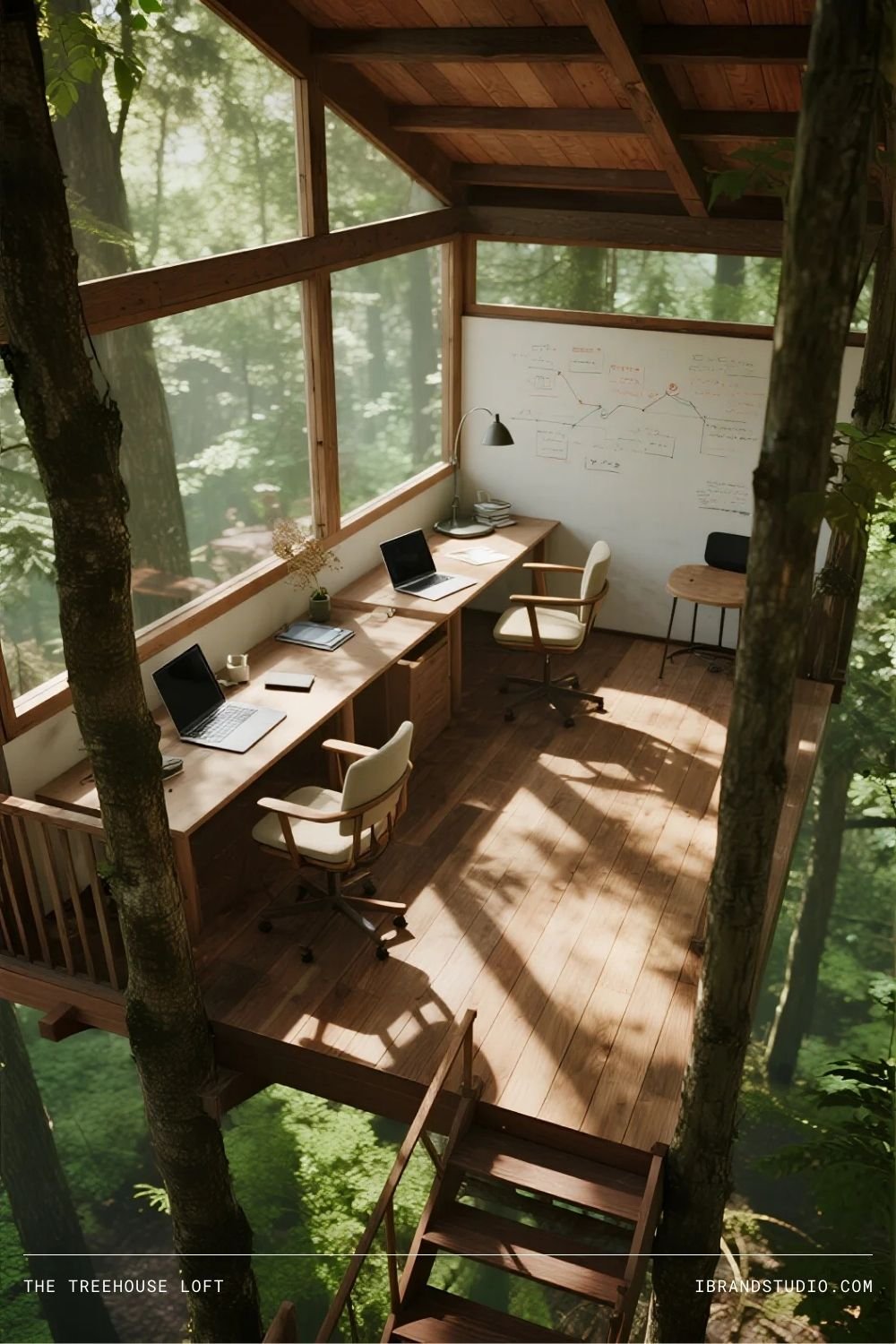
Being physically elevated changes how you think. A treehouse-style workspace is perfect for strategy, planning, and stepping back from daily tasks.
Example:
A startup founder uses the loft for quarterly planning sessions, mapping goals on a whiteboard and taking short walks between thinking blocks.
Practical tip:
Keep furniture minimal and surfaces large. This is a thinking space, not a storage unit.
See Also: 12 Loft Workspace Design Ideas for High-Ceiling Homes
3. The Riverside Retreat
Soft water sounds, low mental friction

Water naturally masks background noise and lowers stress. A riverside or stream-adjacent workspace is great for tasks that need gentle focus rather than intense concentration.
Example:
A UX designer edits microcopy and refines flows while listening to the natural rhythm of water.
Practical tip:
Protect your gear from moisture with raised flooring and sealed storage. The calm should never come at the cost of damaged equipment.
4. Moss & Minimalism Studio
Simple materials, calm visuals
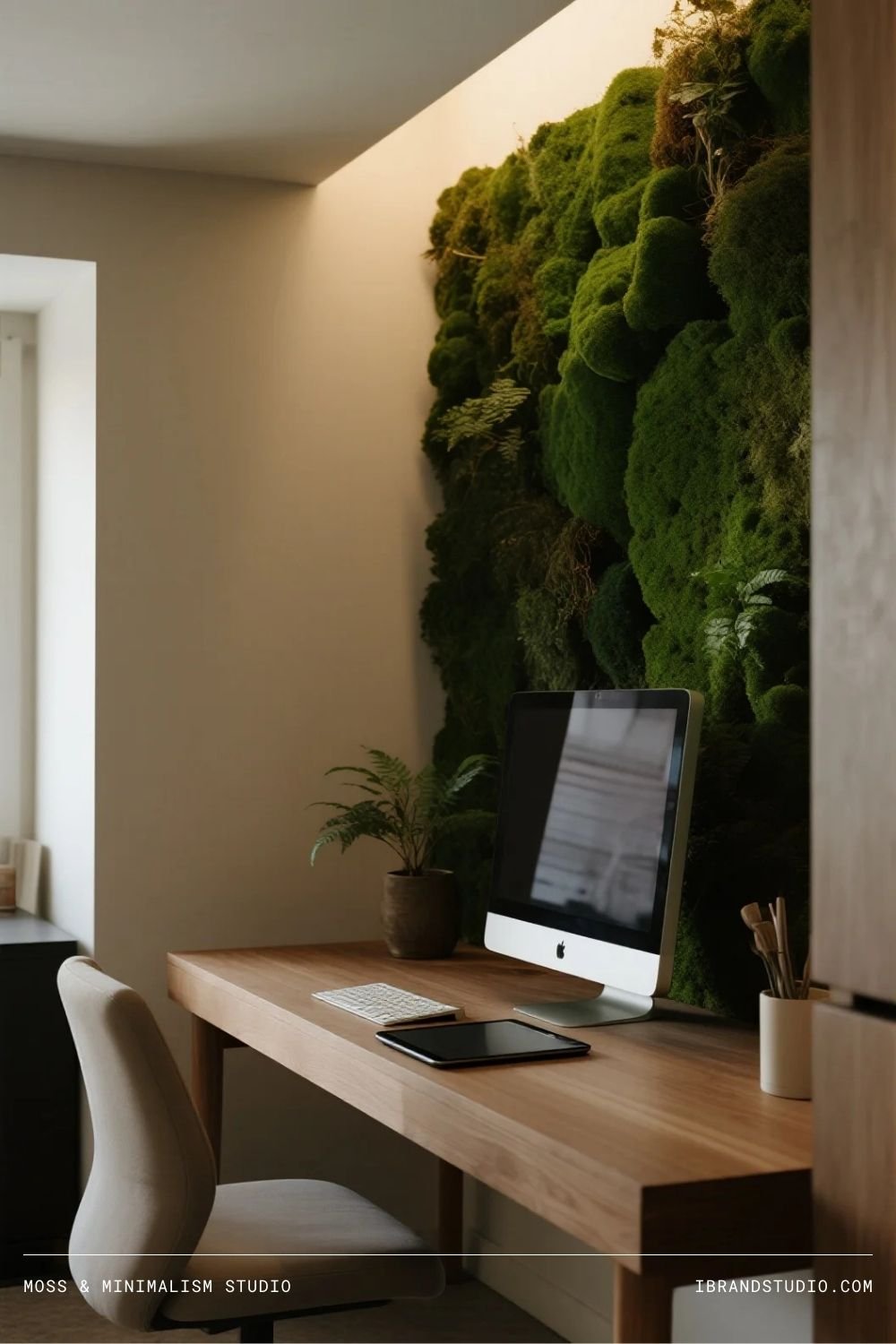
This workspace relies on restraint. One or two materials, a moss wall, and minimal décor reduce visual noise and help your eyes rest.
Example:
An icon designer uses this setup for precision work, glancing at the moss wall whenever mental fatigue sets in.
Practical tip:
Treat the moss wall as a visual “reset button.” When you feel stuck, look away from the screen for 20–30 seconds before continuing.
5. The Soundproof Forest Pod
Total isolation when you need it
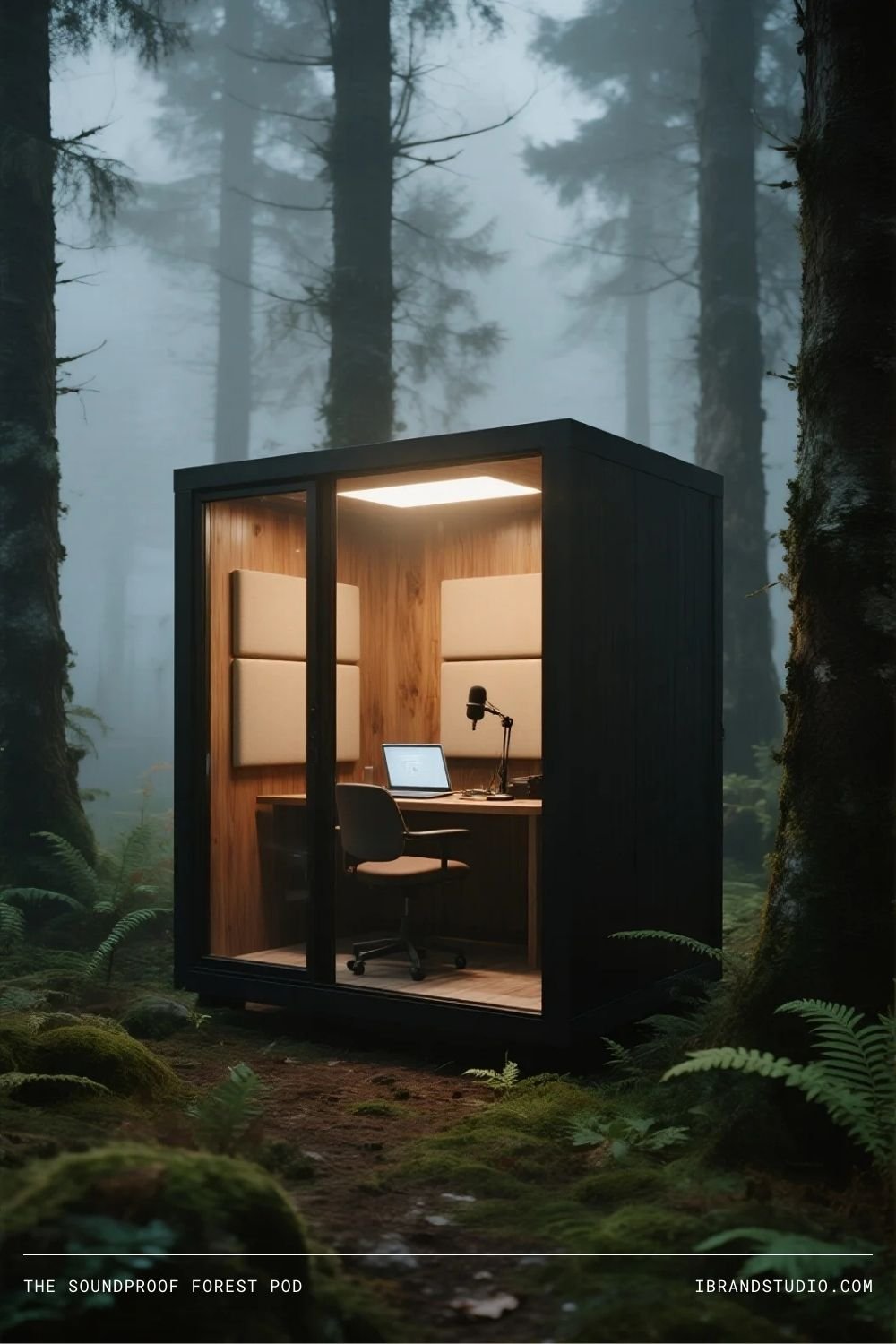
Sometimes deep focus requires real silence. A soundproof pod gives you that, without needing to disappear for days.
Example:
An entrepreneur records podcast intros and then switches straight into editing mode, uninterrupted.
Practical tip:
Make sure ventilation is quiet and effective. Poor airflow ruins concentration faster than noise.
6. The Biophilic Home Nook
Nature-inspired, budget-friendly

You don’t need a cabin to benefit from biophilic design. A well-designed corner at home can still function as a powerful forest workspace.
Example:
A freelance designer transforms a bedroom corner with plants, wood textures, and warm lighting to create a focused work zone.
Practical tip:
Separate this nook mentally from the rest of your home. Use a start-of-day ritual—music, tea, or a short walk—to signal “work mode.”
Recommended: Nature-Inspired Workspace Ideas: Biophilic Design for Creative Professionals
7. The Communal Cabin
Quiet together, focused apart
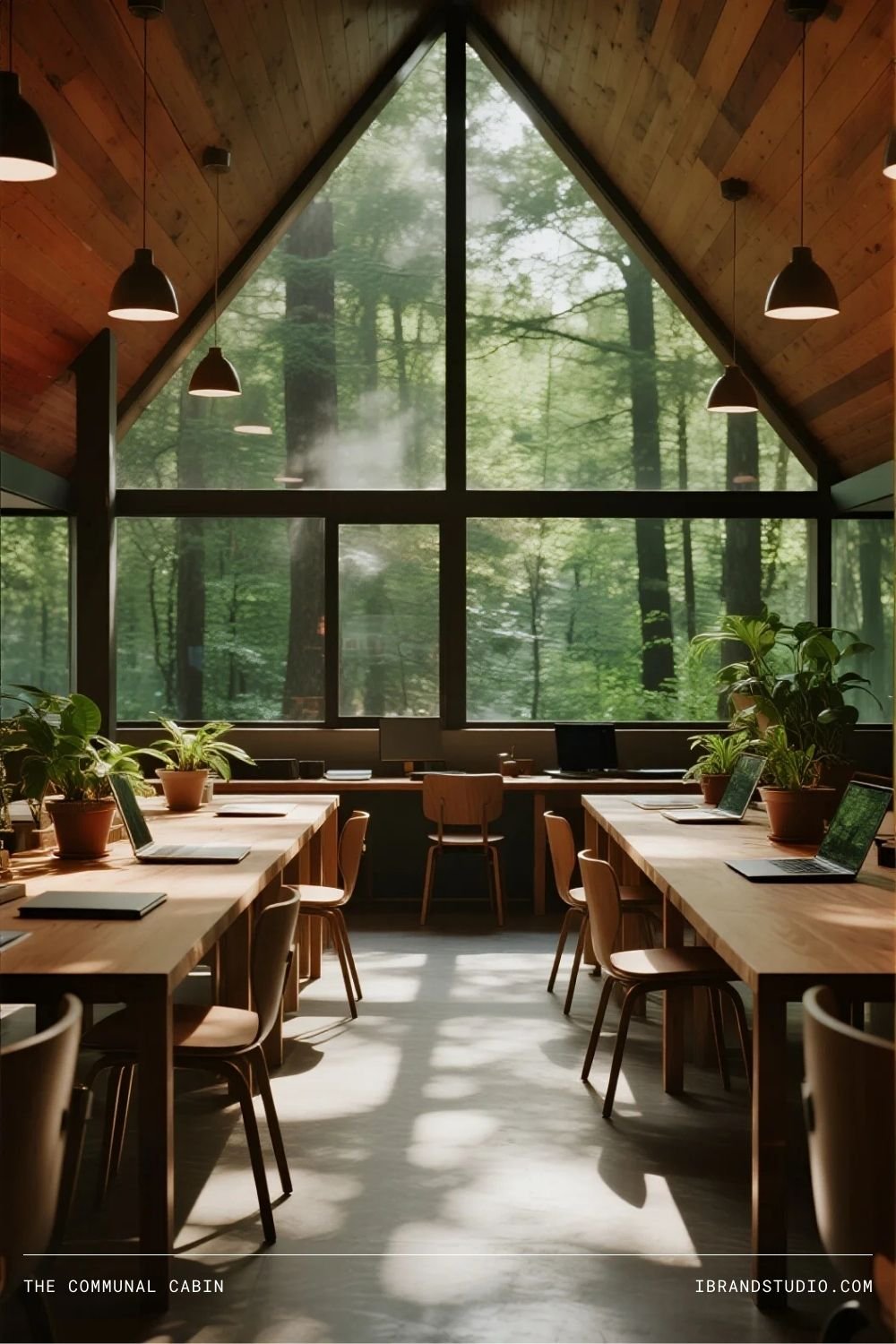
This shared workspace works best with clear rules. Think of it as silent co-working with occasional collaboration.
Example:
A founder and designer work side by side once a week, then review each other’s progress at the end of the day.
Practical tip:
Set expectations early: no calls, no notifications, and shared breaks only at agreed times.
8. The Meditation Glade
Short breaks that actually recharge you

This isn’t a workspace in the traditional sense—it’s a recovery zone. Short, intentional breaks keep deep work sustainable.
Example:
After every 60–90 minutes of focused design work, a creative director walks to the glade for breathing exercises.
Practical tip:
Keep this space device-free. The goal is nervous system reset, not passive scrolling.
9. The Maker Shed
Hands-on creativity, no screens
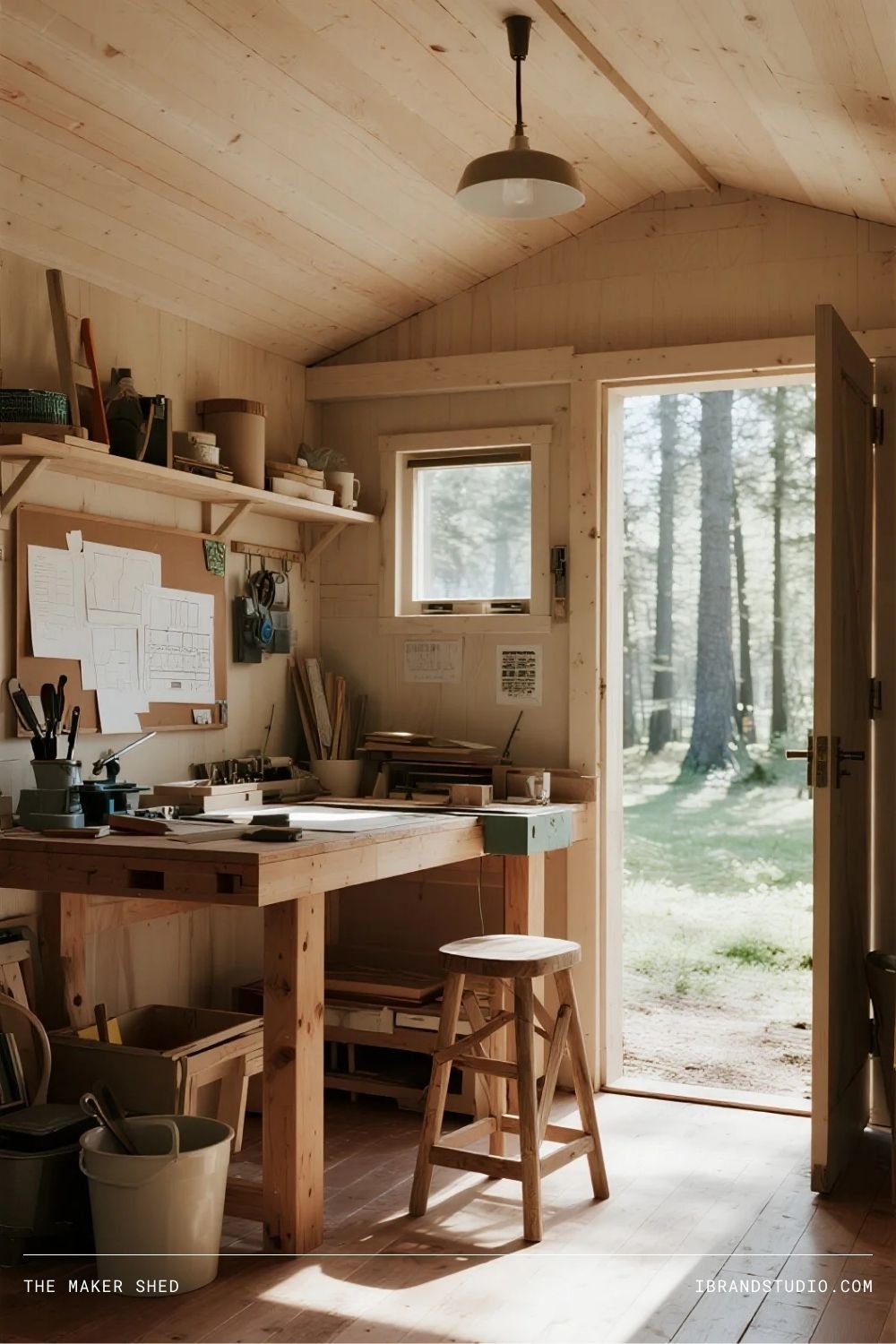
Digital work benefits from physical exploration. A maker shed gives you room to prototype, test textures, and think with your hands.
Example:
A packaging designer builds rough mockups, then photographs them for digital refinement.
Practical tip:
Schedule maker time after digital ideation—not before. It works best as a second-stage process.
10. The Solar-Powered Mobile Workspace
Work wherever inspiration hits
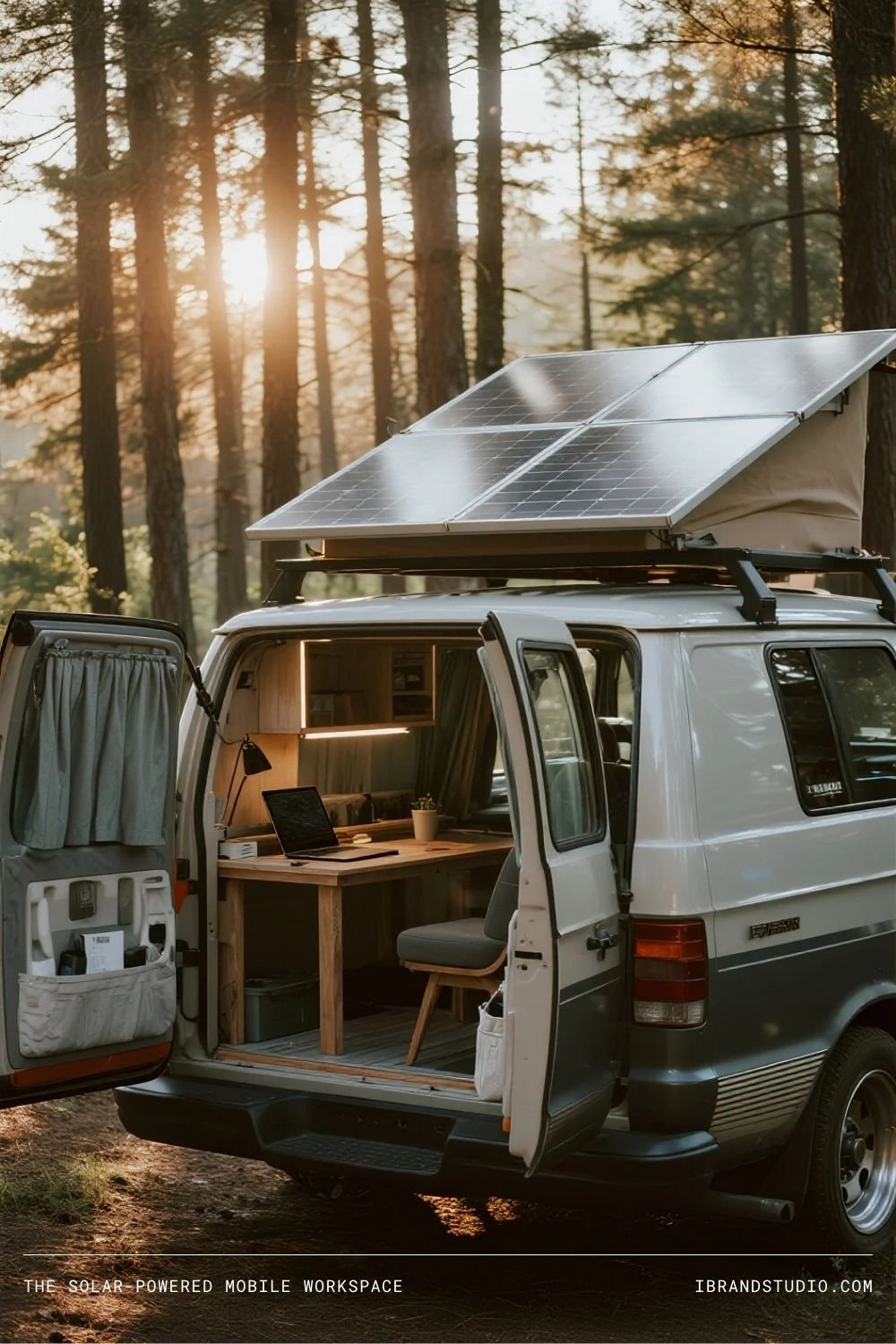
A mobile forest workspace gives entrepreneurs flexibility without sacrificing productivity.
Example:
A consultant travels between cities, parking near forested areas to write proposals and strategy documents.
Practical tip:
Invest in reliable mobile internet and power management. Freedom only works if your tools keep up.
Keep Explore: Top 10 Workplaces for Starting Entrepreneurs
11. The Nightfall Studio
Optimized for evening focus
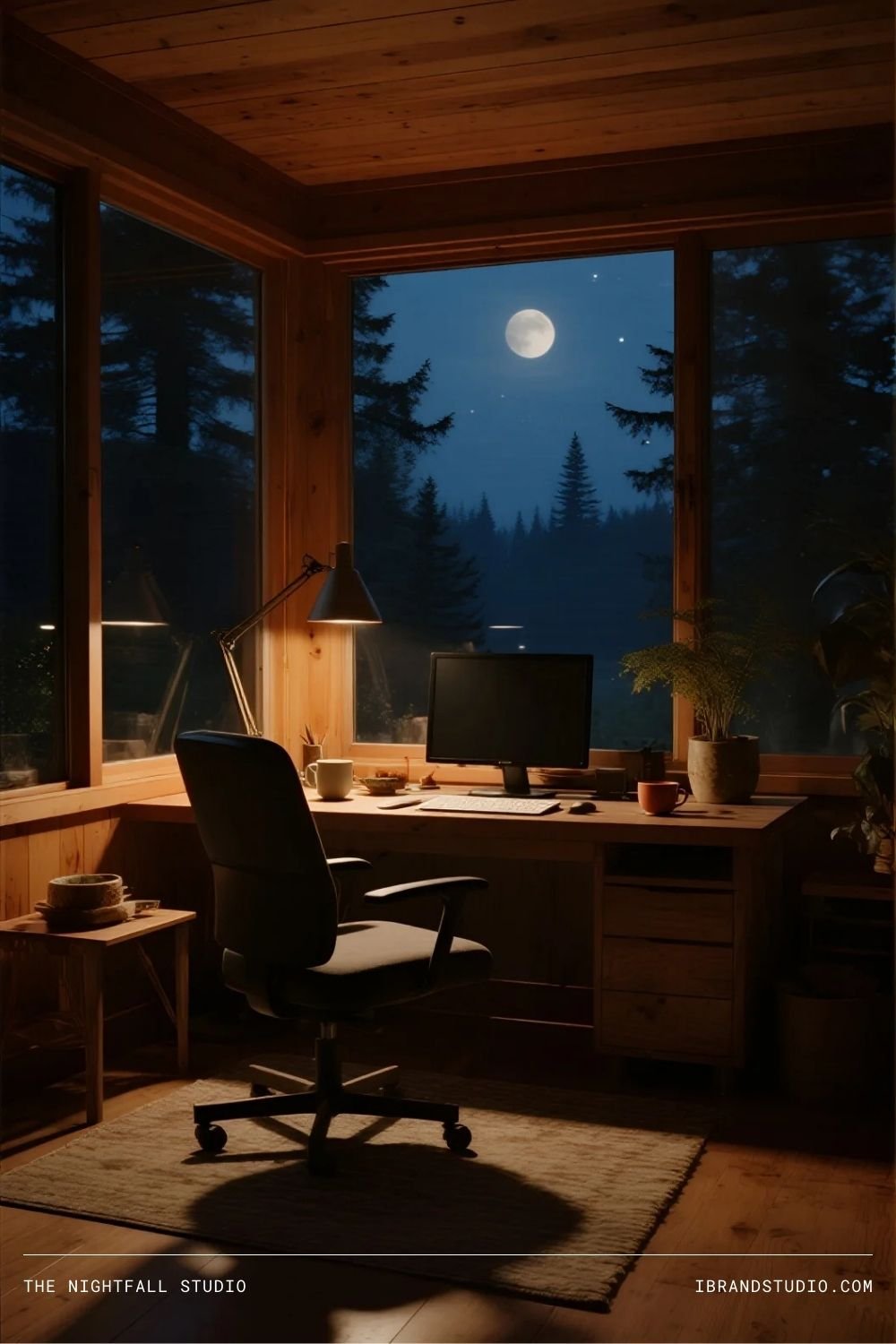
Some creatives do their best work at night. This workspace embraces that instead of fighting it.
Example:
A designer schedules client work during the day and reserves evenings for deep creative output under warm lighting.
Practical tip:
Use blue-light filters and consistent lighting tones to avoid overstimulation late at night.
12. The Garden Pavilion
Client-friendly and calming
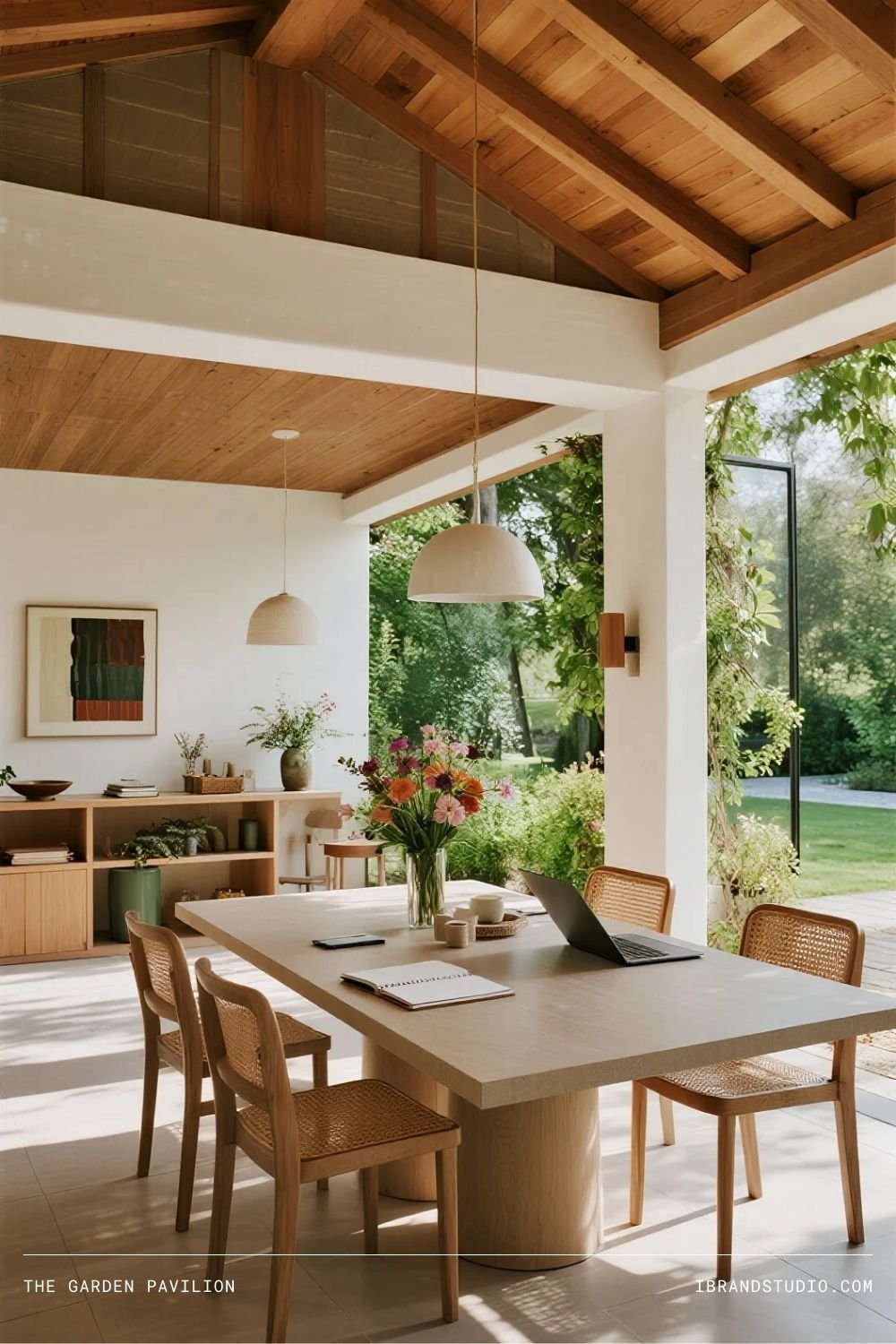
A garden pavilion is perfect for presentations, workshops, and collaborative sessions that benefit from a relaxed atmosphere.
Example:
A creative director hosts brand kickoffs here, combining structured discussion with short outdoor breaks.
Practical tip:
Keep technology simple and reliable. The environment should support conversation, not distract from it.
Forest Workspace Setup Essentials
No matter which forest-haven workspace you choose, these basics matter:
- Stable internet (mesh Wi-Fi or mobile hotspot)
- Ergonomic seating and monitor setup
- Backup power solutions
- Thoughtful lighting with temperature control
- Simple acoustics management
- Clear start and end-of-day rituals
Good design removes friction before it shows up.
Simple Focus Routines That Work in Any Forest Workspace
- 90/30 cycles: 90 minutes deep work, 30 minutes movement or rest
- Morning clarity: Write your top creative task before opening email
- Evening reset: Tidy your workspace so tomorrow starts clean
These habits matter just as much as the environment itself.
Final thoughts: build a system, not just a beautiful space
A forest-haven workspace isn’t about aesthetics alone. It’s about creating conditions where deep focus feels natural and wellness is built into your workday.
Start small—add plants, block uninterrupted time, or work near nature once a week. Over time, those choices compound.
For graphic designers and entrepreneurs, the real goal isn’t escaping work—it’s doing better work with less strain.
Design your workspace the same way you design for clients: intentionally, thoughtfully, and with the human experience in mind.