
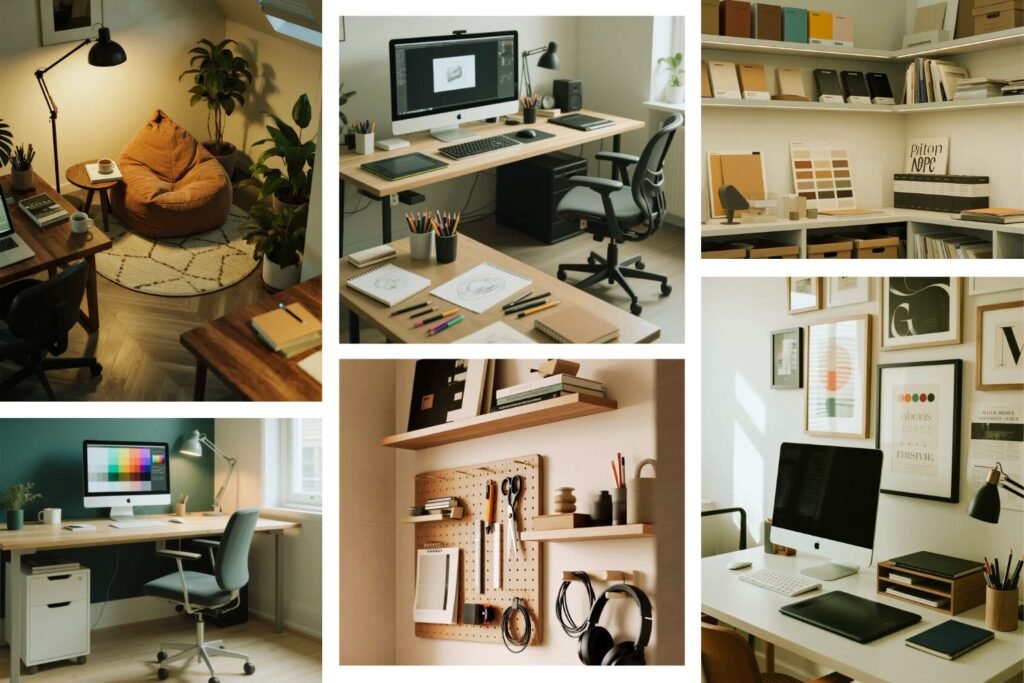
How to design a workspace that supports focus, creativity, and real-world design work
A graphic designer’s workspace isn’t just a place to sit and work. It’s where ideas are shaped, problems are solved, and concepts turn into finished designs.
Whether you’re freelancing from home, working remotely, or setting up a personal studio, your room decor plays a bigger role than most designers realize.
The right workspace setup can help you stay focused longer, think more clearly, and feel genuinely inspired to create.
The wrong setup? It can drain energy, slow your workflow, and quietly kill creativity.
In this guide, we’ll walk through six room decor ideas designed specifically for graphic designers.
These ideas focus on balance — creativity without clutter, inspiration without distraction, and style that actually supports how designers work.
Along the way, you’ll find practical tips you can apply right away, even if you’re working with limited space or budget.
Keep Explore: 12 Inspiring Studios Perfect for Etsy Sellers and DIY Creators
Why Room Decor Matters for Graphic Designers
As designers, we’re visual thinkers. That means our environment constantly influences how we feel and how we work.
A well-designed graphic designer workspace can:
- Improve focus and reduce mental fatigue
- Support accurate color work and visual decisions
- Make long design sessions more comfortable
- Reinforce your identity as a professional designer
Think of your workspace as a design project of its own. When it’s done well, everything else flows more easily.
1. Build a Gallery Wall and Inspiration Board

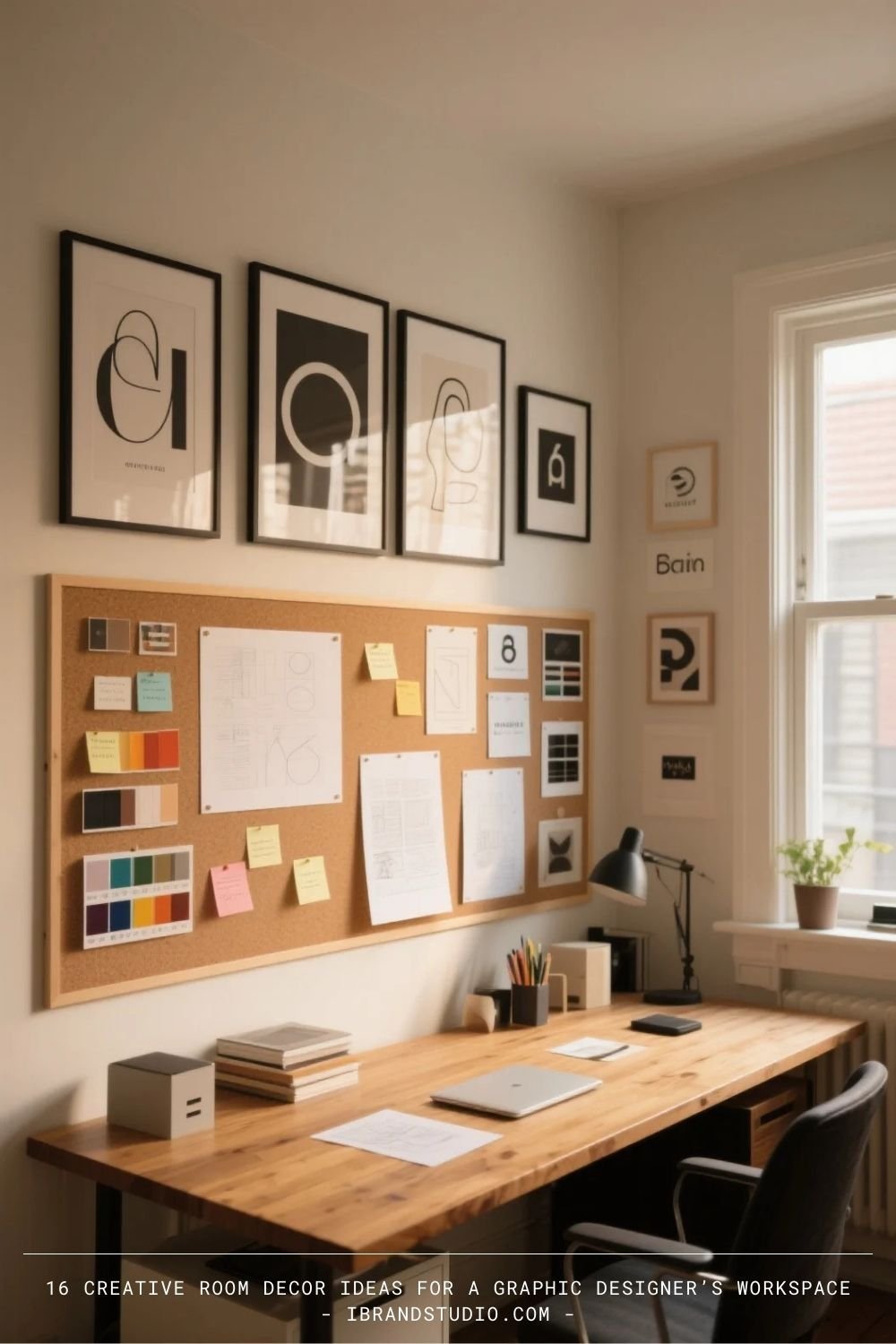
Every graphic designer needs visual inspiration — but it needs to be intentional.
A gallery wall paired with an inspiration board gives you a curated source of ideas right in front of you. This isn’t about filling walls randomly.
It’s about surrounding yourself with work that reflects where you want your design skills to go.
What works well:
- Framed posters, typography, or illustrations
- Your own favorite projects
- Branding or layouts you admire
- Design quotes or creative principles
Add a corkboard or magnetic board nearby for sketches, color palettes, and in-progress ideas. This makes inspiration feel active instead of static.
Helpful tip:
Rotate items every few weeks. When something fades into the background, it stops inspiring you.
2. Create a Dual-Zone Workstation (Digital + Analog)
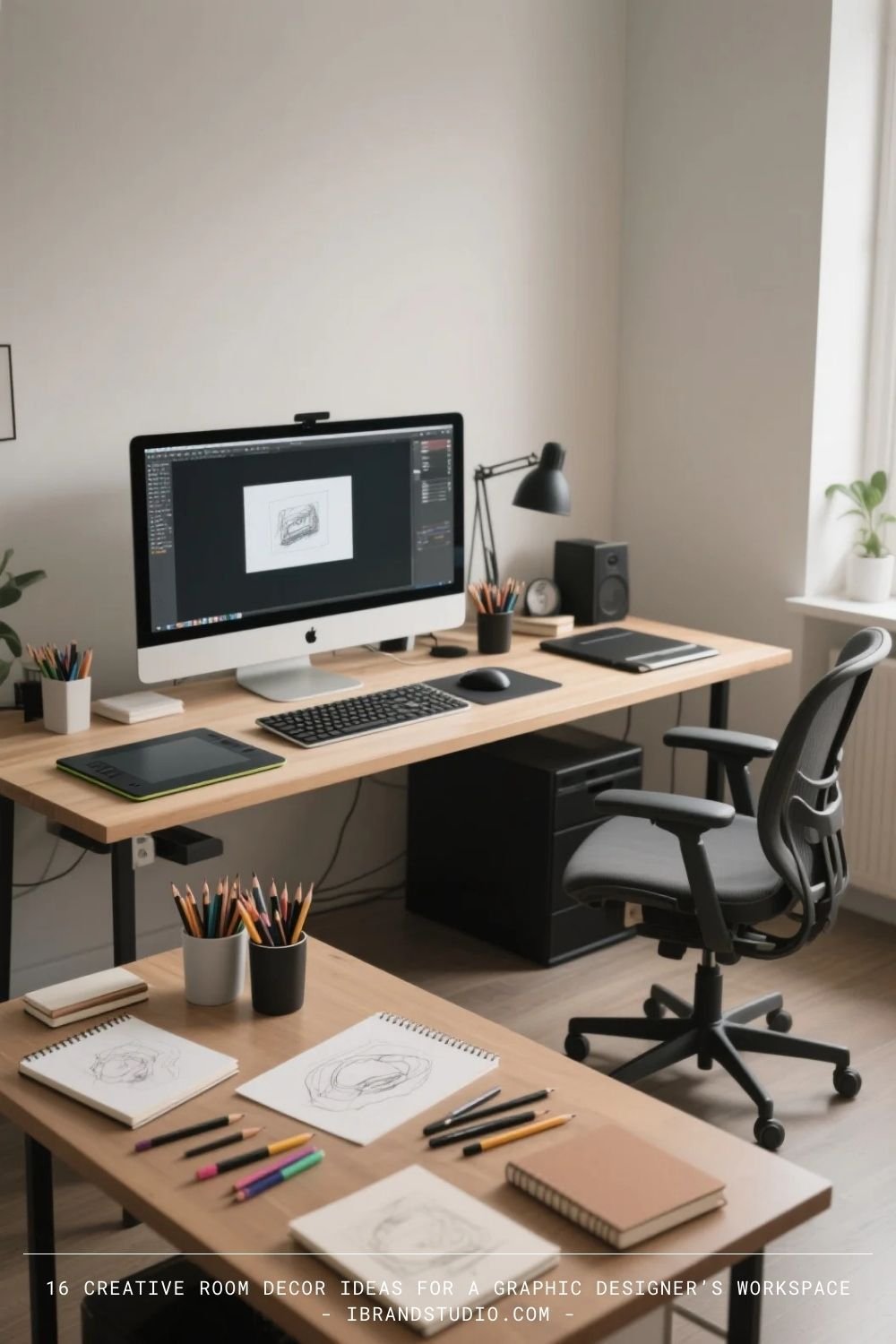
Design doesn’t start and end on a screen. Some of the best ideas still begin on paper.
A dual-zone workstation separates your workspace into:
- A digital zone for your computer, monitor, and tablet
- An analog zone for sketching, notes, and brainstorming
This setup makes it easy to move between thinking and executing without breaking your flow.
Key elements to consider:
- A desk large enough to spread out
- A monitor arm to free up space
- A sketchbook or notepad that’s always within reach
If possible, a sit-stand desk or desk converter is worth considering. Changing posture during the day helps with both comfort and creative energy.
3. Use Color and Lighting with Purpose
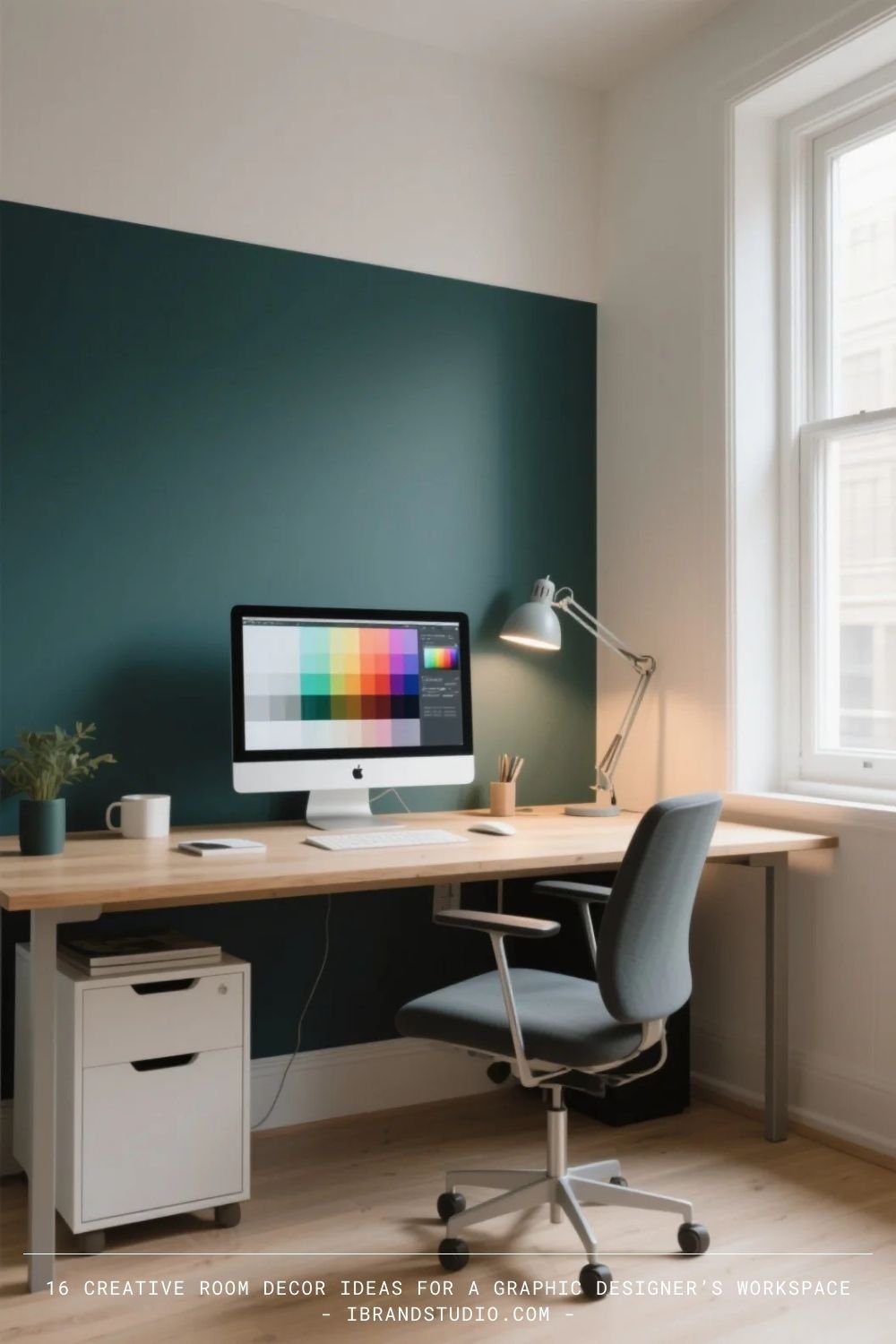
As a graphic designer, color accuracy matters — and your room decor can affect it more than you think.
Wall color tips:
Stick with light, neutral colors for most walls. Whites, soft grays, or warm off-whites keep your space visually calm.
If you want personality, add one accent wall in a muted tone like navy, olive, or charcoal.
Avoid overly bright or saturated colors near your monitor. They can subtly distort how you perceive color on screen.
Lighting essentials:
- Natural light whenever possible
- A daylight-balanced desk lamp (around 5000–6500K)
- Soft ambient lighting to reduce eye strain
Good lighting isn’t just about aesthetics — it directly affects how your designs look and how tired your eyes feel at the end of the day.
4. Add Floating Storage and a Tool Wall
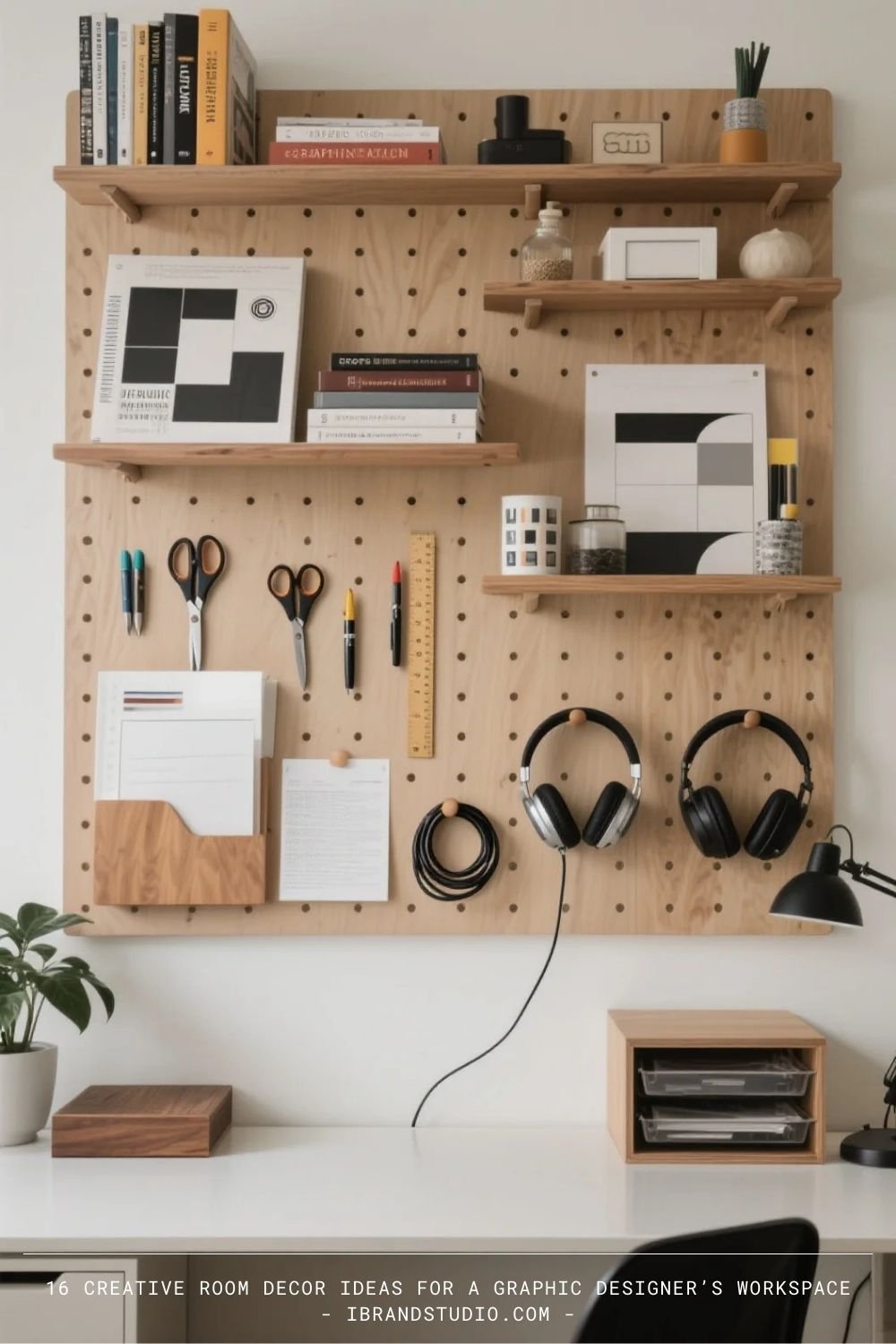
A messy desk makes it harder to think clearly. But hiding everything away isn’t the answer either.
Smart storage keeps tools visible, organized, and easy to reach. Pegboards, floating shelves, and magnetic strips work especially well in a graphic designer workspace.
Useful storage ideas:
- Pegboards for tools, headphones, and cables
- Floating shelves for books and references
- Drawer organizers for small items
Simple rule:
If you use it weekly, keep it visible. If not, store it out of the way. Your desk space is valuable — treat it that way.
5. Create a Creative Materials Library
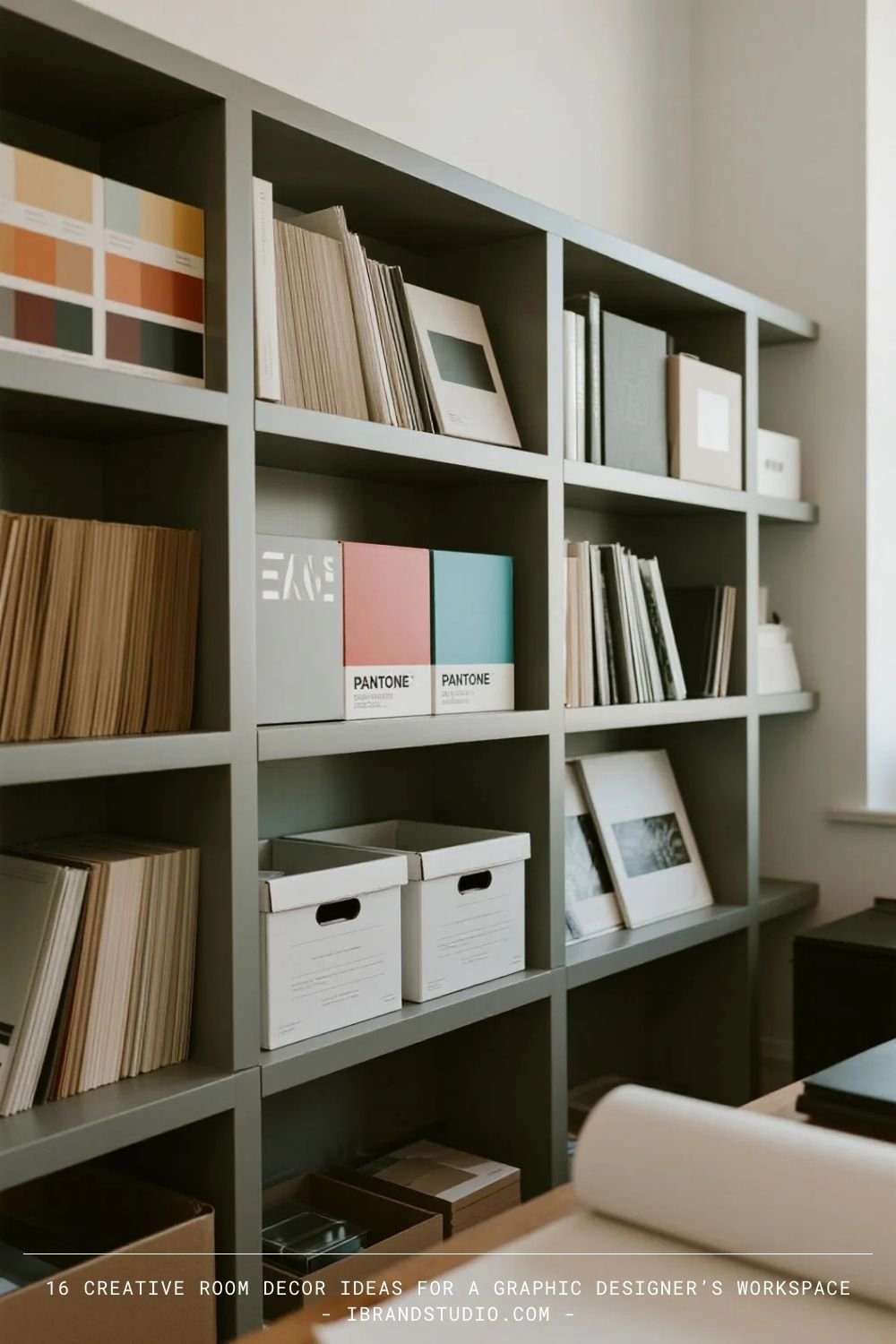
If you work in branding, print, or packaging, a materials library can be a game changer.
This is a dedicated space for physical inspiration — things you can touch, flip through, and compare.
Screens are great, but physical materials often spark ideas in a different way.
What to include:
- Paper samples and textures
- Color swatches or Pantone references
- Design and typography books
- Print samples and mockups
Use labeled boxes or trays to keep things tidy. When everything has a place, it’s easier to explore without creating chaos.
6. Design a Chill and Reflection Corner
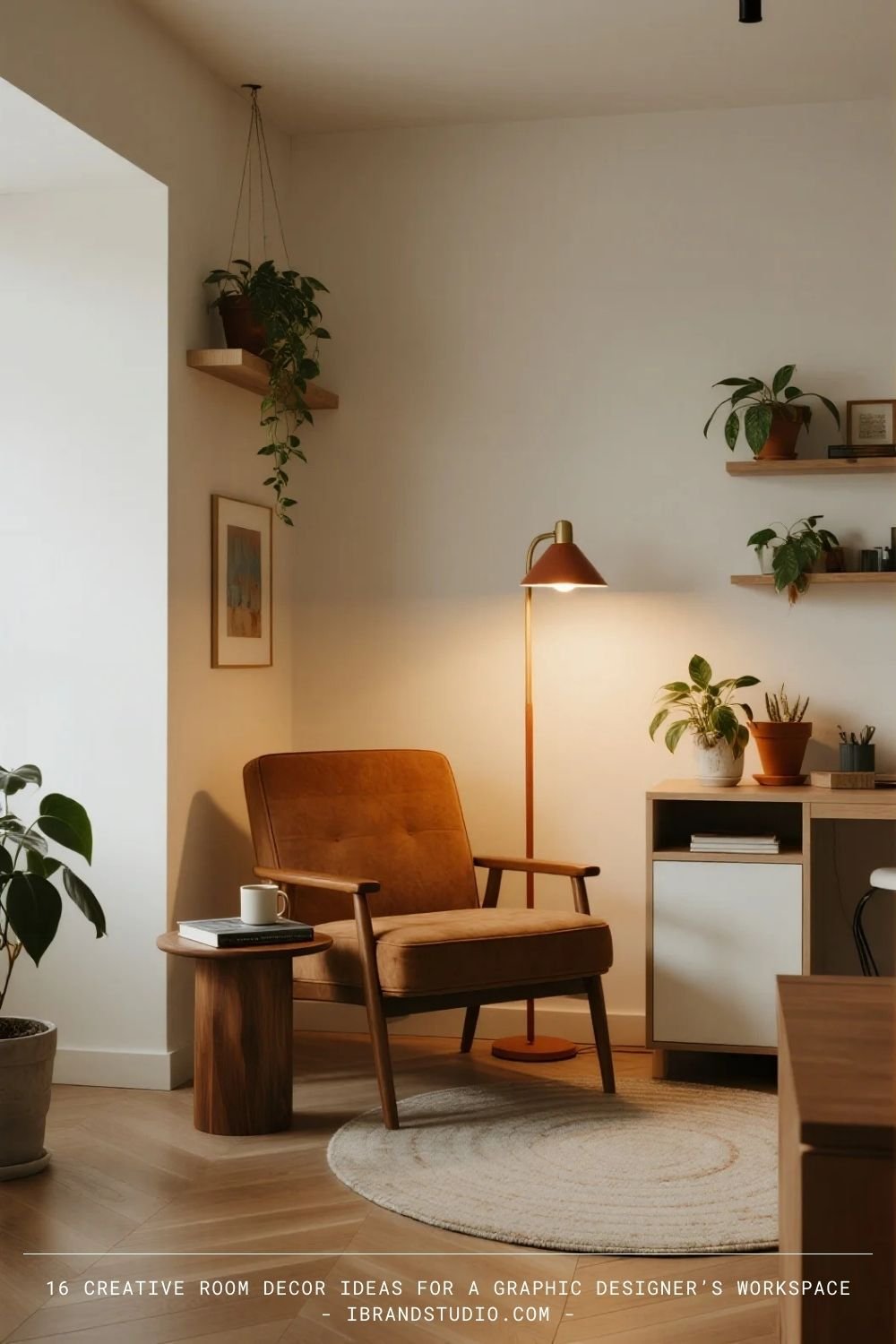
Creativity needs breaks. Seriously.
A small chill corner gives you a place to step away from your desk without leaving your workspace entirely. This is where ideas often click into place.
You don’t need much:
- A comfortable chair or bean bag
- A small table
- A plant
- Soft, indirect lighting
Use this space for reviewing work, reading, client calls, or short mental resets. Many designers do their best thinking when they’re not actively “working.”
Don’t Forget Plants and Personal Touches
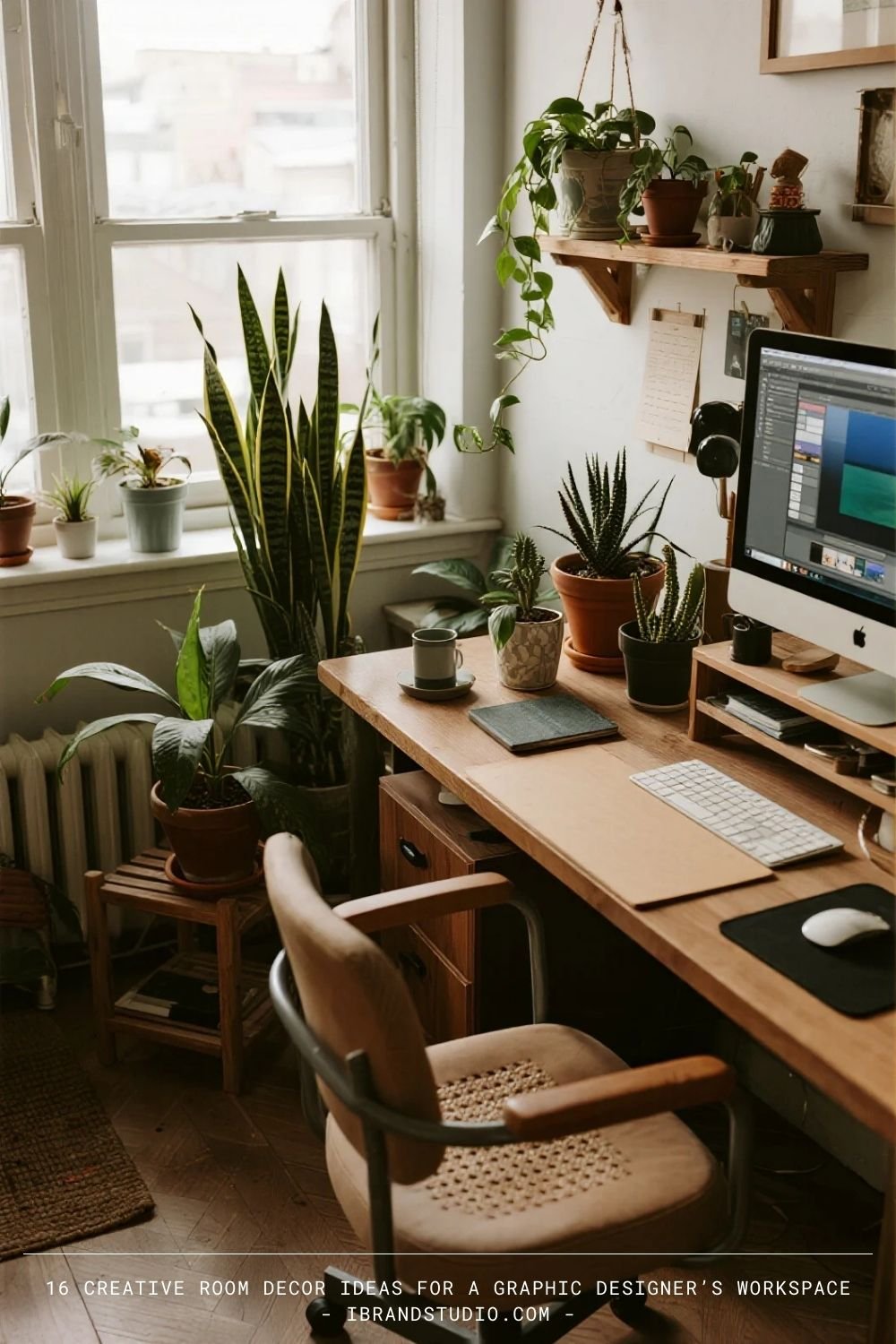
Plants bring life into a design-heavy space and help reduce stress. Low-maintenance options like snake plants, pothos, or ZZ plants are perfect for studios.
Personal items — art objects, travel souvenirs, handmade pieces — make your workspace feel human. Just keep it intentional. Too much visual noise can become distracting.
Also Read: 15 Indoor Garden Workspace Setups for Small Apartments
Common Workspace Decor Mistakes Designers Make
Watch out for these:
- Decorating for trends instead of function
- Poor lighting for color work
- Ignoring ergonomics
- Overcrowding the space
- No separation between work and rest
Your workspace should support your design process, not compete with it.
Final Thoughts: Treat Your Workspace Like a Design Project
Your graphic designer workspace is an extension of how you think and work. Approach it the same way you approach a client project:
- Define the purpose
- Design for the user (you)
- Balance creativity with clarity
- Refine over time
You don’t need a massive studio or expensive furniture. With thoughtful room decor choices, even a small space can become a focused, inspiring, professional design environment.