
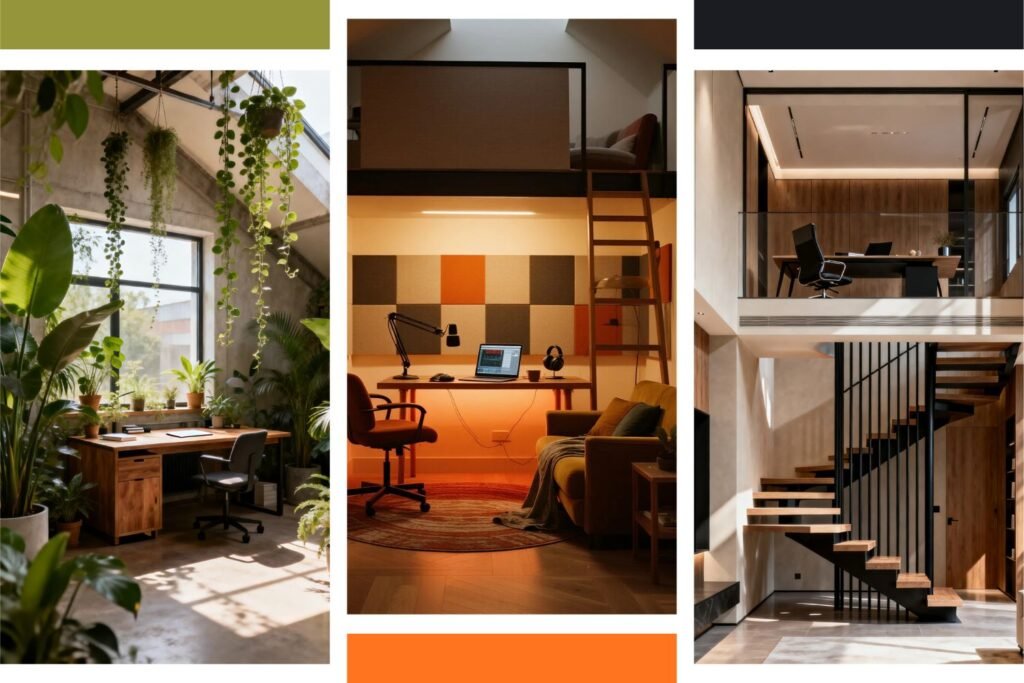
A smart, stylish guide for freelancers, remote workers, and entrepreneurs
Working from home looks very different when your house has high ceilings. There’s more light, more air, and a sense of openness that can feel both inspiring and—if you’re not careful—a little overwhelming.
That’s where a well-designed loft workspace comes in.
A loft office allows you to turn unused vertical space into a productive, creative environment tailored to how you actually work.
For freelancers managing multiple clients, remote workers on back-to-back calls, or entrepreneurs building something new, a loft workspace can become the most valuable area in your home.
Below are 12 practical loft workspace design ideas for high-ceiling homes, with real-world tips to help you create a space that’s comfortable, functional, and genuinely enjoyable to work in.
You Might Also Like:
- Winter Workspace Interior Design Inspiration: 15 Ideas for a Warm, Stylish Office
- 14 Desert Botanical Workspace Ideas for Warm, Minimal Design
1. Create a Dedicated Loft Office

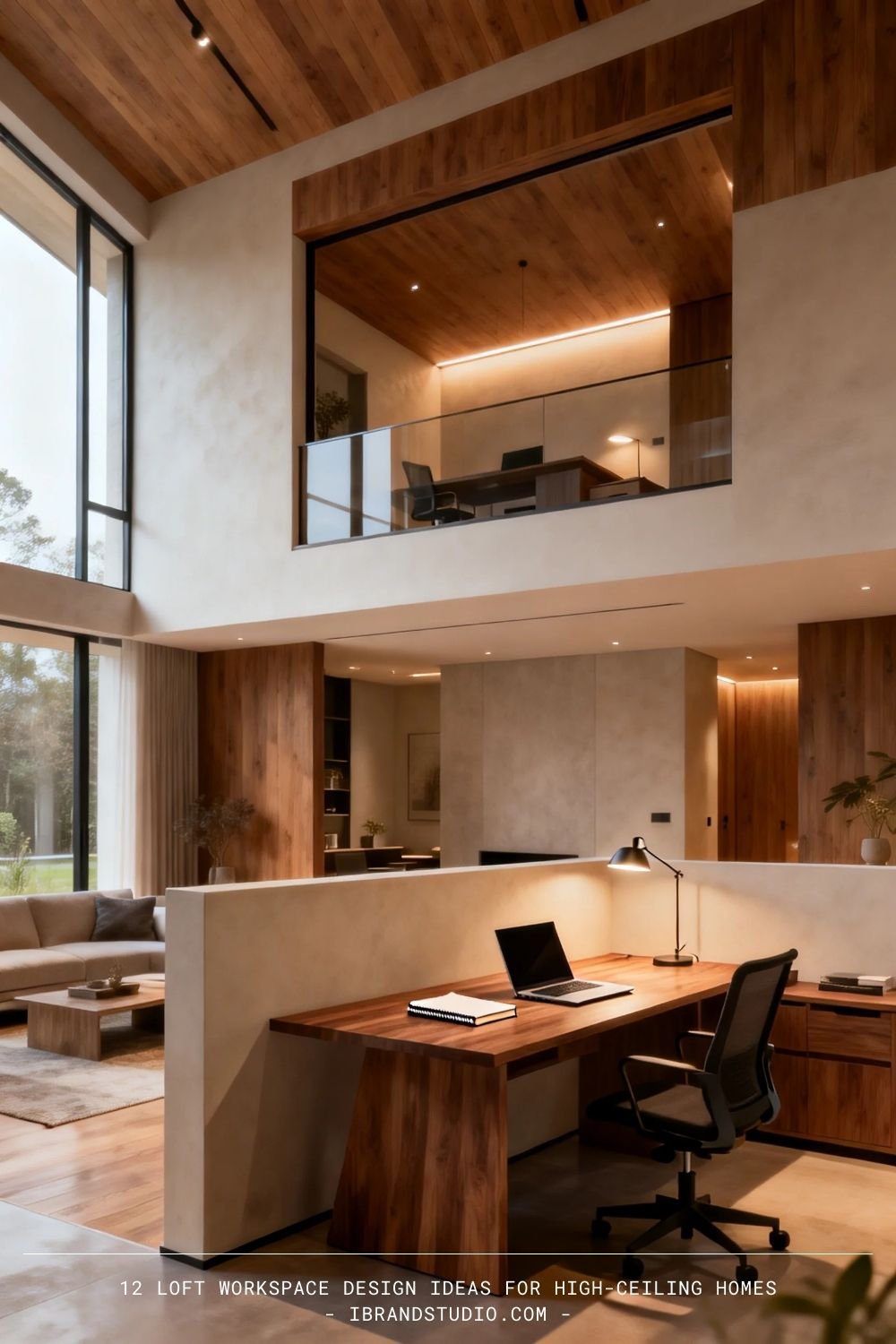
If your loft has enough headroom, the simplest solution is to turn it into a fully dedicated office.
A defined workspace makes it easier to focus and easier to disconnect when the workday ends.
Why it works: Separating work from living areas helps reduce distractions and supports better work-life balance.
Helpful tip: Instead of solid walls, consider a half wall or glass partition to keep the space open while still feeling intentional.
2. Use Glass Railings to Keep Things Light
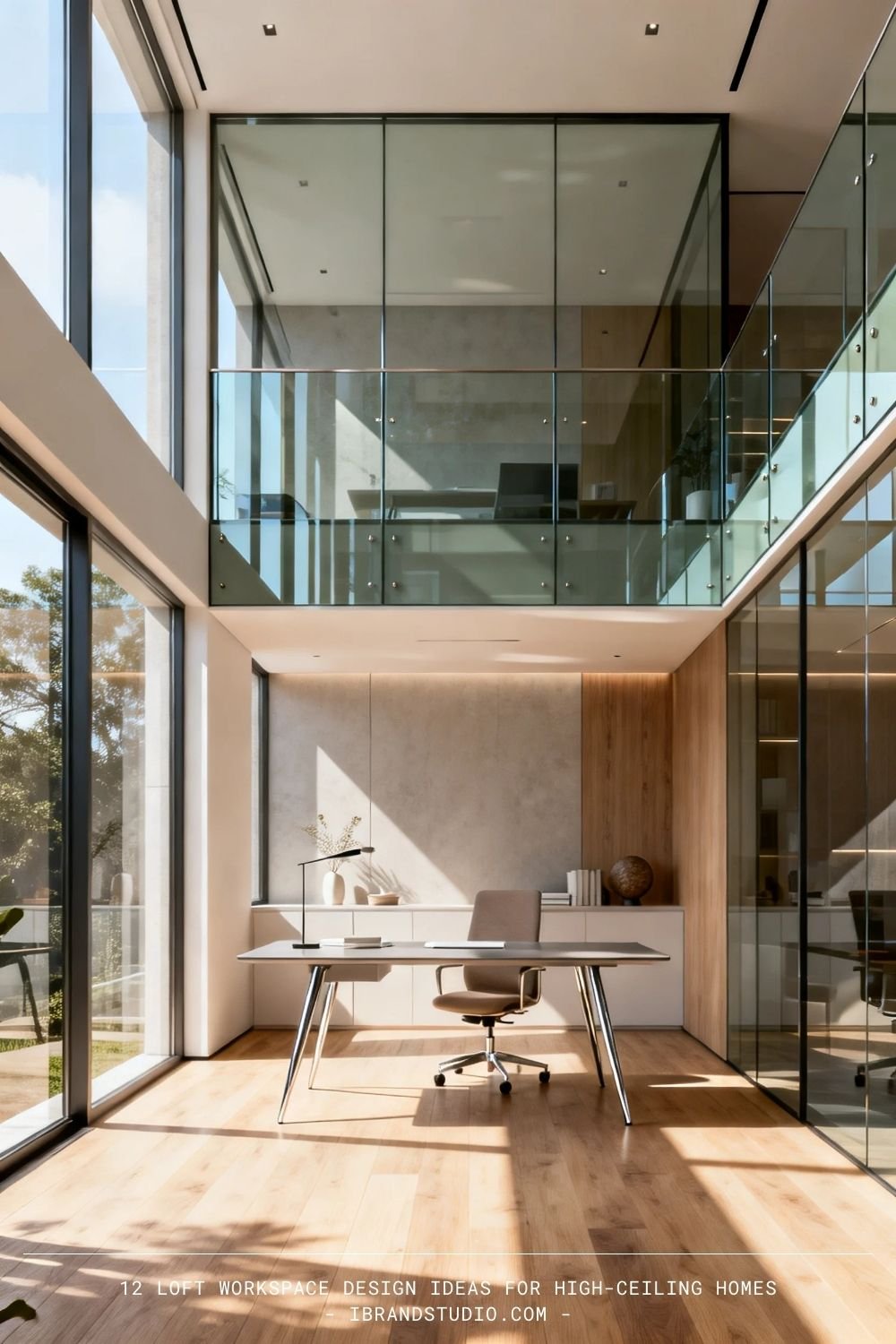
Glass railings are a popular choice in modern loft workspace design—and for good reason. They let light flow freely and prevent the loft from feeling boxed in.
Best for: Creative professionals and entrepreneurs who like an open, airy atmosphere.
Extra benefit: Glass railings make your workspace feel larger and more visually connected to the rest of your home.
3. Embrace a Minimalist Loft Workspace
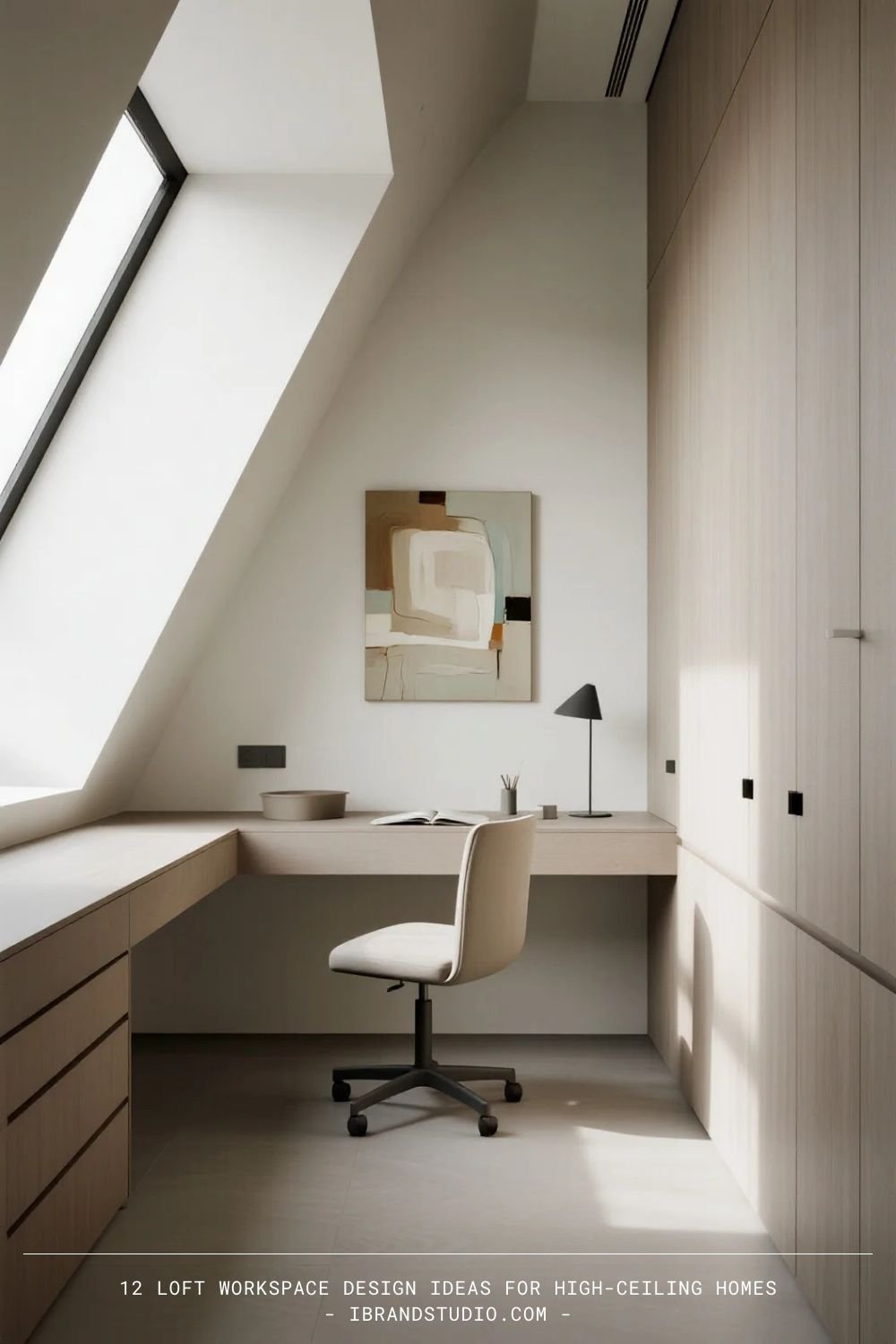
High ceilings and minimalist design work beautifully together. Clean lines, simple furniture, and neutral colors help the space feel calm instead of cluttered.
Key elements:
- Floating or wall-mounted desks
- Built-in storage
- Hidden cables and tech
Design tip: Keep décor intentional. One strong art piece or design feature usually looks better than several small distractions.
See Also: 15 Indoor Garden Workspace Setups for Small Apartments
4. Use the Space Under the Loft Wisely
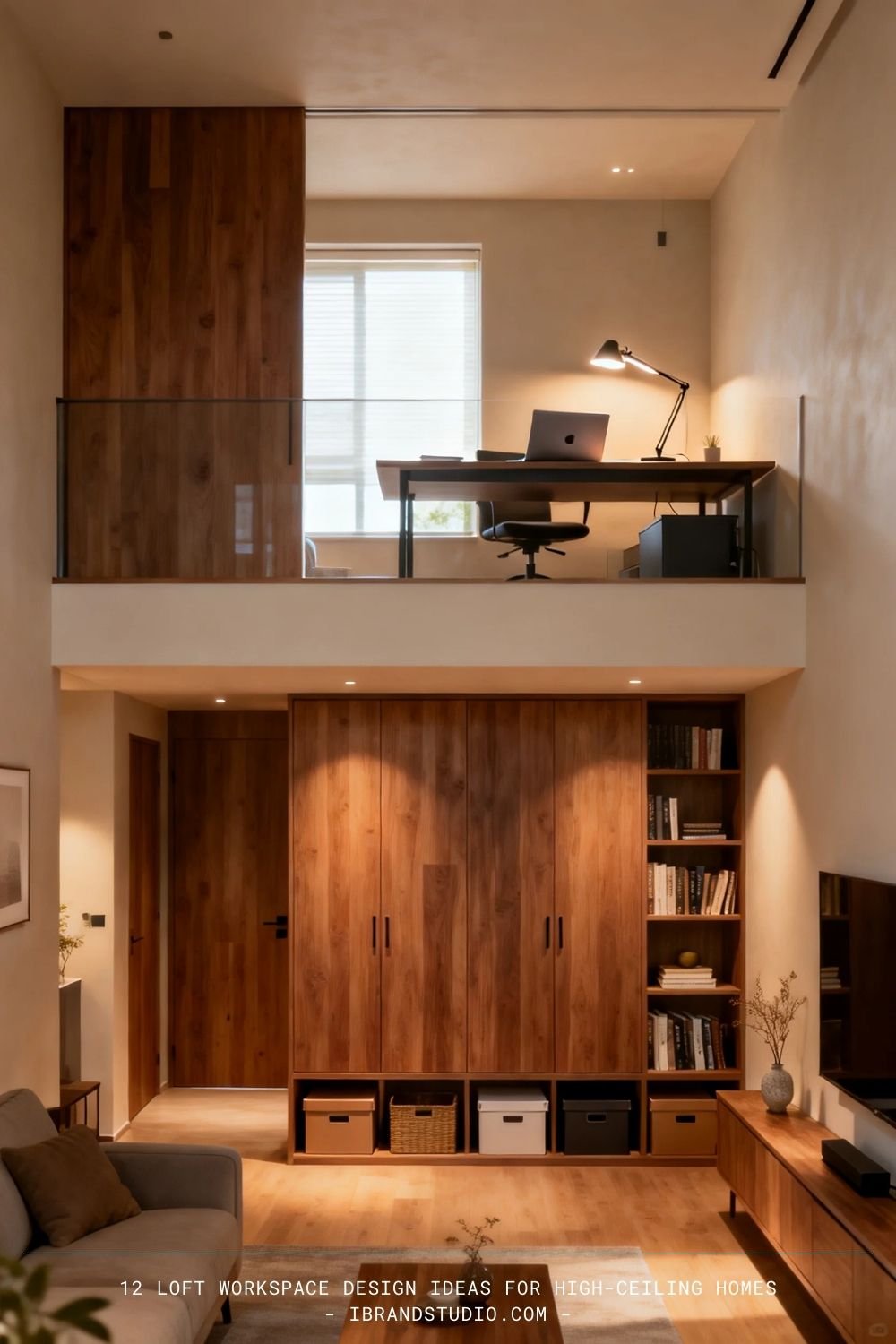
The area beneath your loft doesn’t have to be wasted. Built-in cabinets, bookshelves, or storage drawers can house office supplies, equipment, or files.
Why this matters: Freelancers and remote workers often need more storage than expected—without wanting their office to feel crowded.
Bonus: Custom storage solutions can add long-term value to your home.
5. Maximize Natural Light
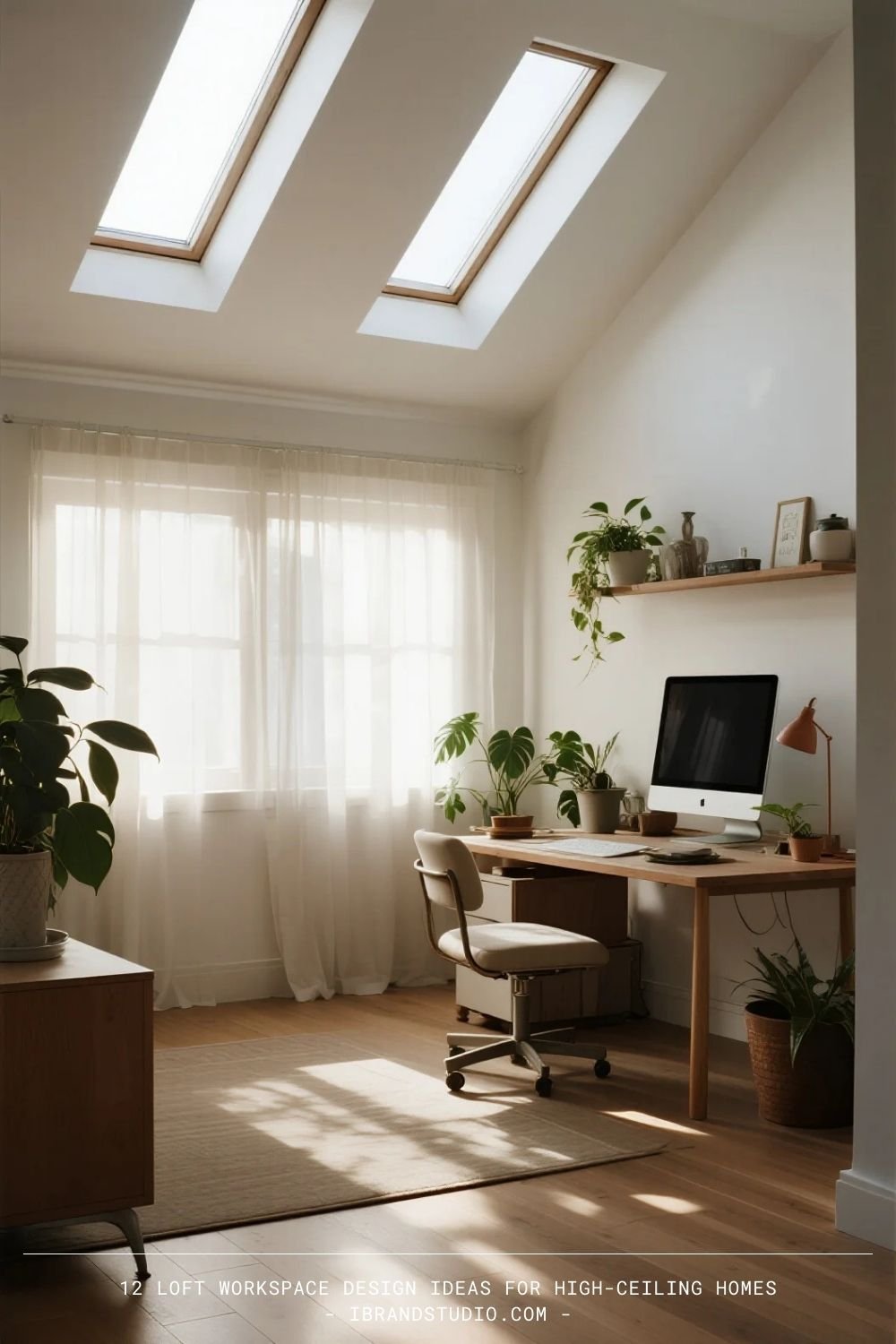
One of the biggest advantages of a loft workspace in a high-ceiling home is access to natural light, especially from upper windows or skylights.
Smart placement tips:
- Position your desk near—but not directly facing—windows
- Use light-filtering curtains to reduce glare
- Avoid placing monitors directly under skylights
Wellness perk: Natural light improves focus, energy, and mood—something every remote worker benefits from.
6. Make the Staircase Part of the Design
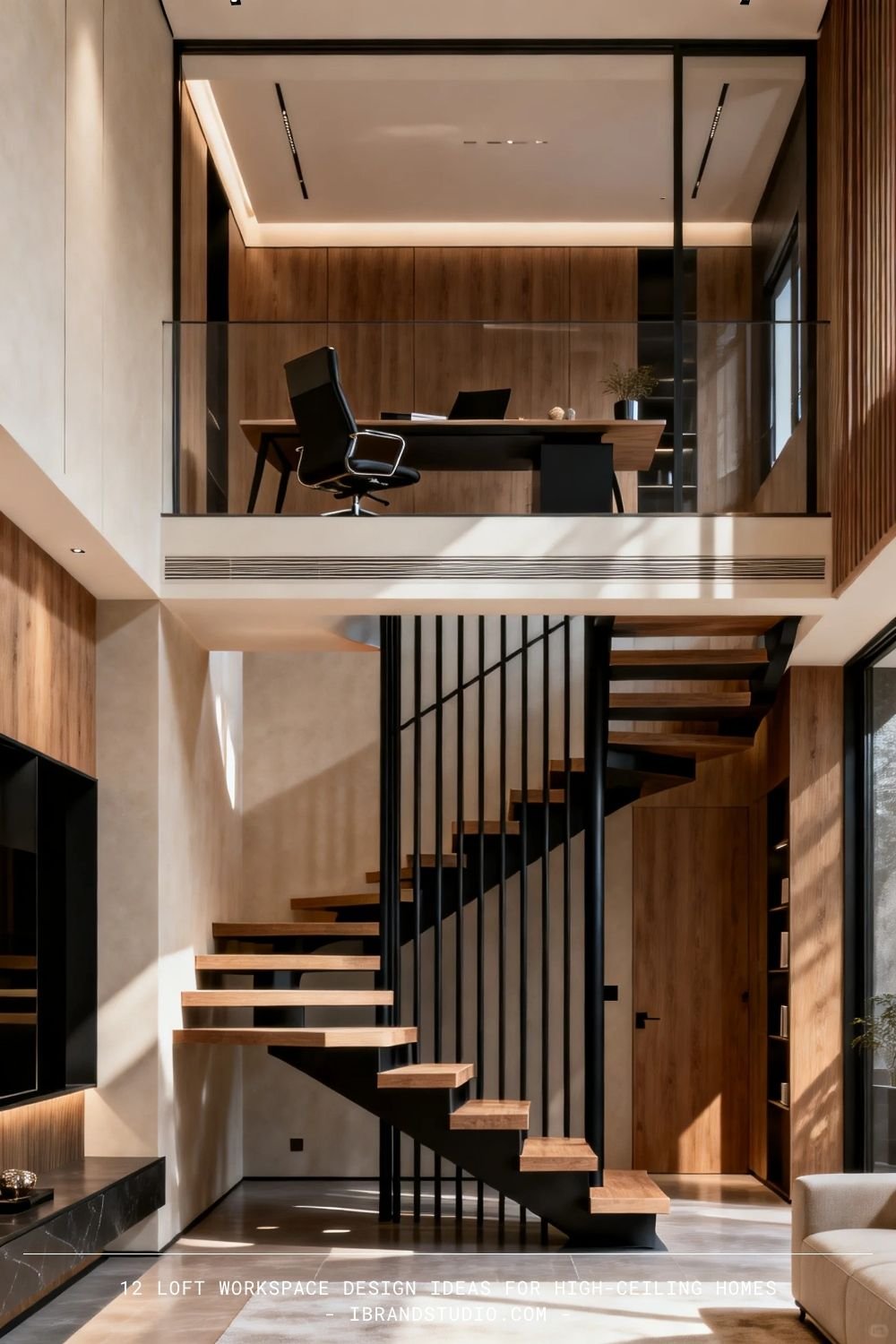
Your staircase isn’t just a way up—it’s a visual feature.
Floating stairs, spiral staircases, or wood-and-metal designs can elevate the entire look of your loft workspace.
Design advice: Open riser stairs allow light to pass through and help maintain that airy, open feeling.
Also Read: 16 Coastal-Inspired Workspaces for Calm & Productive Workflows
7. Don’t Ignore Acoustics
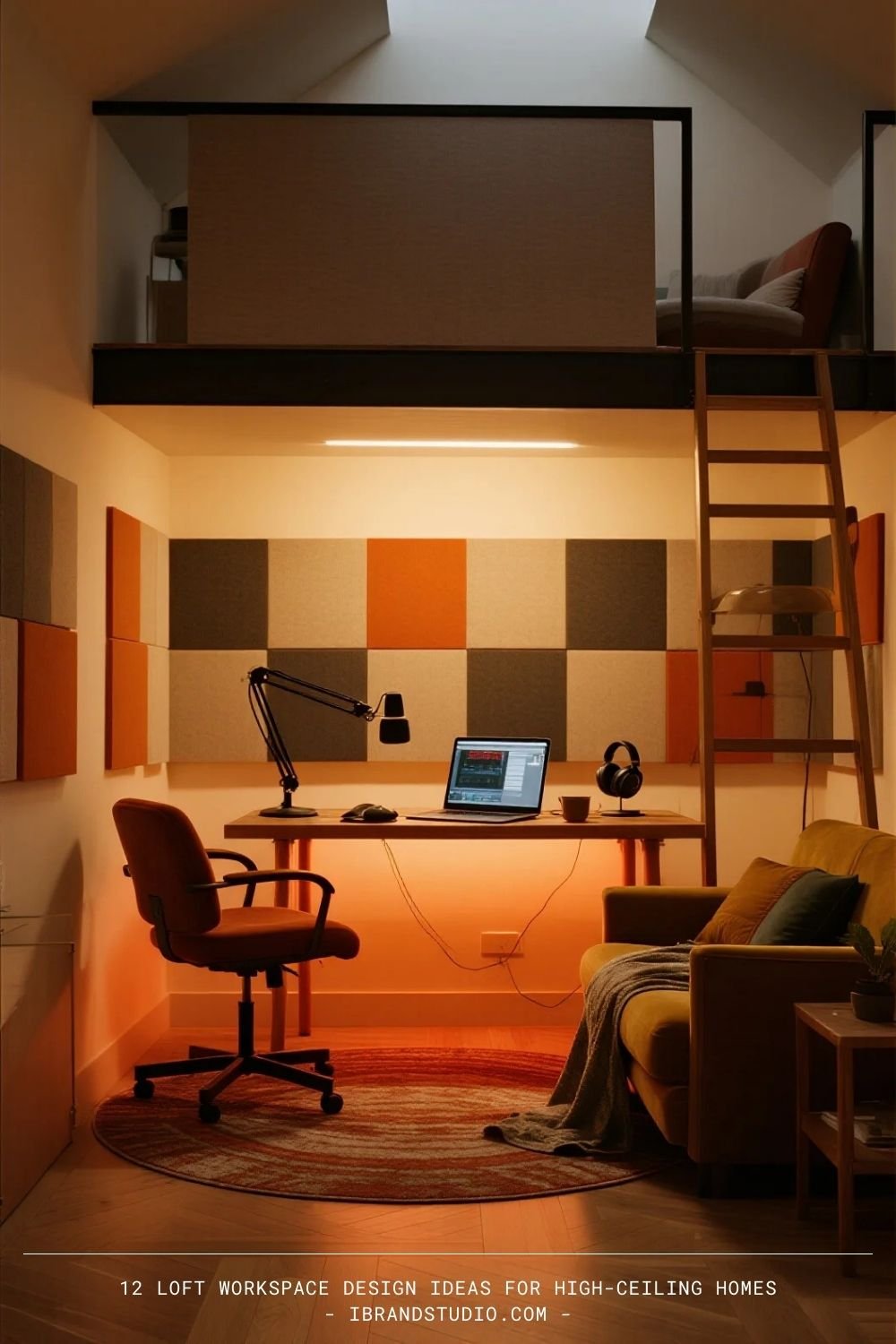
High ceilings can create echo, which isn’t ideal if you’re on frequent calls or recording content.
Easy acoustic fixes:
- Fabric wall panels
- Area rugs
- Upholstered furniture
Entrepreneur tip: If you host virtual meetings, webinars, or podcasts, sound treatment is just as important as lighting.
8. Create a Hybrid Work-and-Relax Loft
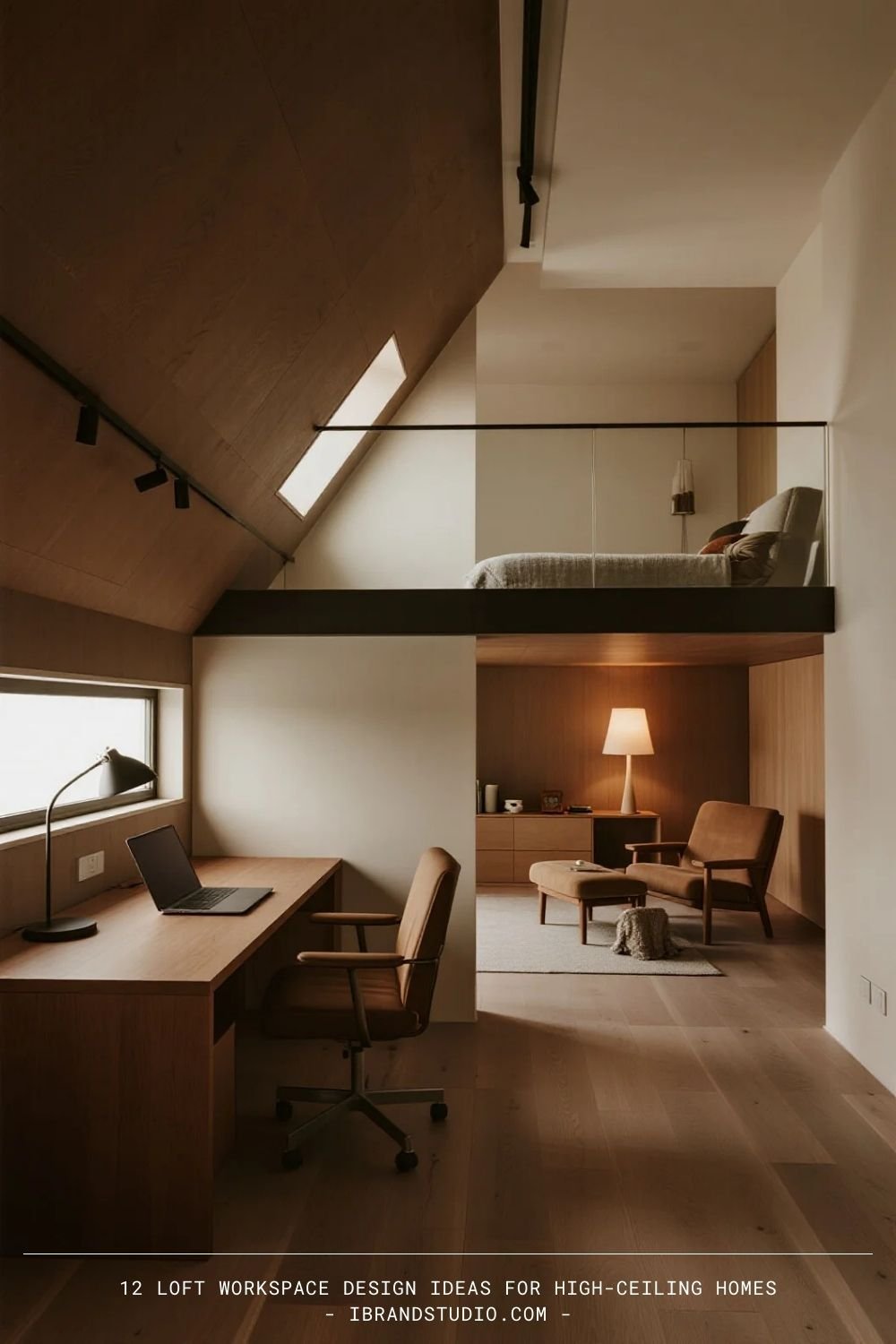
Your loft workspace doesn’t have to be all desk and chair. Adding a small reading chair, sofa, or quiet corner can make the space more versatile.
Why it helps: Some of your best ideas won’t happen at your desk.
Good for: Strategic thinking, creative work, or informal calls.
9. Design Vertically, Not Just Horizontally
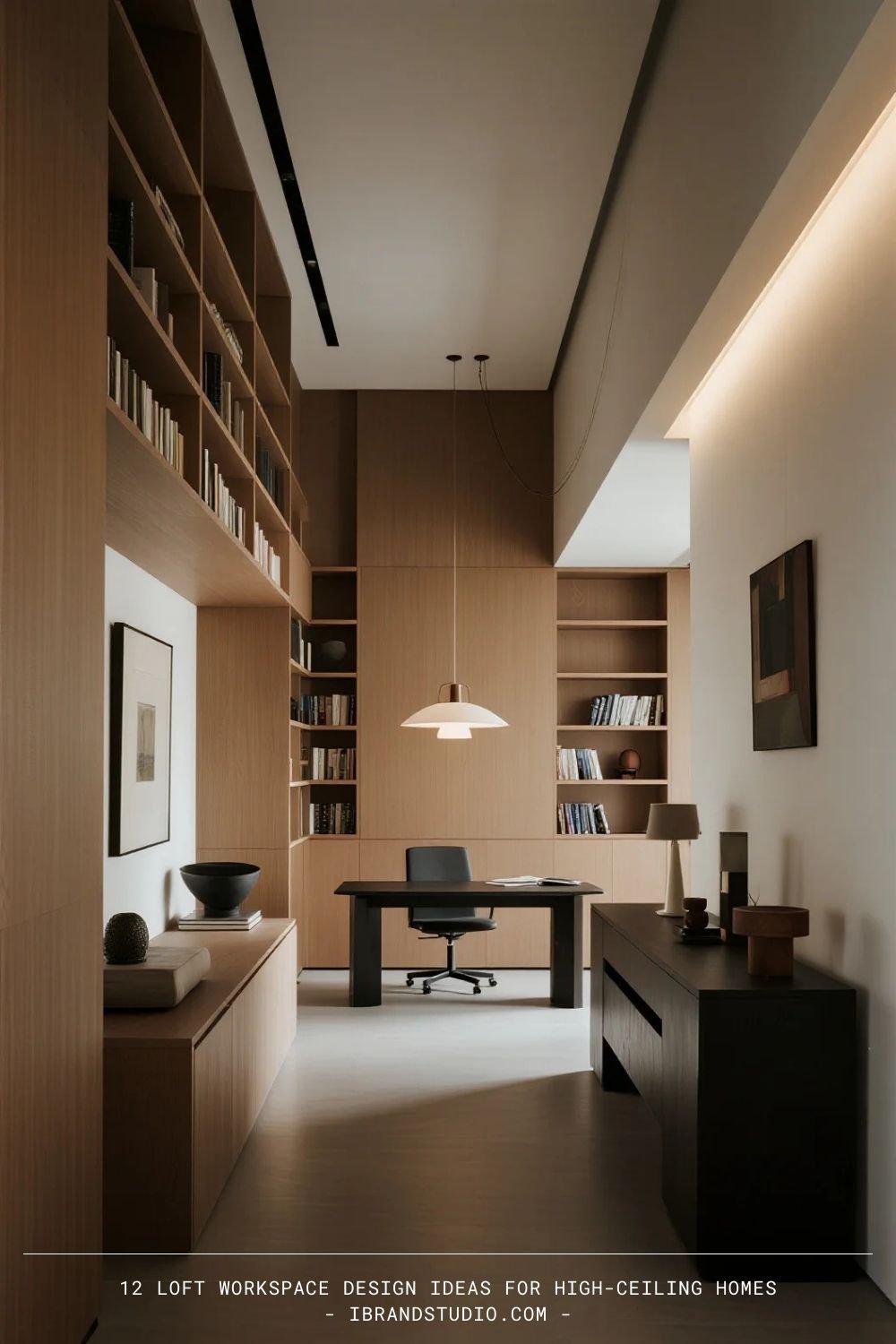
High ceilings give you the freedom to design upward. Tall shelves, vertical artwork, and hanging lights draw the eye up and make the most of the space.
Functional advantage: More storage without taking up valuable floor area.
Visual tip: Keep heavier elements lower and lighter details higher for balance.
10. Layer Your Lighting
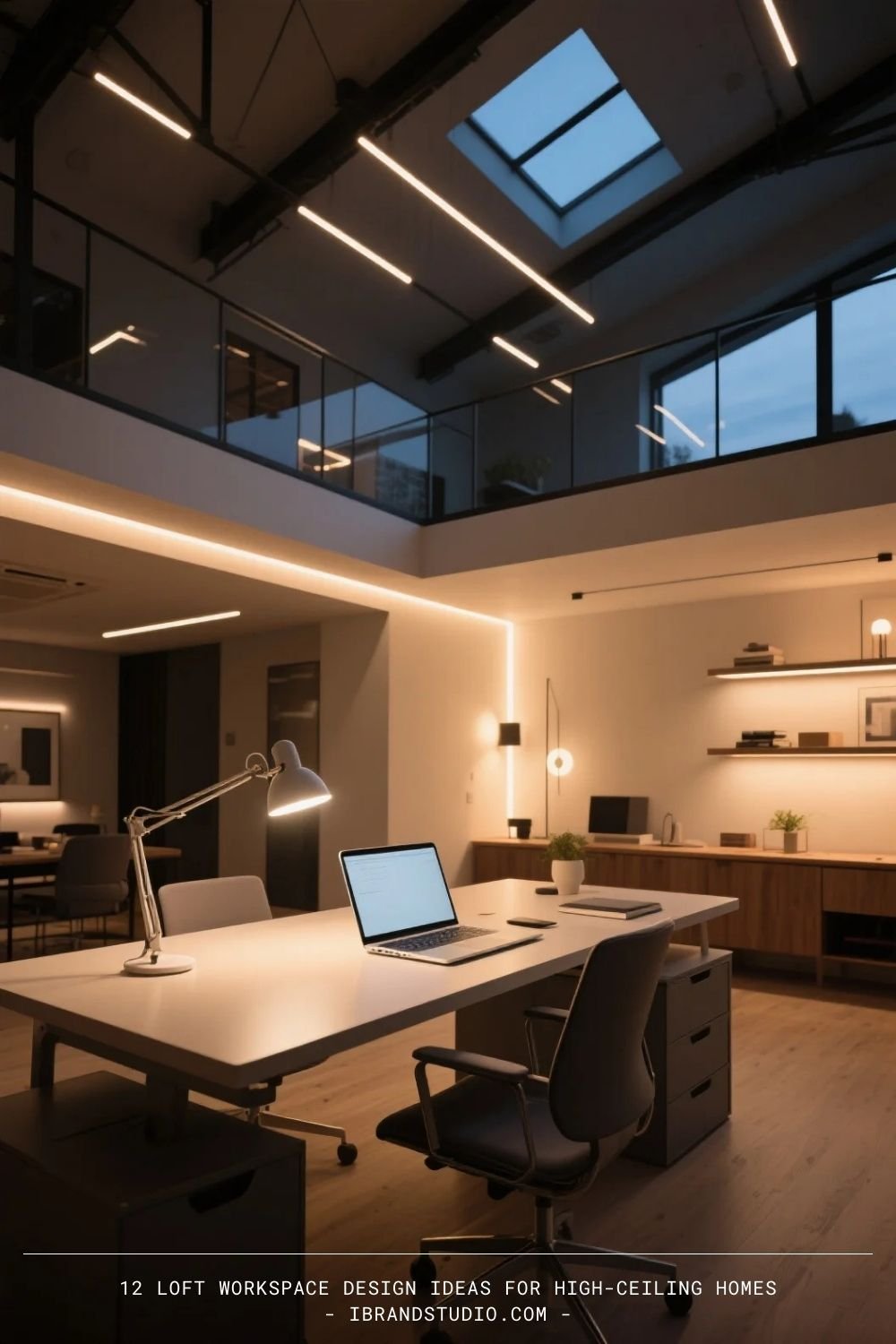
Loft workspaces need more than one light source, especially if you work early mornings or late evenings.
Essential lighting layers:
- Task lighting for your desk
- Ambient lighting for overall brightness
- Accent lighting for warmth and mood
Productivity tip: Adjustable lighting temperatures help you stay focused during the day and wind down in the evening.
11. Try an Industrial Loft Workspace Style
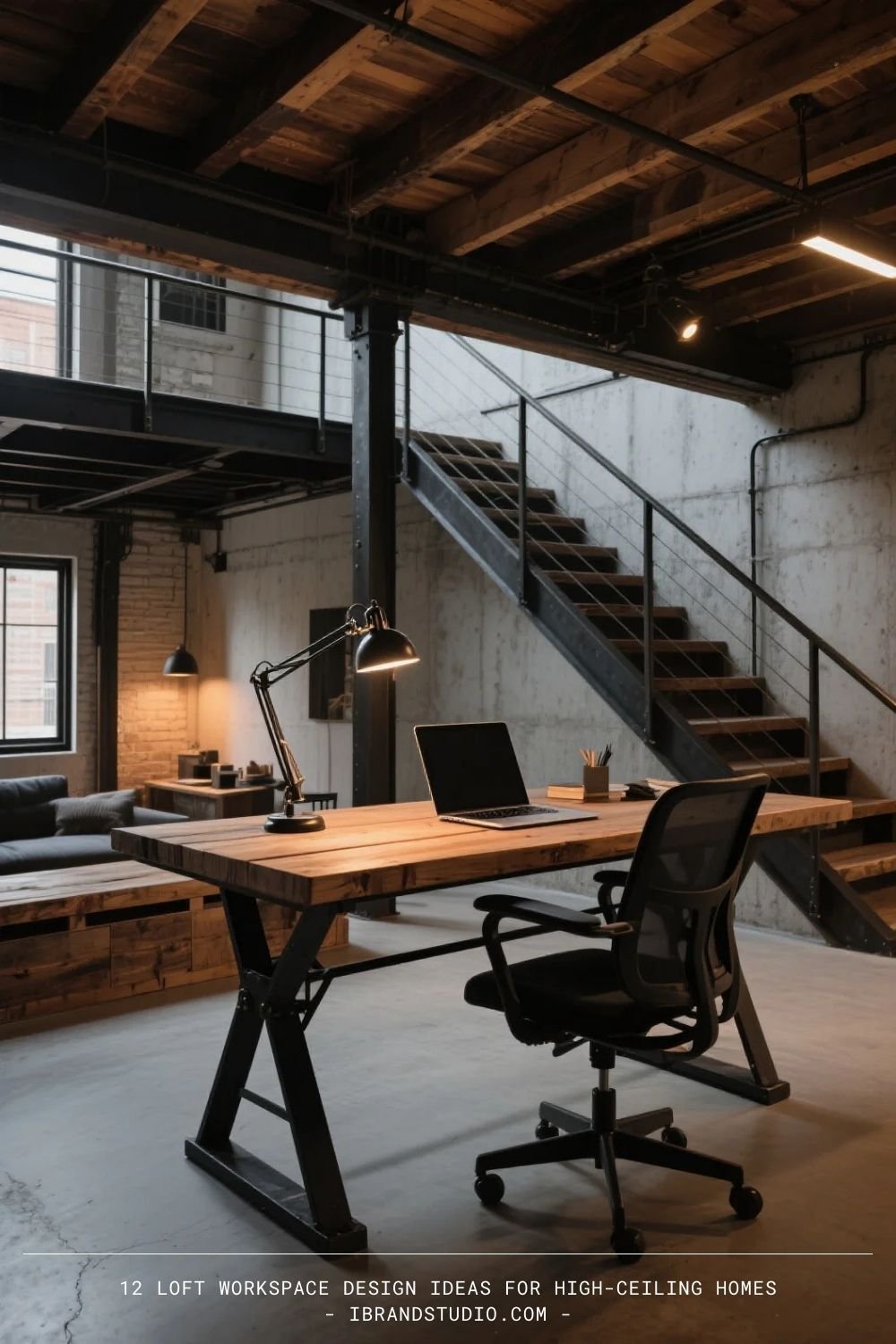
Industrial design works particularly well in loft spaces. Exposed beams, metal accents, and concrete or wood floors add character and edge.
Great fit for: Designers, developers, and startup founders.
Balance it out: Add plants, rugs, or warm wood tones so the space doesn’t feel too stark.
12. Bring in Plants
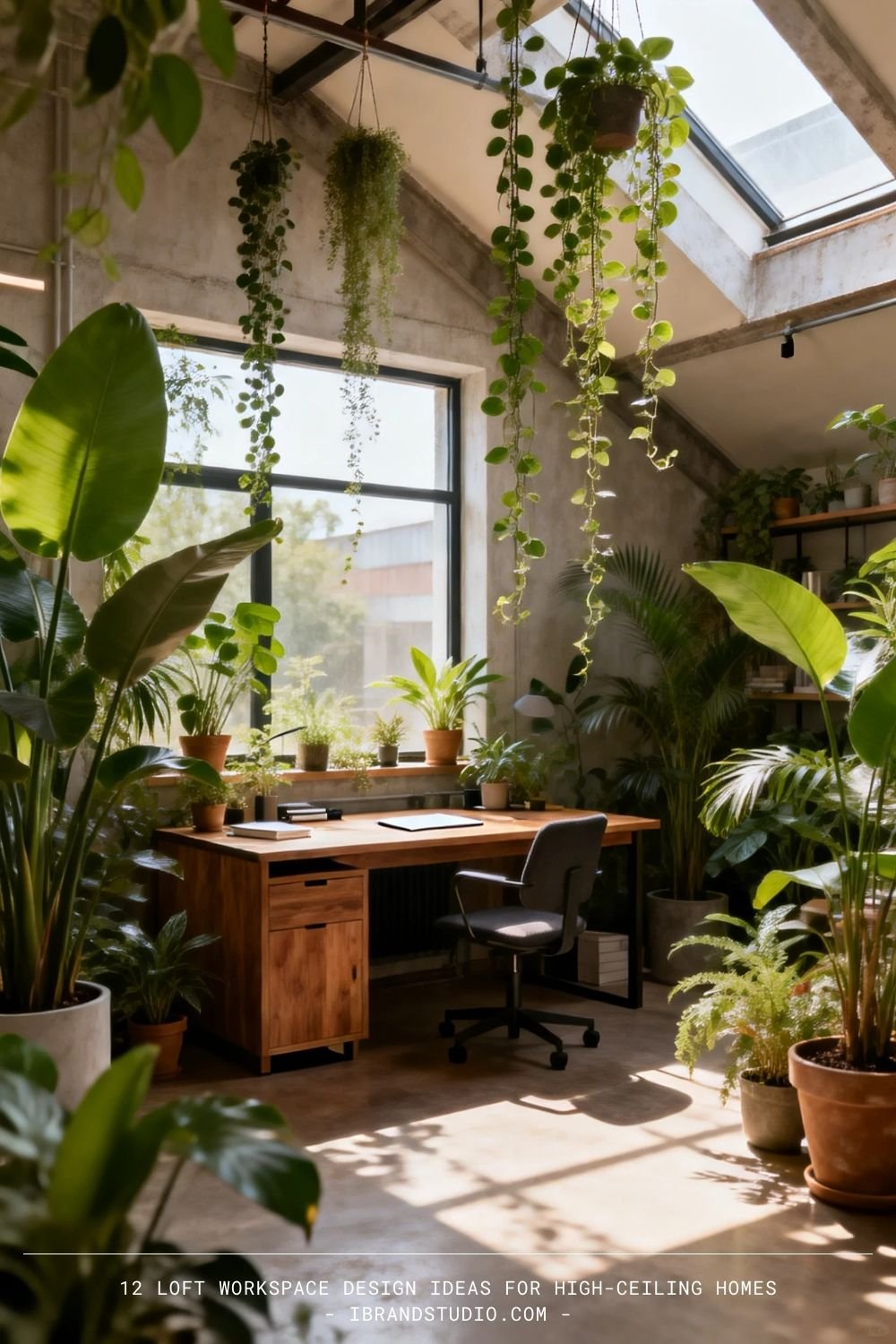
Greenery softens a loft workspace and makes it feel more inviting. High ceilings are perfect for taller plants or hanging greenery.
Good options:
- Fiddle leaf figs
- Snake plants
- Hanging pothos
Well-being bonus: Plants help reduce stress and improve air quality—both important during long workdays.
Also Read: Boost Your Creativity: 12 Unique Workspace Concepts for Designers
Final Thoughts
A loft workspace in a high-ceiling home isn’t just about aesthetics—it’s about creating a place where you can focus, think clearly, and do your best work.
When designed thoughtfully, a loft office feels elevated in every sense of the word. Start with how you work, build around your daily needs, and let the architecture support you—not distract you.