
10 Vision Board Aesthetic Ideas for Graphic Designers: Interior Design Inspiration That Shapes Creative Growth
In the creative world, interior design isn’t just about aesthetics. It’s about how a space makes you think, focus, and create.
For graphic designers, young entrepreneurs, and design enthusiasts, a vision board can be far more than a motivational collage—it can become a visual system that guides daily decisions.
If you’re spending hours in your workspace (and let’s be honest, you probably are), the environment around you matters.
Your walls, desk, lighting, and visual references quietly influence your mindset, confidence, and creative output.
This article explores 10 vision board aesthetic ideas inspired by interior design concepts, specifically crafted for designers who want to work with intention—not chaos.
Why Vision Boards Actually Work for Designers
Let’s clear something up first: vision boards aren’t magic. They work because designers are visual problem-solvers.
When done right, a vision board:
- Reinforces focus through repeated visual cues
- Helps filter distractions
- Makes long-term goals feel more concrete
When you combine that with interior design principles—layout, color psychology, lighting, and texture—you get a workspace that supports creativity instead of draining it.
Helpful mindset: Think of your vision board like a brand identity. It should communicate one clear direction, not everything you like at once.
1. Minimal Swiss Precision Workspace
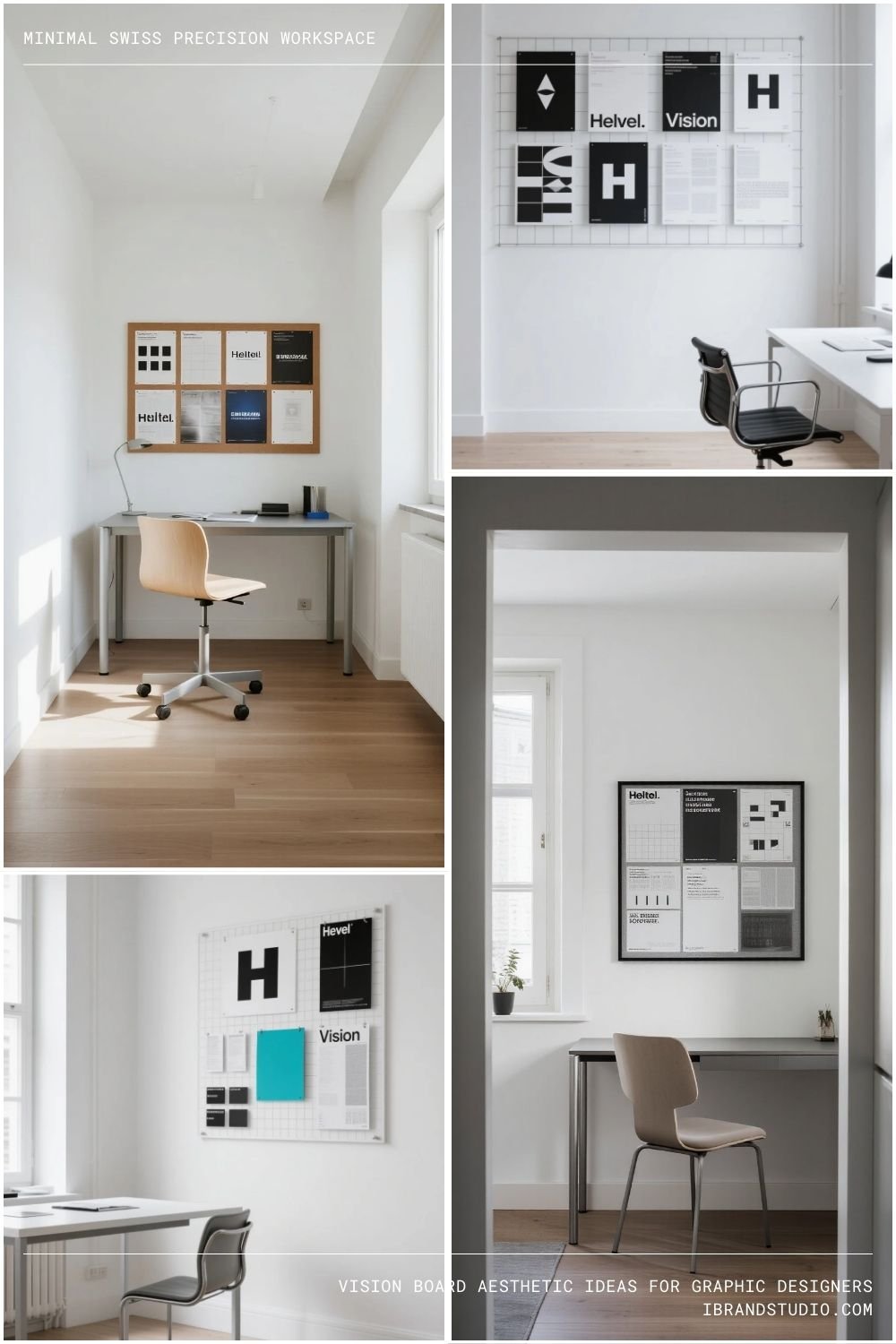
Interior vibe: Clean, structured, timeless
Design influence: Swiss style, grids, editorial clarity
This aesthetic is all about discipline and clarity. White walls, clean desks, and intentional spacing help reduce mental noise and sharpen focus.
Vision board elements:
- Grid-based layouts
- Black-and-white compositions
- Sans-serif typography (Helvetica, Inter, Neue Haas)
- Editorial and print mockups
Best for: Designers who want to master fundamentals and work with professional, detail-oriented clients.
Interior tip: Use a framed pinboard or metal grid board to reinforce structure visually.
2. Bold Creative Director Studio

Interior vibe: Confident, modern, high-impact
Design influence: Fashion studios, brand presentations
This vision board aesthetic is about stepping up. It reflects leadership, taste, and confidence—not just execution.
Vision board elements:
- Oversized typography
- Studio desks and mood boards
- Neutral interiors with bold contrast
- Luxury branding references
Best for: Designers aiming to raise rates, attract bigger clients, or position themselves as creative leaders.
Interior tip: Place your vision board directly in front of your workspace—where decisions happen.
3. Retro Modern Revival Space

Interior vibe: Warm, playful, nostalgic
Design influence: 70s–90s design with modern balance
This aesthetic blends retro personality with modern structure. Think curved furniture, warm color palettes, and expressive typography.
Vision board elements:
- Vintage posters and album covers
- Earth tones and muted pastels
- Serif and playful sans-serif type
- Grainy textures and analog details
Best for: Branding designers, illustrators, and creatives who value storytelling.
Interior tip: Cork boards or textured backings work perfectly with this style.
4. Soft Digital Dream Workspace

Interior vibe: Calm, airy, digital-first
Design influence: UI/UX, soft gradients, glassmorphism
This is a great aesthetic if you work mainly on screens. The goal here is mental calm and visual softness—less strain, more flow.
Vision board elements:
- Pastel gradients
- Floating UI mockups
- Rounded layouts
- Minimal desks and soft lighting
Best for: UI designers, web designers, and digital creators.
Interior tip: Use warm, diffused lighting to avoid harsh contrast.
5. Brutalist Creative Lab
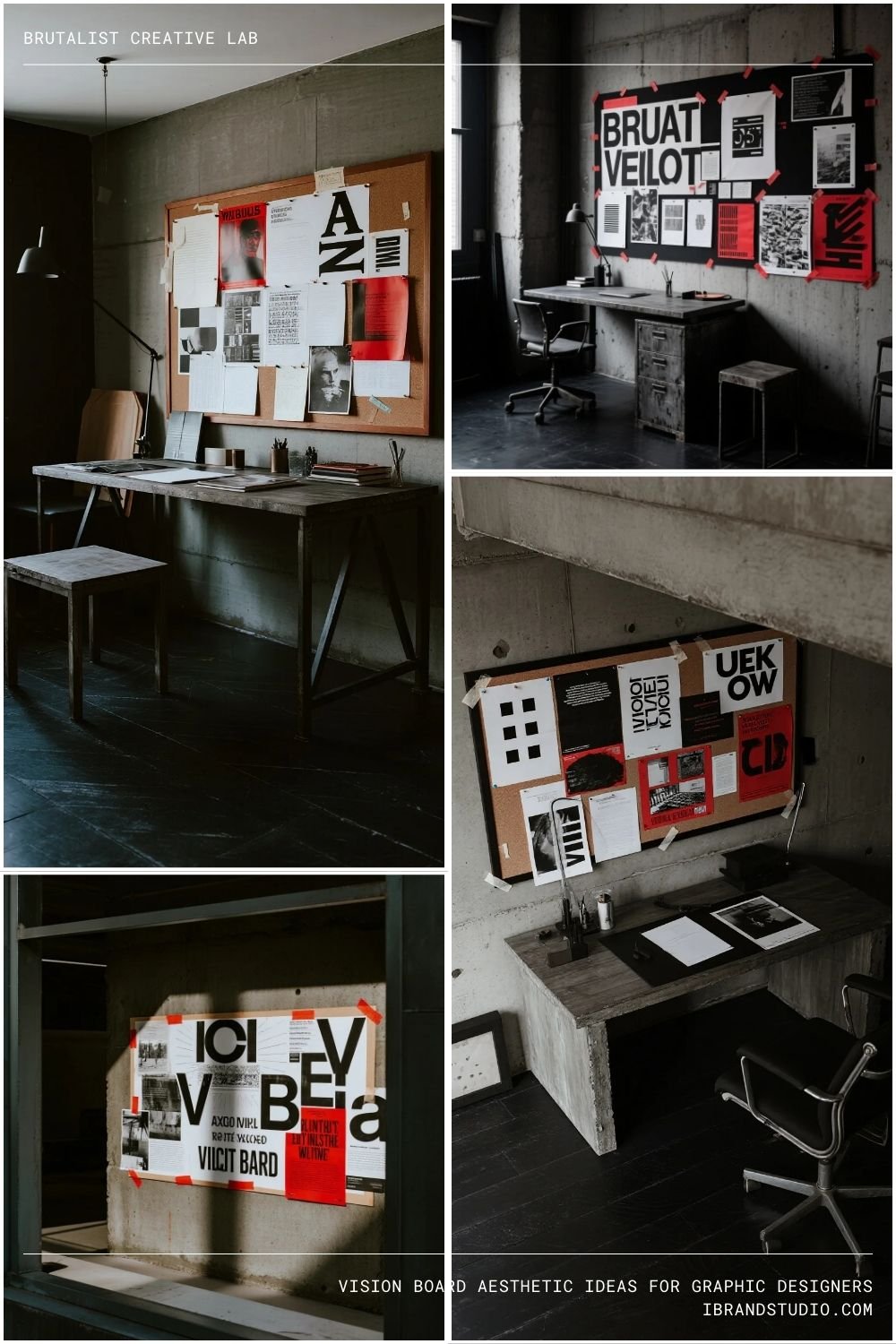
Interior vibe: Raw, bold, experimental
Design influence: Brutalism, anti-design
This aesthetic isn’t trying to be comfortable—and that’s the point. It embraces tension, contrast, and visual honesty.
Vision board elements:
- Stark typography
- Black or concrete textures
- Asymmetrical layouts
- High-contrast visuals
Best for: Designers who want to challenge trends and build a distinctive voice.
Interior tip: Don’t over-polish. Tape, rough edges, and layered paper are part of the character.
6. Nature-Inspired Creative Sanctuary
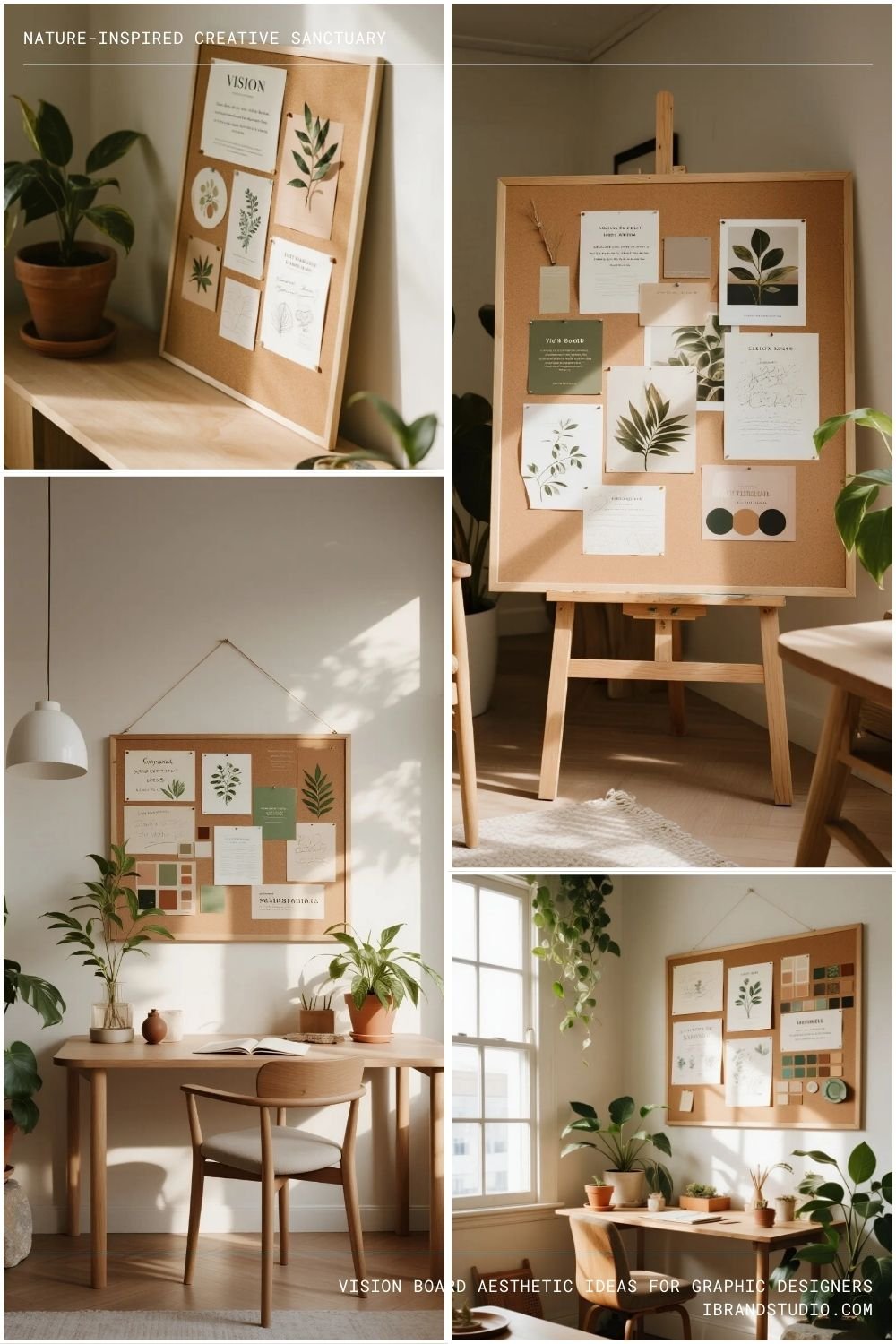
Interior vibe: Organic, grounded, restorative
Design influence: Biophilic design
If you value long-term creativity and balance, this aesthetic brings calm into your workflow.
Vision board elements:
- Plants and natural materials
- Earth-tone color palettes
- Hand-drawn sketches
- Soft natural light
Best for: Freelancers, parents, or designers managing multiple responsibilities.
Interior tip: Position your vision board near a window or greenery for extra impact.
7. Brand Strategist Workspace
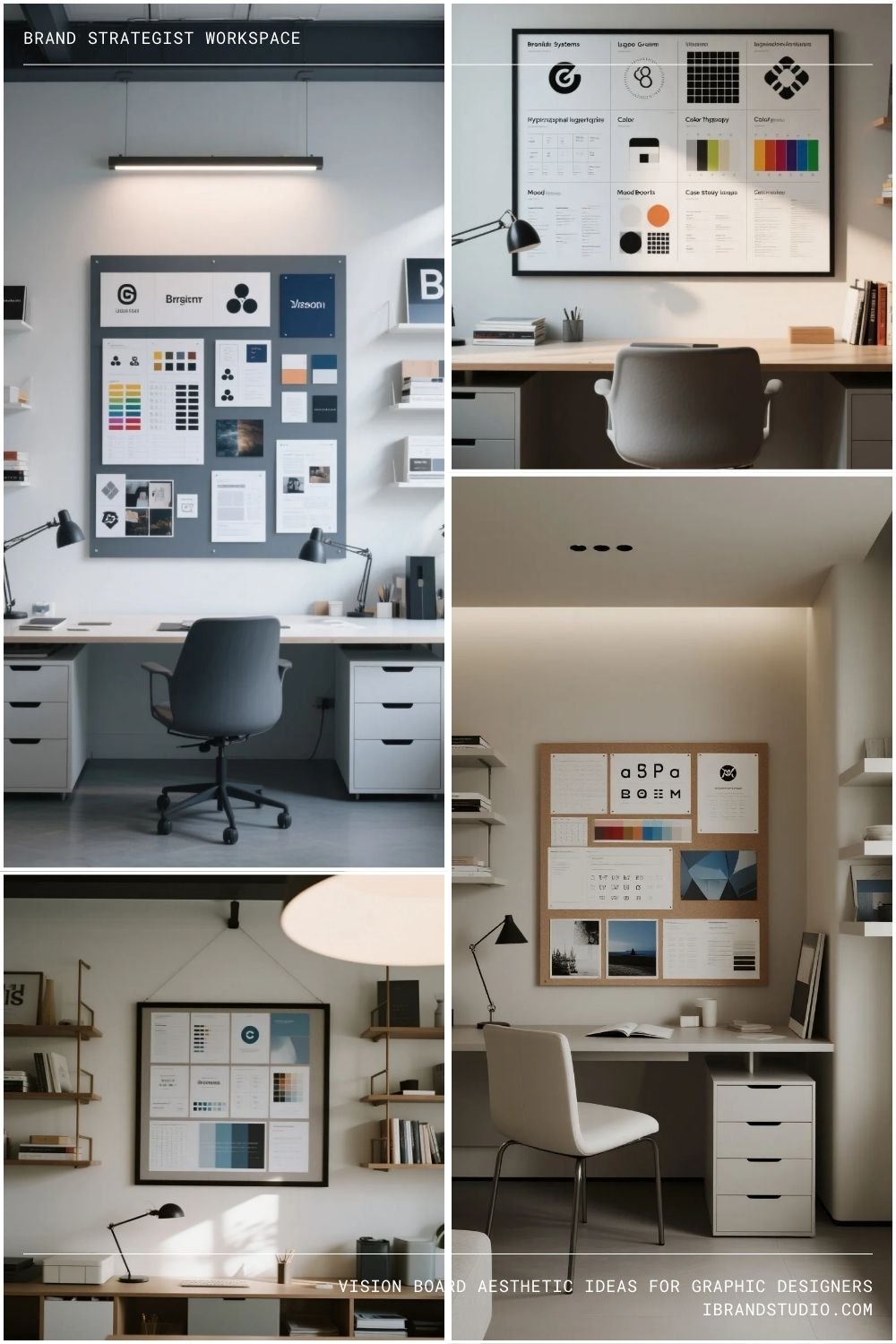
Interior vibe: Intentional, thoughtful, professional
Design influence: Brand systems and strategy
This vision board focuses less on style trends and more on thinking frameworks.
Vision board elements:
- Brand architecture diagrams
- Logo grids
- Color theory references
- Case study layouts
Best for: Designers moving toward branding, consulting, or strategy roles.
Interior tip: Use modular boards so your strategy can evolve over time.
8. Digital Nomad Designer Setup
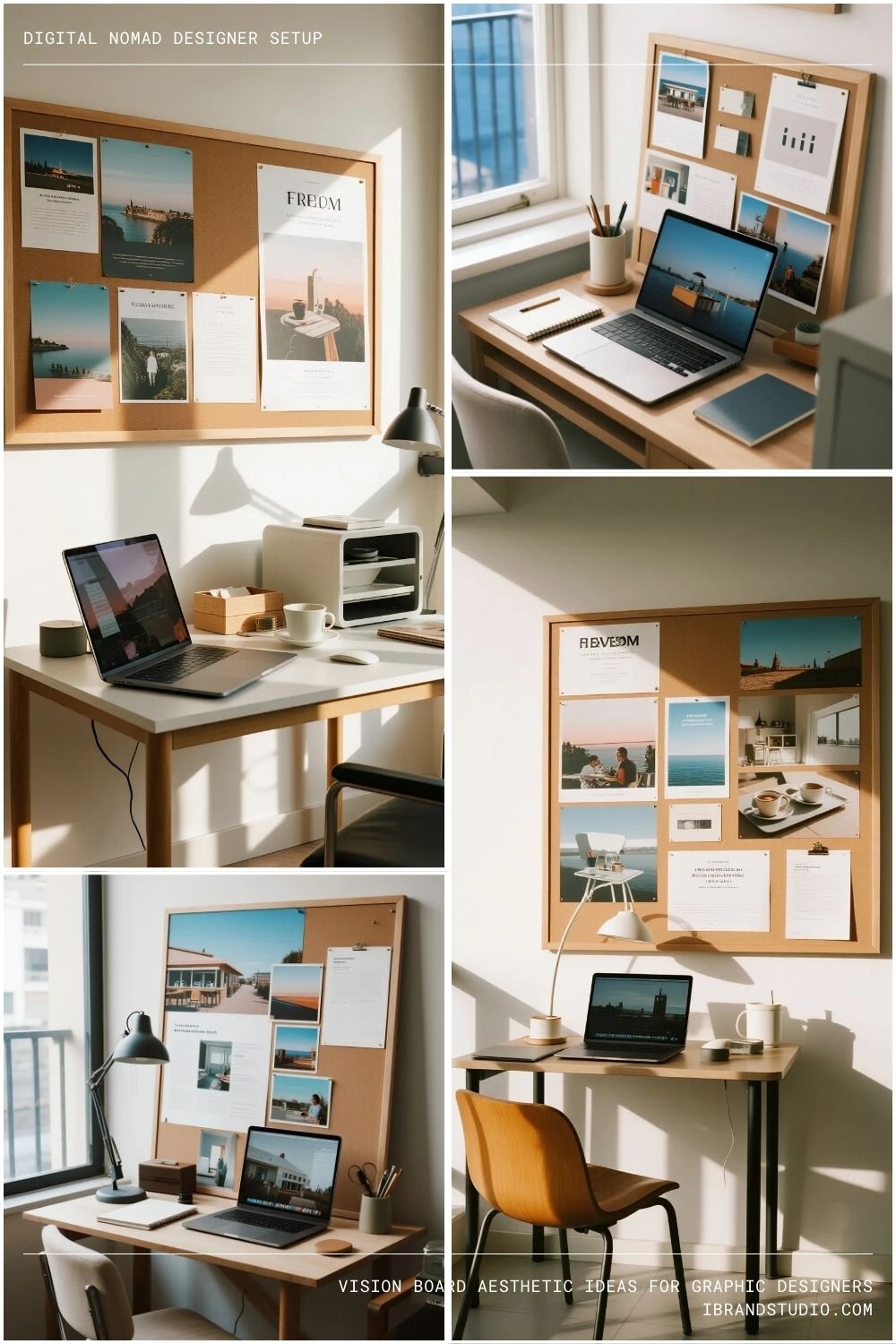
Interior vibe: Flexible, lifestyle-driven
Design influence: Portable workspaces
This aesthetic reflects freedom and adaptability—designing a life, not just a workspace.
Vision board elements:
- Laptops in cafes or travel locations
- Compact desk setups
- Coastal or urban views
- Minimal tools
Best for: Freelancers and remote designers.
Interior tip: Consider a digital vision board if you move often.
9. Monochrome Mastery Studio
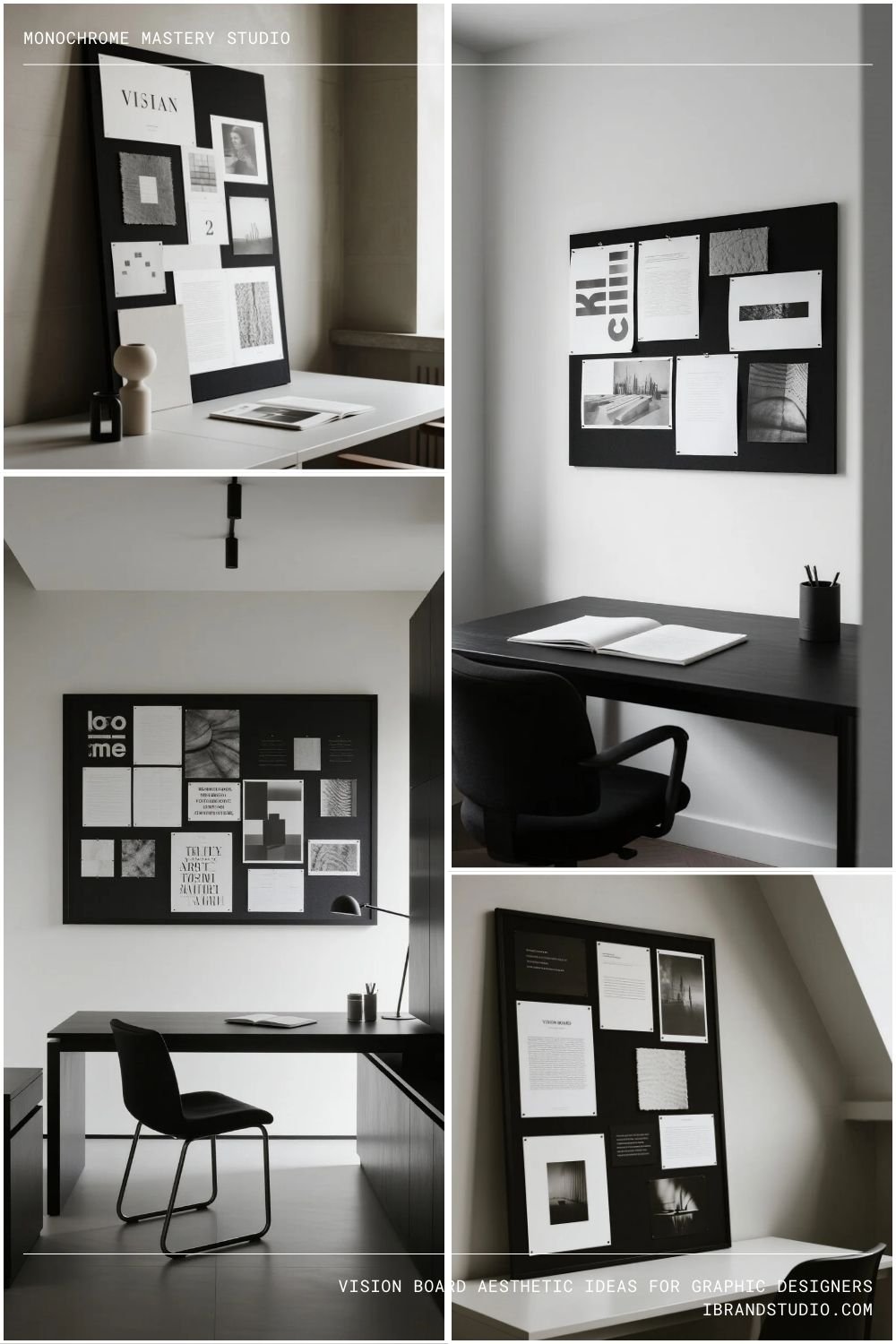
Interior vibe: Focused, elegant, distraction-free
Design influence: Typography and composition
By removing color, this aesthetic sharpens your eye for form, contrast, and hierarchy.
Vision board elements:
- Black, white, and gray imagery
- Typography studies
- Texture-based visuals
- Editorial photography
Best for: Designers refining craft and fundamentals.
Interior tip: Directional lighting helps emphasize contrast and depth.
10. AI-Powered Future Creative Space
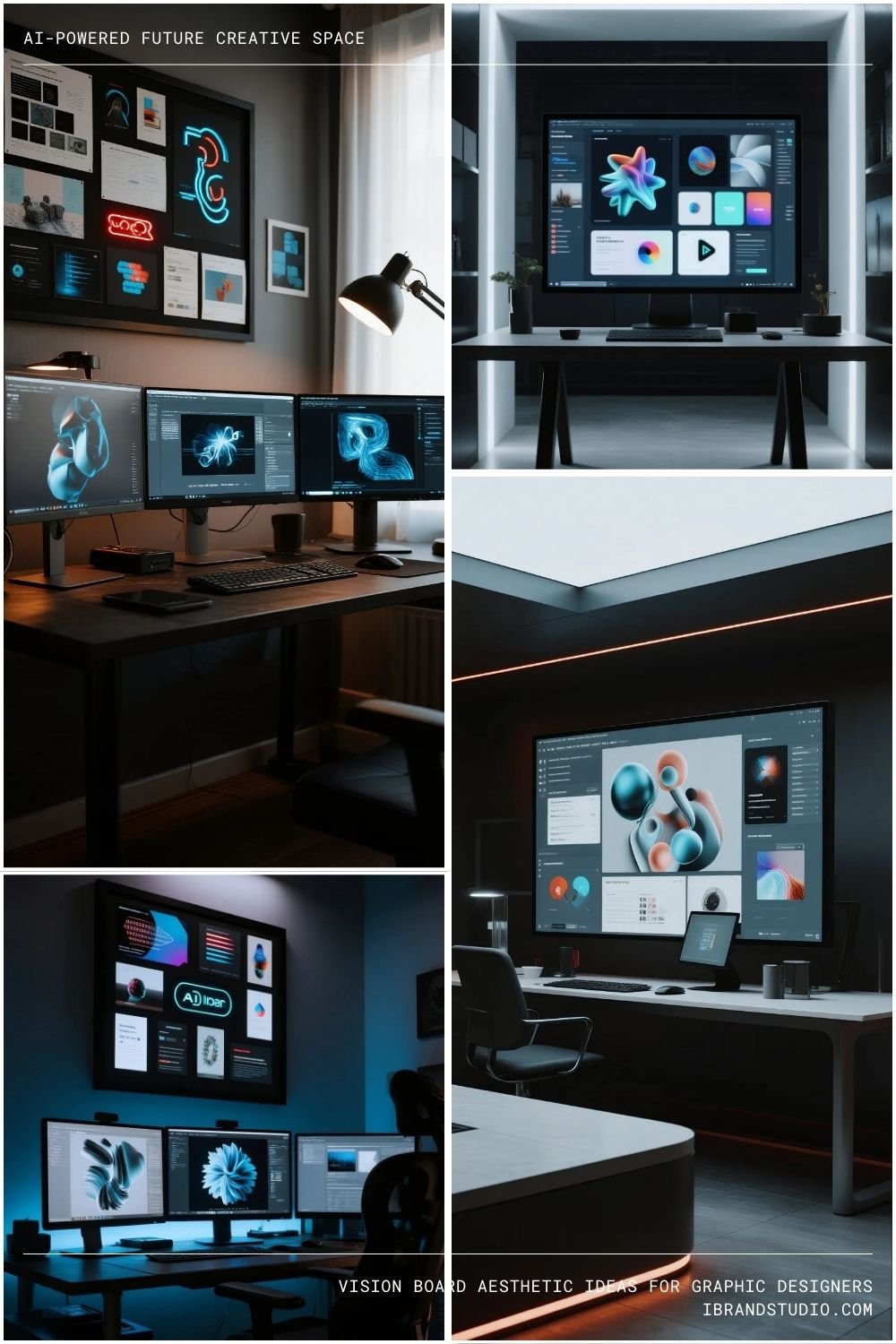
Interior vibe: Futuristic, innovative
Design influence: AI tools and digital evolution
This vision board is about curiosity and adaptation in a fast-changing industry.
Vision board elements:
- AI-generated visuals
- Abstract 3D forms
- Neon accents on dark backgrounds
- Futuristic UI concepts
Best for: Designers integrating AI into their creative process.
Interior tip: Keep physical clutter minimal to match the future-focused feel.
How to Build a Vision Board That Actually Helps You Work
Here’s the biggest mistake designers make: mixing too many aesthetics.
Use the 70–30 rule:
- 70% one main aesthetic (your current direction)
- 30% a supporting theme (where you’re growing)
Practical tips:
- Place it near your workspace
- Keep it at eye level
- Review and update it every 3–4 months
Your goals evolve—your space should too.
Final Thoughts: Your Space Is Part of Your Brand
For graphic designers and young entrepreneurs, interior design is personal branding in physical form.
A vision board isn’t about dreaming—it’s about alignment.
When your environment reflects where you’re going, staying focused becomes easier.
Choose one direction. Commit to it. Let your space support your growth—quietly, every day.