
From LEGO to Mattel: 10 Iconic Toy Brands That Mastered Branding (And What Entrepreneurs Can Learn)
The toy industry may look playful on the surface, but from a branding perspective, it’s one of the toughest—and smartest—industries out there. Toy companies aren’t just selling products.
They’re selling imagination, memories, trust, and emotional connection. And they have to do it in a market where customers grow up fast and trends change even faster.
For branding enthusiasts and entrepreneurs, famous toy brands offer something rare: decades of real-world branding lessons that actually hold up over time.
In this article, we’ll explore 10 famous toy company brands, why their branding works so well, and what practical ideas you can borrow for your own business—whether you’re building a startup or refining an established brand.
You Might Also Like: The 12 Most Recognizable Snack Brand Logos Ever Created
Why Toy Brands Are So Powerful
Toy brands face challenges most industries don’t:
- Kids outgrow products quickly
- Parents and children have different expectations
- Emotional trust matters more than specs
- Competition is constant and global
The brands that survive for decades don’t do it by accident. They win because they invest deeply in brand identity, consistency, and emotional storytelling.
Let’s look at how the best do it.
Keep Explore: The 10 Most Recognizable Beverage Brand Logos Ever Created
1. LEGO – Turning Creativity into a Global Brand
Founded: 1932
Country: Denmark
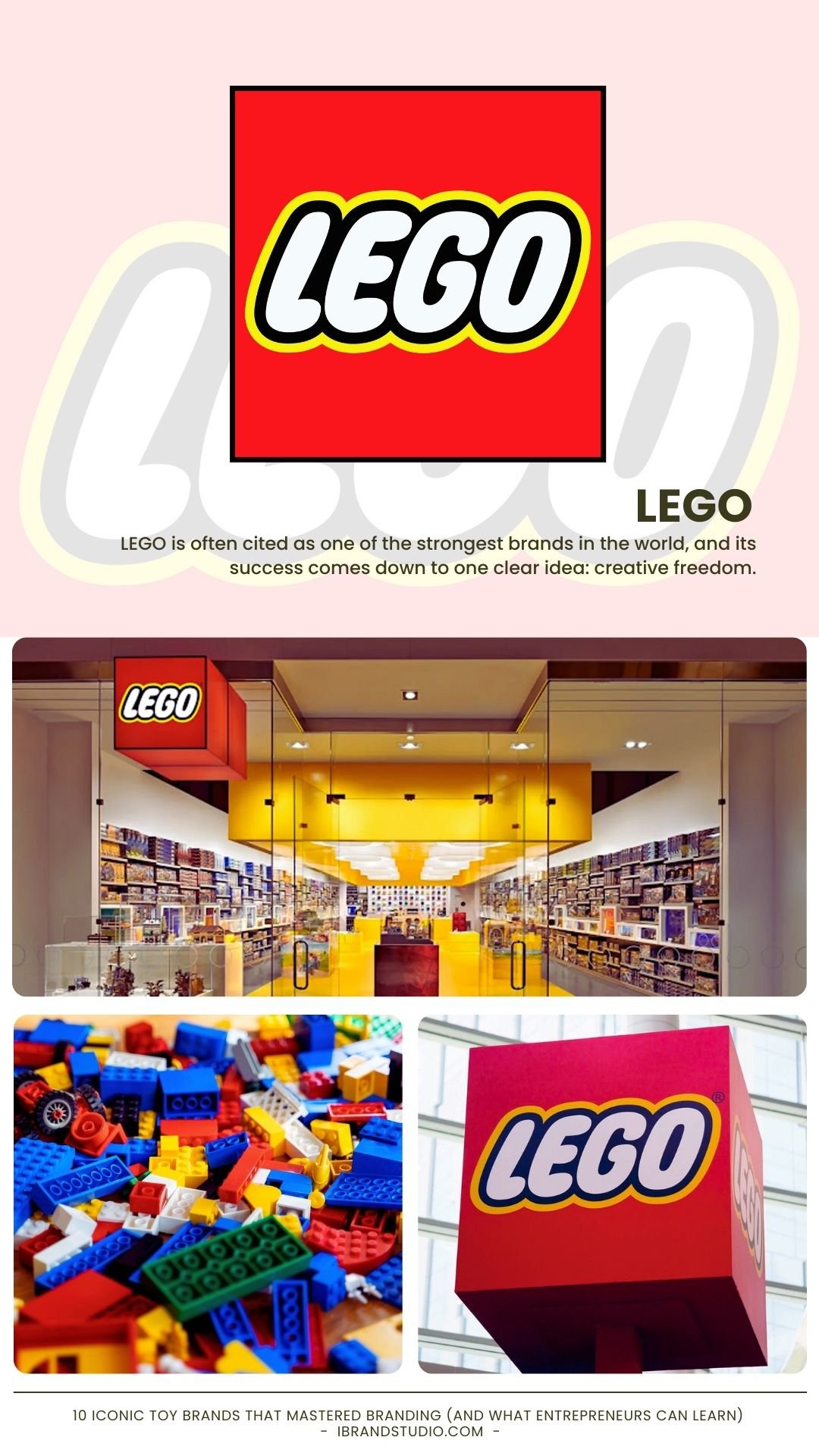
LEGO is often cited as one of the strongest brands in the world, and its success comes down to one clear idea: creative freedom.
The product itself hasn’t changed much over the years. A brick from the 1960s still works today.
What has changed is how LEGO expresses its brand—through movies, games, fan communities, and experiences.
Why LEGO’s Branding Works
- A simple, timeless brand promise: creativity without limits
- Instantly recognizable colors and design
- Strong fan engagement through co-creation
- Smart expansion that never breaks the brand
Branding takeaway:
If your core idea is strong, your brand can evolve endlessly without losing its identity.
2. Mattel – A Case Study in Brand Architecture
Founded: 1945
Country: USA
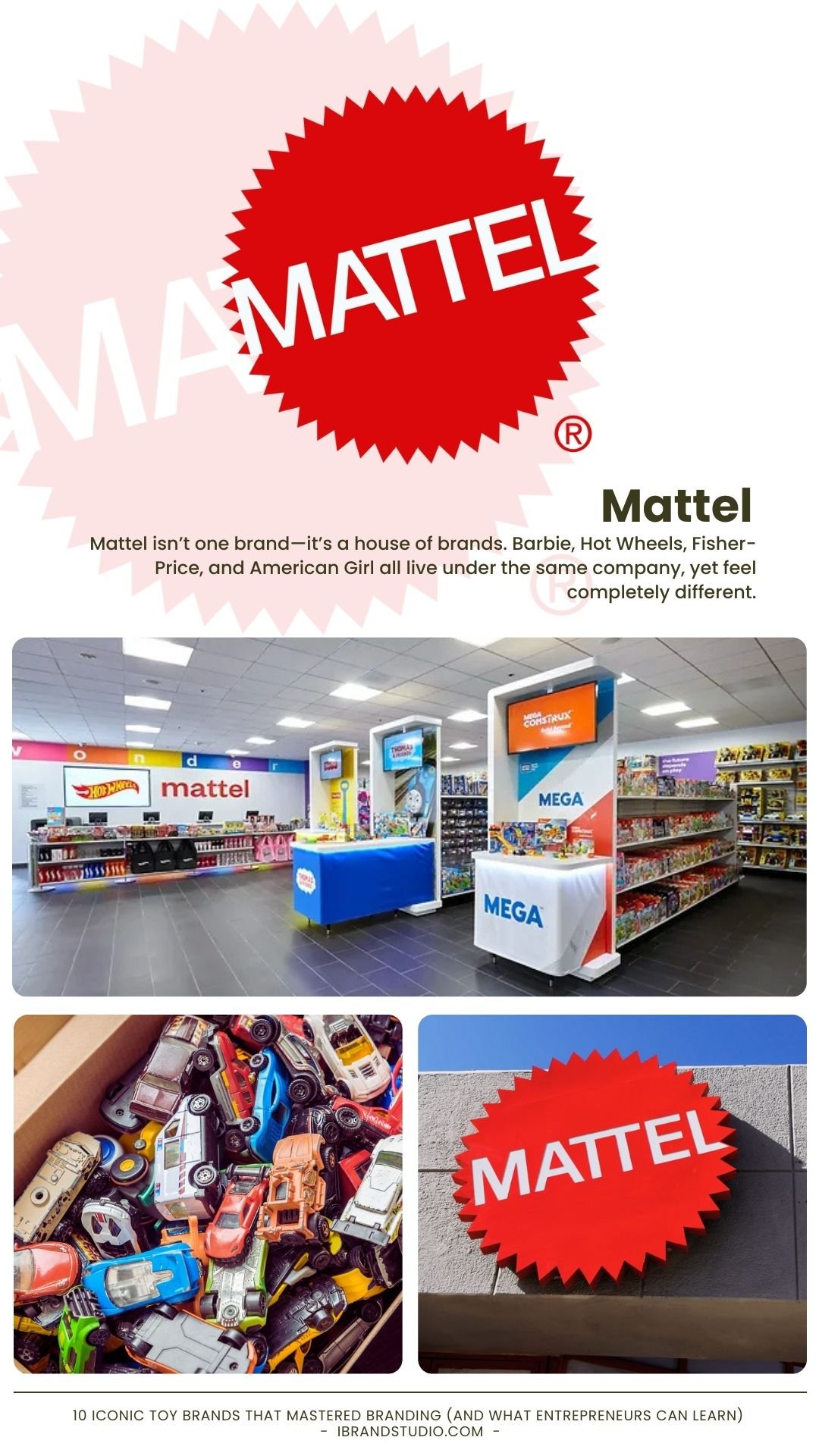
Mattel isn’t one brand—it’s a house of brands. Barbie, Hot Wheels, Fisher-Price, and American Girl all live under the same company, yet feel completely different.
That’s not easy to pull off.
Why Mattel’s Branding Works:
- Clear positioning for each sub-brand
- Willingness to modernize legacy brands
- Strong storytelling through entertainment
- Emotional connections with multiple generations
Branding takeaway:
When you manage multiple products, clarity matters more than uniformity. Each brand needs its own voice.
Also Read: Top 12 Most Famous Fast-Food Brand Logos Worldwide
3. Hasbro – Building Brands Through Entertainment
Founded: 1923
Country: USA
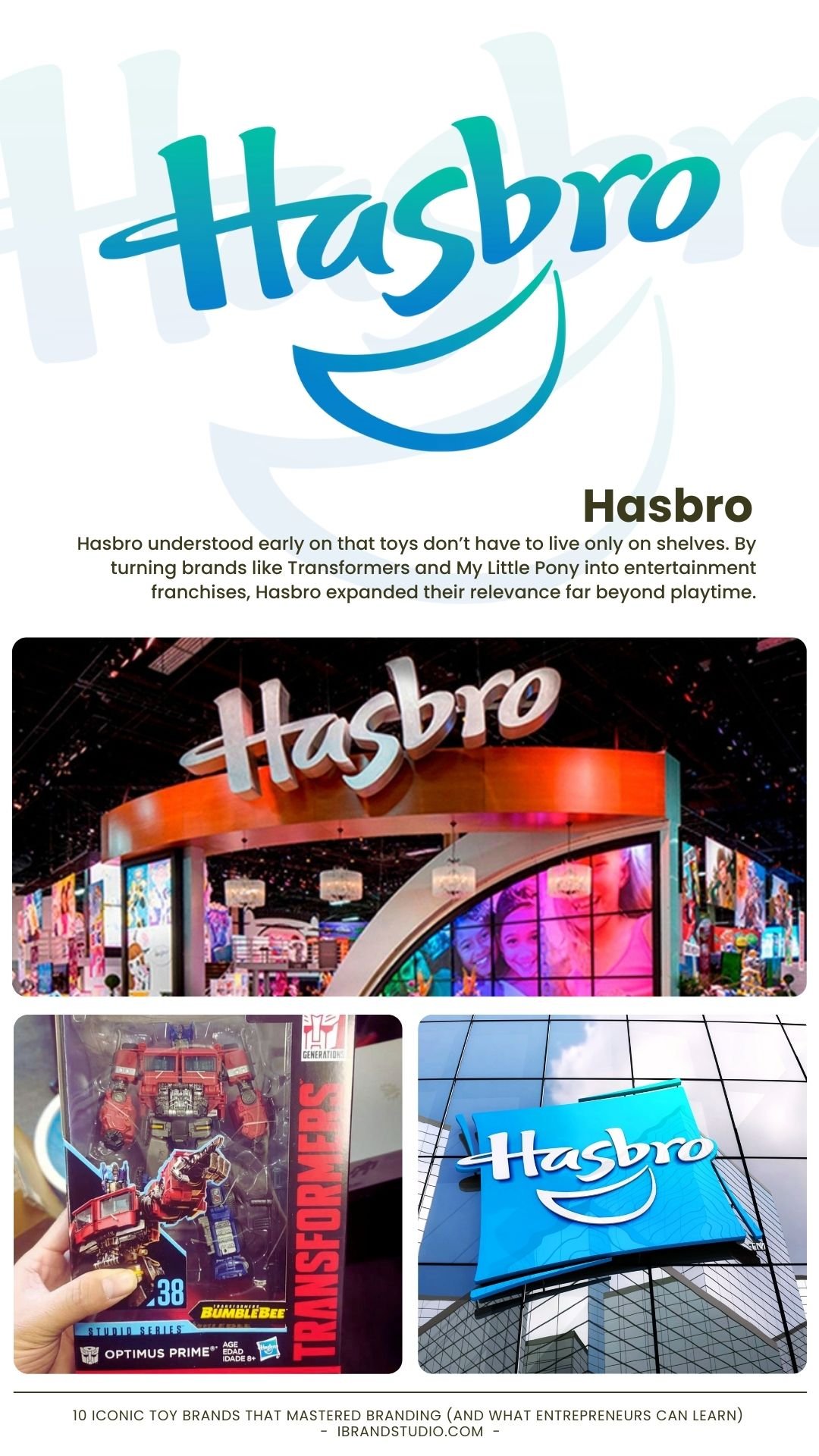
Hasbro understood early on that toys don’t have to live only on shelves. By turning brands like Transformers and My Little Pony into entertainment franchises, Hasbro expanded their relevance far beyond playtime.
Why Hasbro’s Branding Works:
- Heavy investment in intellectual property
- Seamless movement between toys, TV, and film
- Character-driven storytelling
- Long-term franchise thinking
Branding takeaway:
A strong brand story gives you permission to expand into new formats.
4. Fisher-Price – Winning with Trust
Founded: 1930
Country: USA
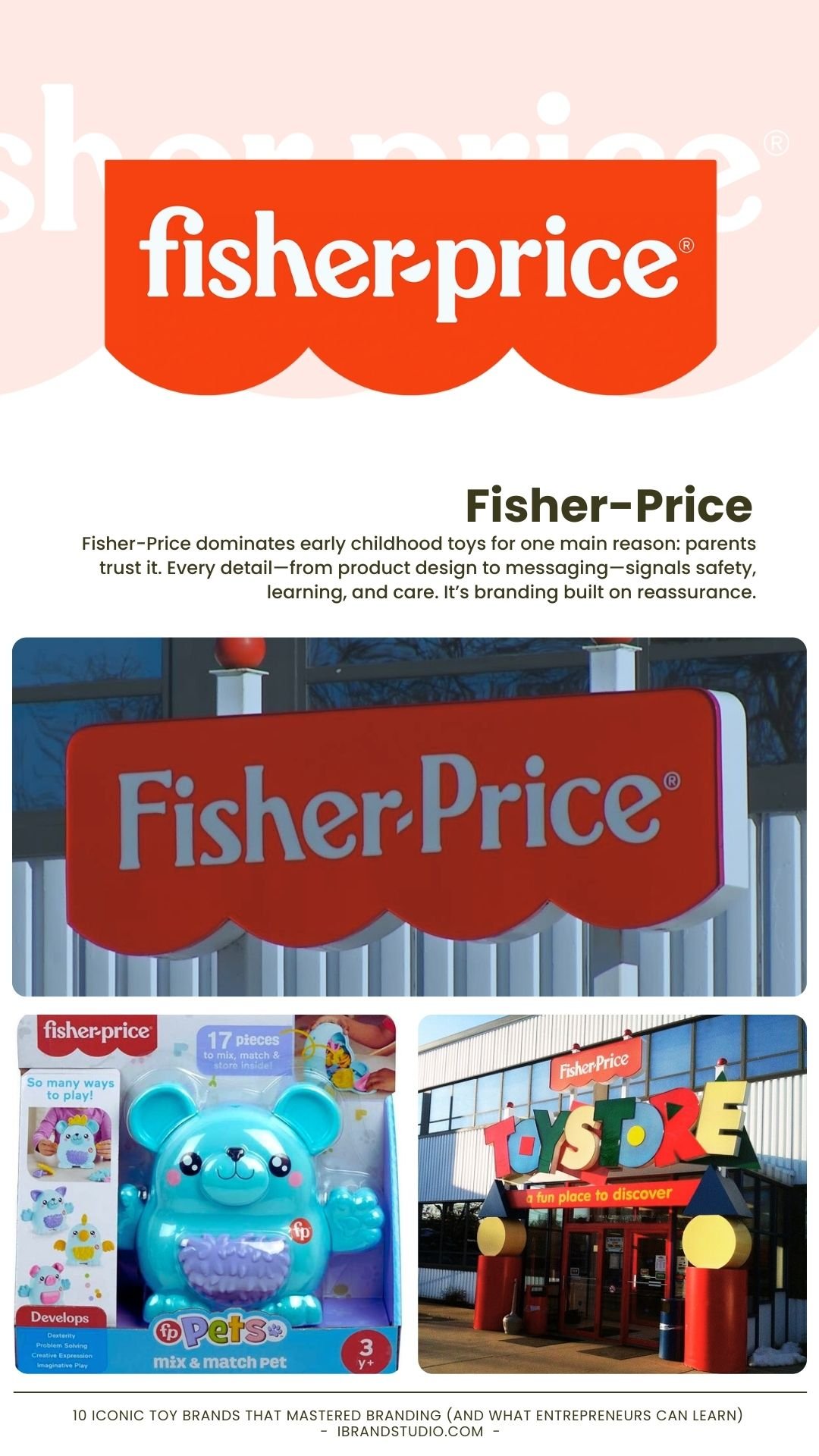
Fisher-Price dominates early childhood toys for one main reason: parents trust it. Every detail—from product design to messaging—signals safety, learning, and care. It’s branding built on reassurance.
Why Fisher-Price’s Branding Works:
- Clear focus on child development
- Calm, friendly visual identity
- Educational positioning
- Consistent, caring tone
Branding takeaway:
In trust-sensitive markets, confidence and reliability are your strongest brand assets.
5. Barbie – One of the Most Successful Rebrands Ever
Founded: 1959
Parent Company: Mattel
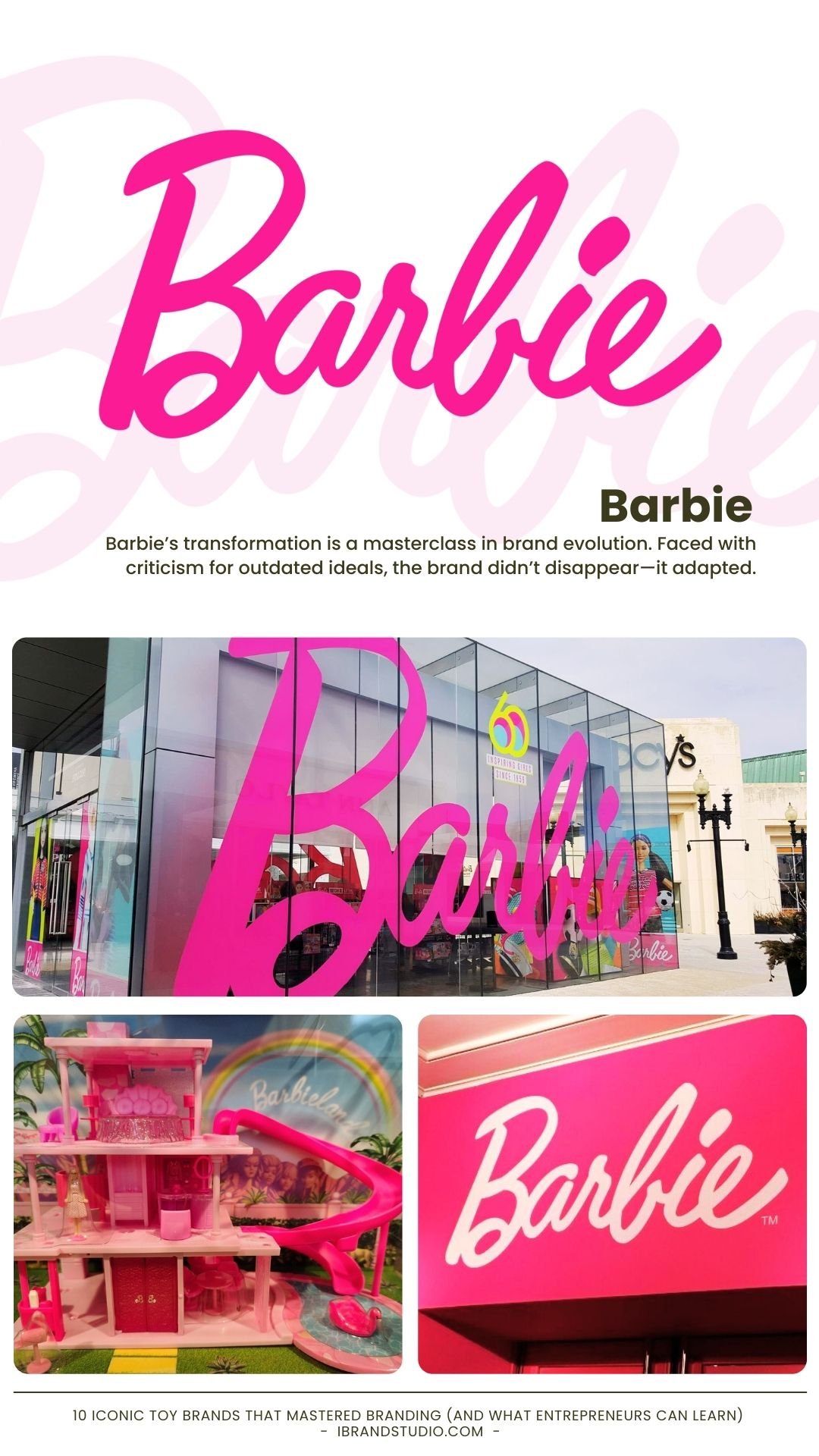
Barbie’s transformation is a masterclass in brand evolution. Faced with criticism for outdated ideals, the brand didn’t disappear—it adapted.
Today, Barbie represents diversity, ambition, and self-expression, while still retaining its iconic identity.
Why Barbie’s Branding Works:
- Clear shift in values, not just visuals
- Inclusive representation
- Cultural relevance
- Strong storytelling across media
Branding takeaway:
Brands don’t have to stay frozen in time. They just need to evolve honestly.
See Also: Top 15 Most Influential eCommerce Brands Shaping Online Shopping
6. Hot Wheels – Simple Product, Strong Identity
Founded: 1968
Parent Company: Mattel
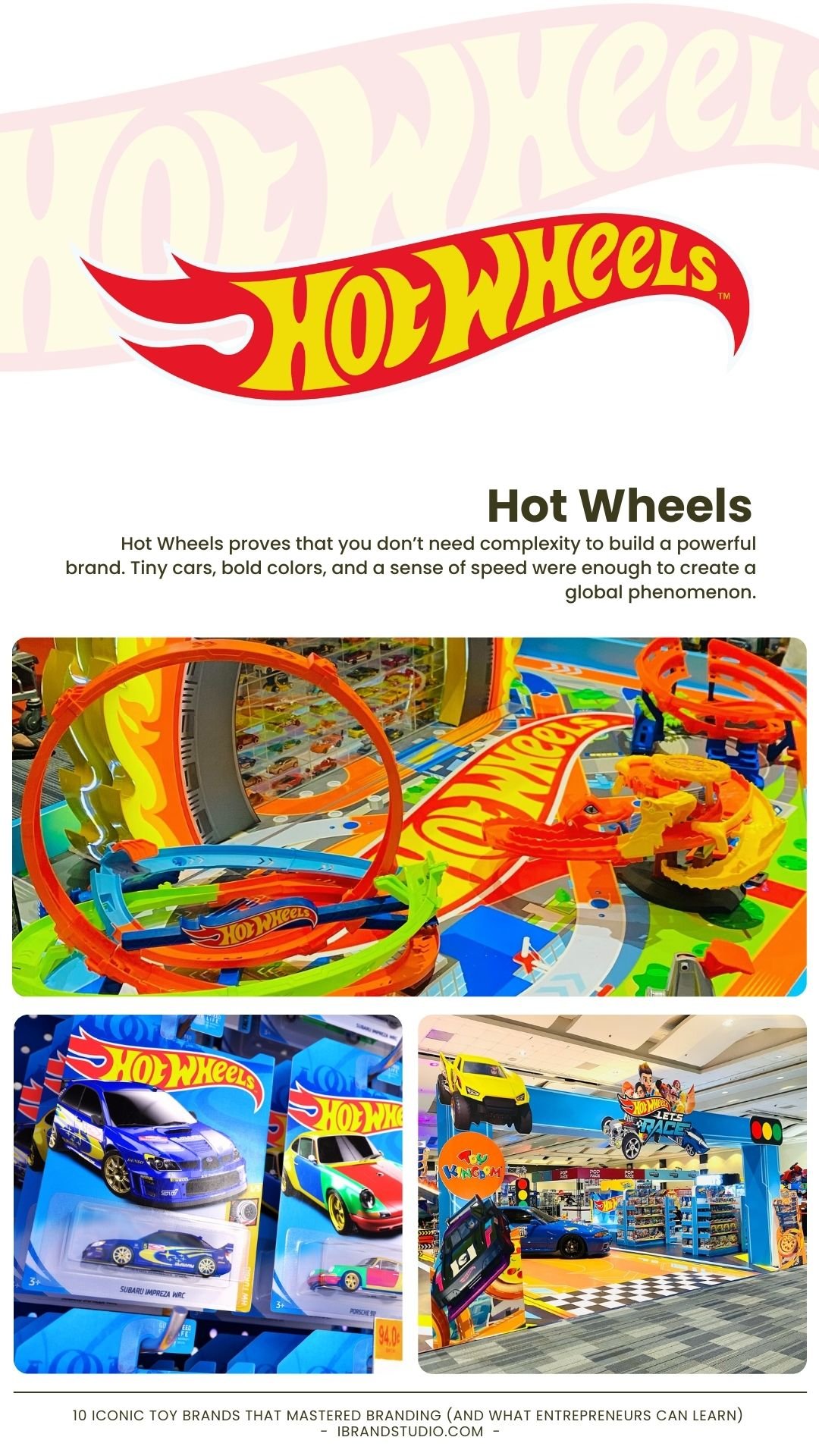
Hot Wheels proves that you don’t need complexity to build a powerful brand. Tiny cars, bold colors, and a sense of speed were enough to create a global phenomenon.
Why Hot Wheels’ Branding Works:
- Instantly recognizable design
- Appeals to kids and adult collectors
- Consistent product experience
- Strong emotional nostalgia
Branding takeaway:
If your brand nails one thing really well, consistency becomes your competitive advantage.
7. Nerf – Creating (and Owning) a Category
Founded: 1969
Parent Company: Hasbro
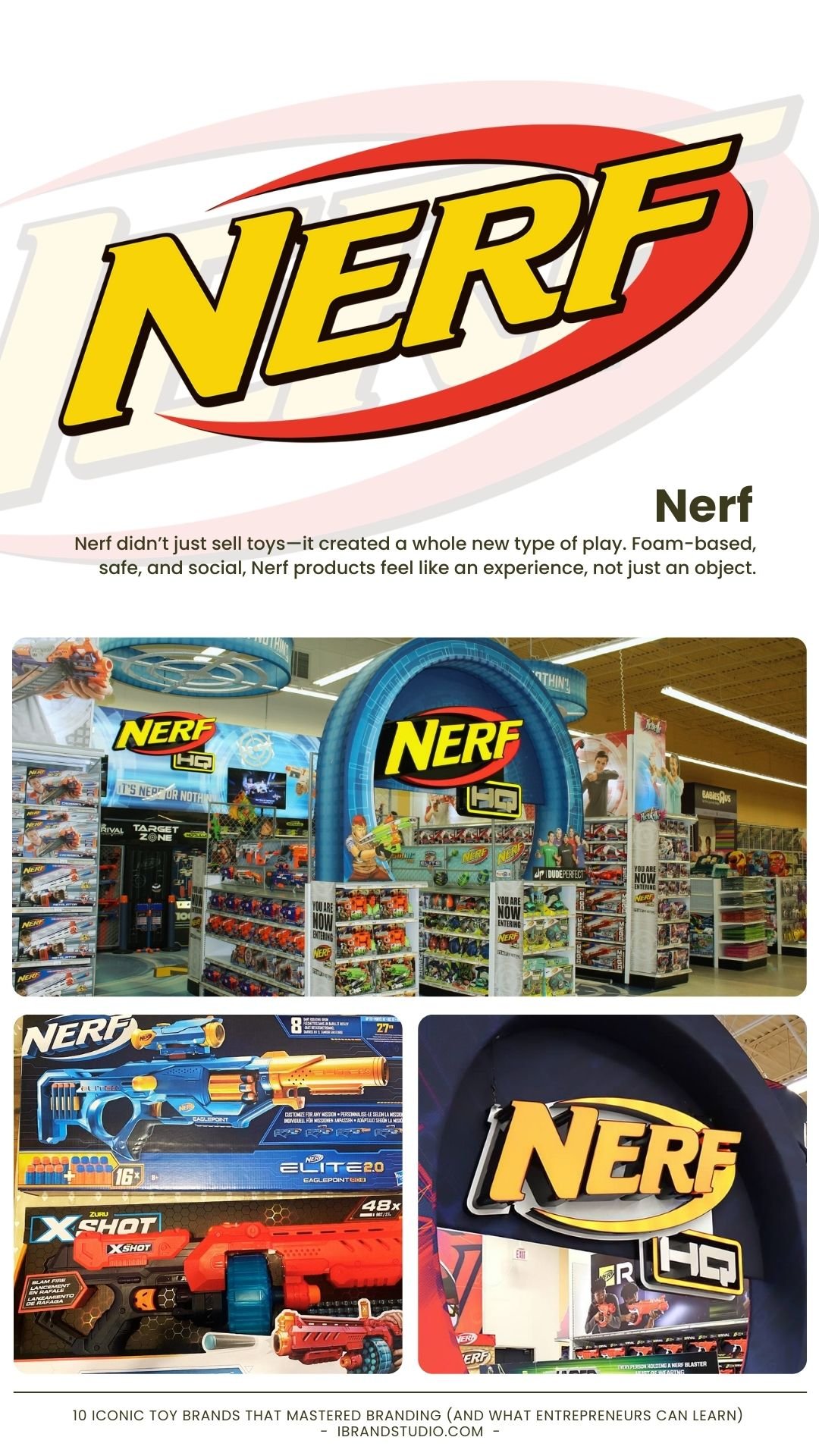
Nerf didn’t just sell toys—it created a whole new type of play. Foam-based, safe, and social, Nerf products feel like an experience, not just an object.
Why Nerf’s Branding Works:
- Unique product category
- Bold, recognizable aesthetics
- Active, social positioning
- Clear brand language
Branding takeaway:
When you define the category, you control the conversation.
8. Playmobil – Clear Differentiation Wins
Founded: 1974
Country: Germany
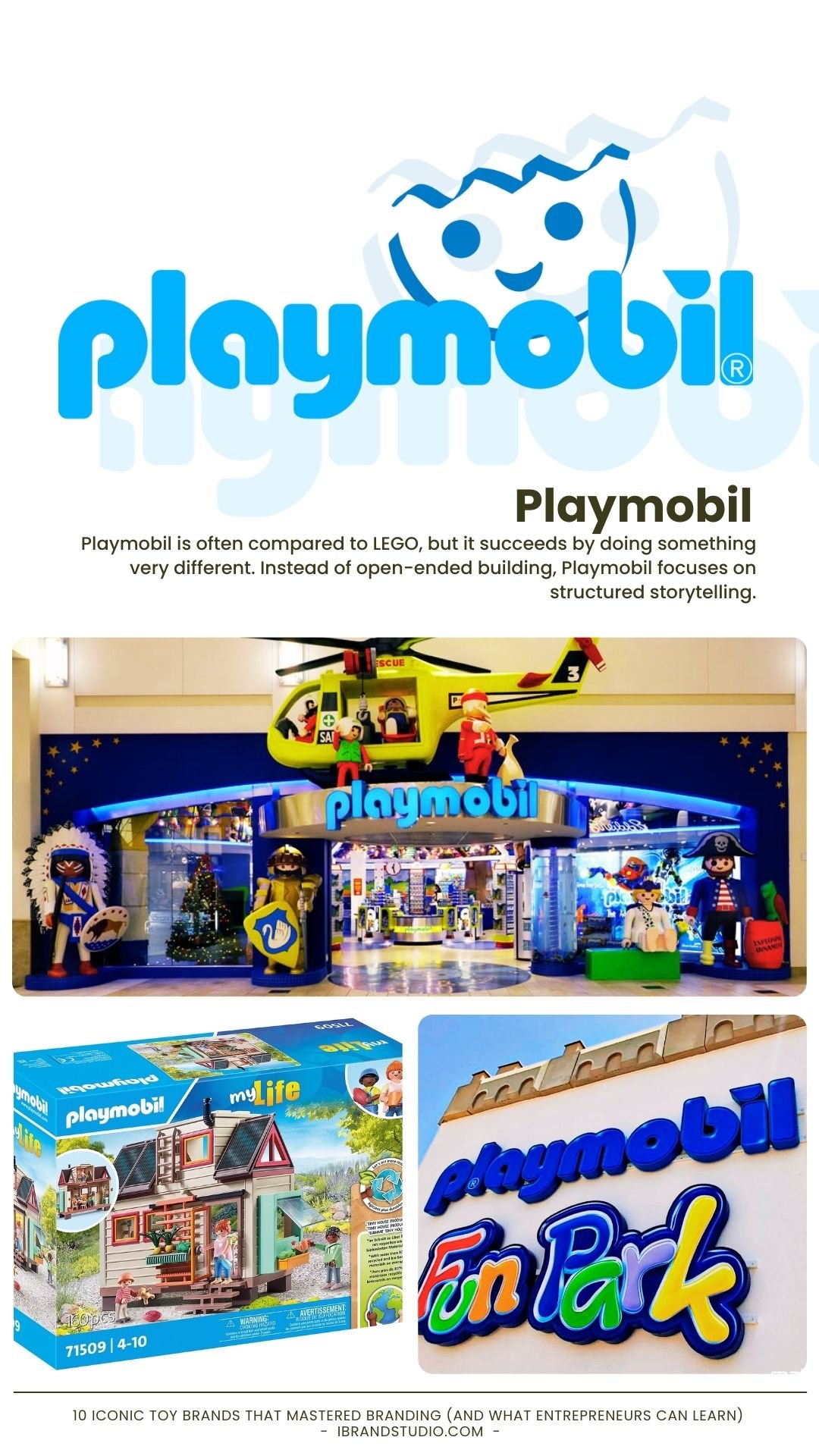
Playmobil is often compared to LEGO, but it succeeds by doing something very different. Instead of open-ended building, Playmobil focuses on structured storytelling.
Why Playmobil’s Branding Works:
- Consistent visual style
- Scenario-based play
- Strong European brand identity
- Clear contrast to competitors
Branding takeaway:
You don’t need to beat the market leader—just position yourself differently.
9. Bandai – Serving Passionate Fans First
Founded: 1950
Country: Japan
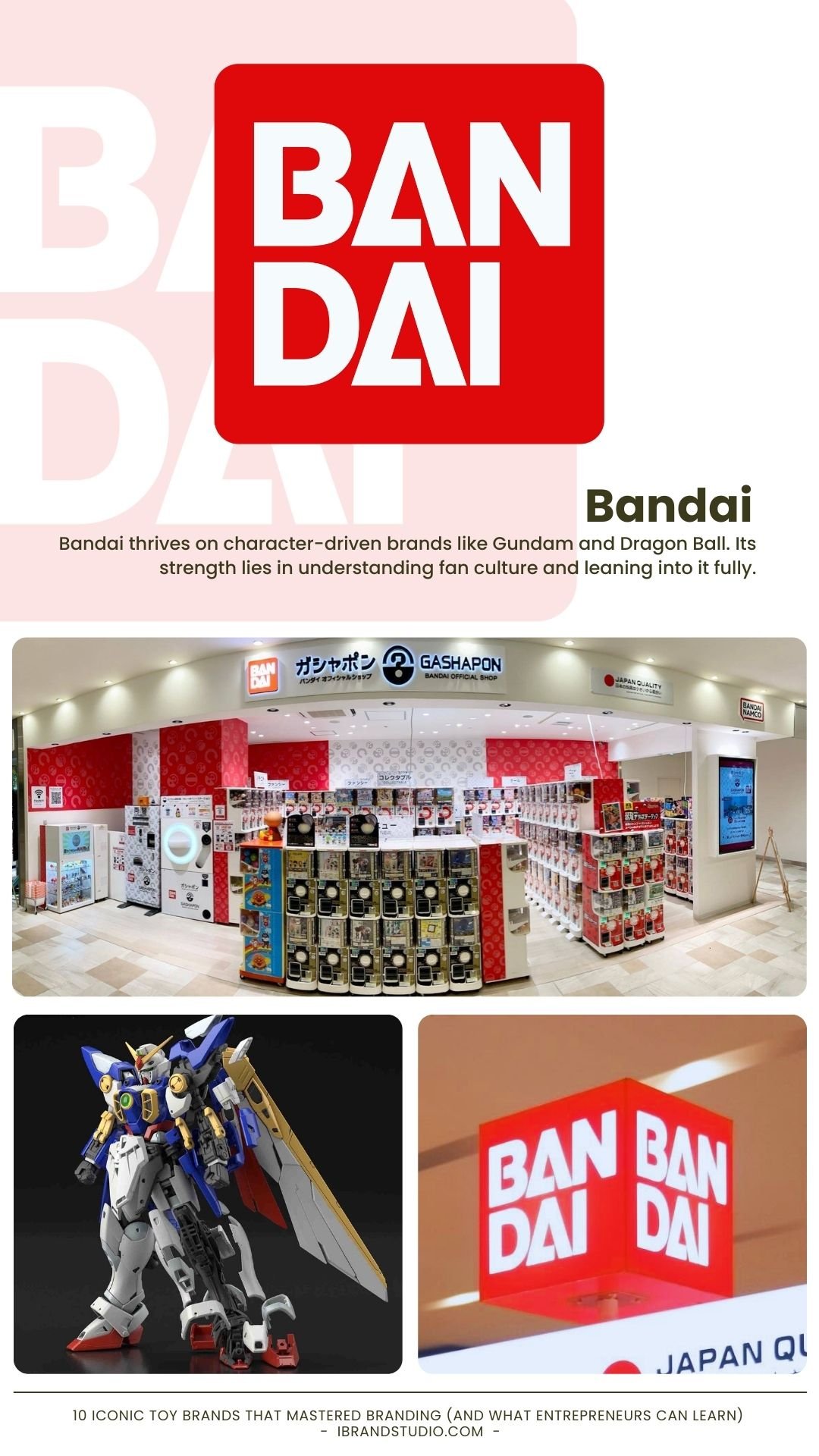
Bandai thrives on character-driven brands like Gundam and Dragon Ball. Its strength lies in understanding fan culture and leaning into it fully.
Why Bandai’s Branding Works:
- Deep ties to pop culture
- Smart licensing strategy
- Collector-focused offerings
- Respect for hardcore fans
Branding takeaway:
Your most passionate customers are your best marketers. Build for them first.
10. Nintendo – The Art of Playful Consistency
Founded: 1889
Country: Japan
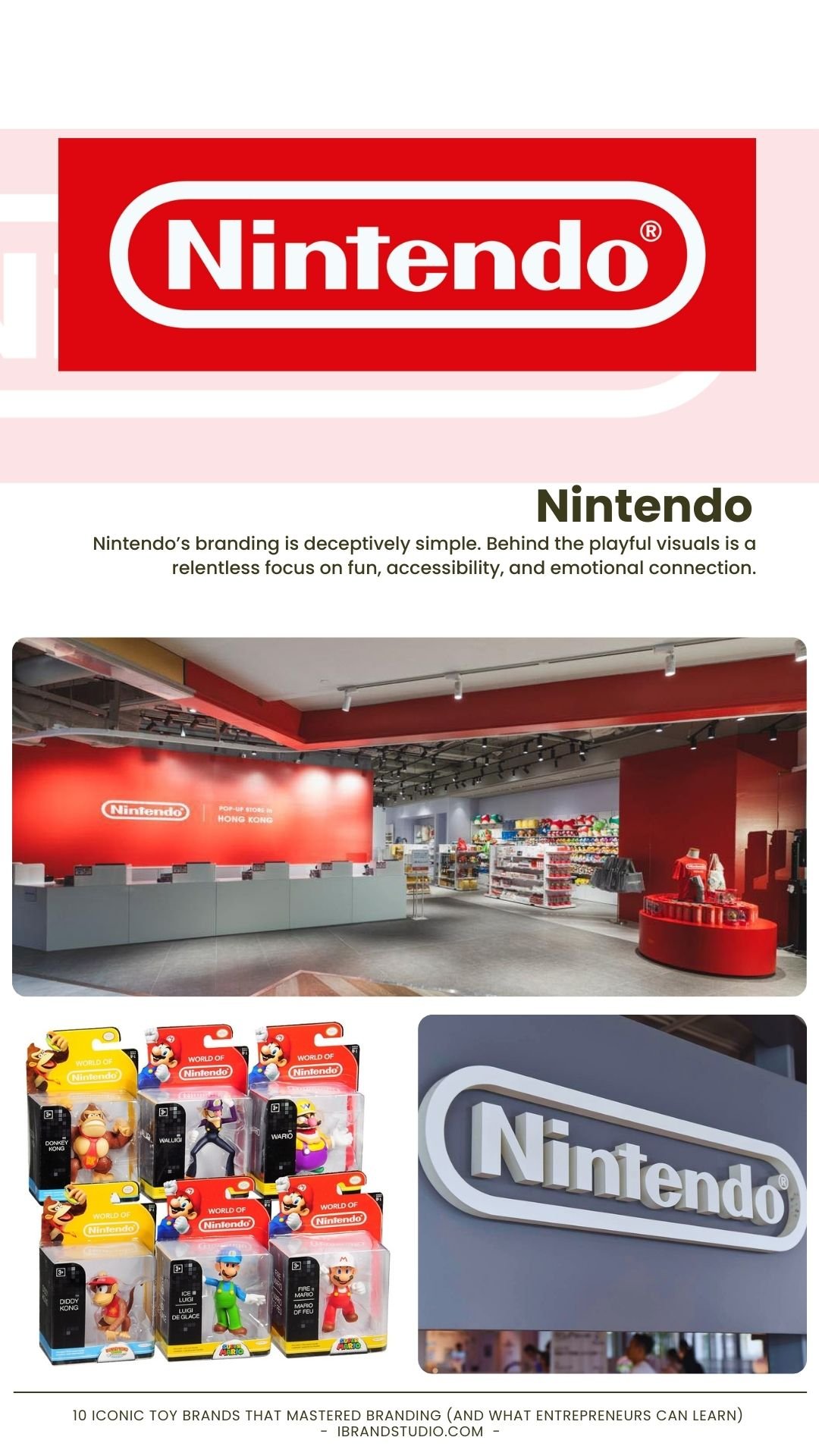
Nintendo’s branding is deceptively simple. Behind the playful visuals is a relentless focus on fun, accessibility, and emotional connection.
Why Nintendo’s Branding Works:
- Iconic characters
- Generational nostalgia
- Simple messaging
- Deep, polished experiences
Branding takeaway:
Simplicity, when done well, is incredibly powerful.
Next: The Visual Power of Industry: The Top 10 Most Recognizable Logos in Oil and Mining
What Entrepreneurs Can Learn from Toy Brands
Across all these famous toy companies, a few branding truths show up again and again:
- Emotion beats features
- Consistency builds trust
- Clear positioning matters more than trends
- Great brands think in decades, not quarters
If you’re building a brand today, especially in a crowded market, these lessons matter more than ever.
Final Thoughts
Toy brands succeed because they understand something fundamental: people don’t just buy products—they buy meaning, memories, and identity.
Whether you’re launching a startup or refining an existing brand, studying iconic toy companies is a reminder that strong branding isn’t loud or complicated. It’s clear, emotional, and consistent over time.